Yeshiva
Beit Midrash
- Jewish Laws and Thoughts
- Pathways in Personality Development
- Enjoying Life

The Torah study is dedicatedin the memory of
Hana Bat Haim
Pious abstinence consists of three main ingredients: abstinence in the realm of pleasures, abstinence in the realm of laws, and abstinence in the realm of conduct.
We have already explained that abstinence in the realm of pleasures means refraining from superfluous worldly matters except where necessary. This includes foods, clothing, outings, as well as cohabitation. All of these matters call for pious abstinence from overindulgence, guarding the boundary between that which is necessary and that which is not. Pleasures must be channeled into conduits which involve fulfilling a mitzvah (commandment), like Sabbath, Festivals, or mitzvah-related celebrations.
Enjoying Life (2)
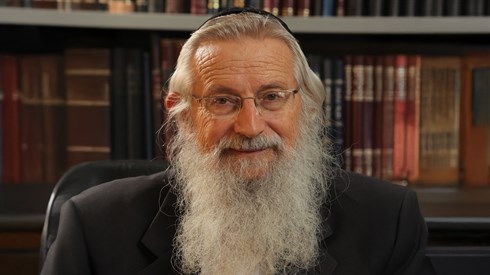
Rabbi Zalman Baruch Melamed
1 - 27. Abstinence and Permissible Pleasures (Cont.)
2 - 28. Types of Pious Abstinence
Load More
Our sages of blessed memory explained the statement of Ezekiel (4:14), "My soul was not polluted" in the following manner: I did not eat of an animal about which a sage had to make a decision, even if it was deemed kosher. Because a question arose regarding its status, I refrained from partaking of it. Neither did I eat the flesh of an animal that had to be slaughtered quickly because it was in danger of dying. Even though it was permitted by law for consumption, I preferred to be stringent and distance myself from a possible transgression.
And Mar Ukvah said (Chullin 105a): My father, if he would eat meat today, would not eat cheese until tomorrow at the same time. But I am to my father as vinegar derived from wine, for I separate between meat and milk by one intervening meal.
Though there is no law which says that a person must wait so long, Mar Ukvah's father was stringent with himself. From here we can learn that in order to be stringent, one must be on a fitting level. It is not enough to merely imitate those who behave stringently. Therefore Mar Ukvah did not behave as his father did in this respect, for he felt that he was not on his father's level.
If a person practices pious abstinence and upholds numerous stringencies without being on the proper level, he probably possesses arrogance more than he does true piety. One must ascend to the level of pious abstinence in a true and full manner, not superficially. Desirable abstinence involves a gradual ascension, not a simple renunciation of pleasure. It means becoming spiritually fulfilled, harboring love for God, the Torah, and the commandments, while at the same time not lacking physical pleasure.
Finally, there is abstinence in the realm of conduct: separation from negative company. This does not mean cutting oneself off from the world, for "a man's mind should always be associated with his fellow men" (Taanit 7a). Rather, a person should associate with reputable persons for as long as may be necessary in the interest of Torah study and good deeds. The guiding rule is this: proper abstinence is that which does not weaken a person's positive inner faculties. Abstinence which weakens these faculties is undesirable.





Rabbis in Midrash























Lessons
fast navigation










Hosha'ana Rabba FLYDUBAI & HOSHANA RABBA- ANI VAHU HOSHIA NA- I & HIM SAVE US
"Ani vaHu Hoshia Na", "I and Him, Save Us". We don't just pray to Him, but we also pray to and for ourselves that we should emulate and educate our children to have that instinctive altruism with which He created the world. President Trump seemed amused about Yaniv Hayon, our PLUMBER who confidently worked with G-d like Superman (he learned from a pilot on a TV show!) to save 174 lives on the Dubai hijacking, but we in Israel are totally accustomed already 78 years to our plumbers, teachers, garbage-men, rabbis, farmers & doctors being Hashem's shlichim! This is what Zionism is about.
Moreshet Shaul Hashem Is your Shadow – part I
Based on Siach Shaul, Pirkei Machshava V’Hadracha p. 420 – an address from 1941










