Yeshiva
Beit Midrash
- Shabbat and Holidays
- Passover - Pesach
- Shabbat Hagadol

We can see this sense of appreciation all throughout the Hagada: In the song Dayenu, when we catalogue all the various steps from slavery to redemption; in Tefilot such as Hallel, or Hodu L’Hashem Ki Tov - "Praise G-d for He is good"; or essentially ALL the songs in the closing section of the Seder. This sentiment is perhaps best summed when we raise our glass in a toast to the Almighty (L’fichach….") and we say:
"It is our duty to thank, praise, laud, glorify, exalt, honor, bless, raise high and acclaim the One who performed all these miracles for our ancestors, and for us."
And yet, I wonder: If G-d loves us so much, why did we have to wander through the desert for 40 years? Why were we not taken directly from Egypt into Israel? Hadn’t we suffered enough during more than a century of cruel oppression? Didn’t the 10 Plagues convince us that
Hashem takes extra special care of us, and loves us?
Rav Shimshon Refael Hirsch brilliantly addresses this issue: True, he says, the Exodus undeniably demonstrated to the people that
G-d protects us in times of crisis. But what about in our day-to-day existence? Is Hashem with us then, too?
In a way, says Rav Hirsch, this is a much more crucial area. For if Man is left alone to provide sustenance for his family, he will never be satisfied, never be satiated. He will always worry, "Do I have enough for today, and also tomorrow? And what about the needs of my children, and my grandchildren? How can I vouchsafe THEIR future, too?" Under this constant pressure, Man would be trapped in a "wilderness of social competition" lasting far beyond just 40 years, an endless anxiety that would occupy most of his time & energy.
Therefore, G-d led His people into the desert, a harsh environment that offered no opportunity for employment or self-sufficiency. There, G-d provided us with Manna from heaven each day, training us over the course of 4 decades to rely on Him, and be secure in the knowledge that even when we did not know what tomorrow will bring – a premise symbolized by the Mahn, which, after all, lasted for only 1 day – we could be confident He would provide for us & be our faithful partner in parnasa.
The trust this built up in us filled us with wonder, even as we wandered, and sustained us then - and now.
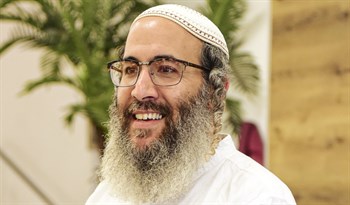







Rabbis in Midrash























Lessons
fast navigation










Hosha'ana Rabba FLYDUBAI & HOSHANA RABBA- ANI VAHU HOSHIA NA- I & HIM SAVE US
"Ani vaHu Hoshia Na", "I and Him, Save Us". We don't just pray to Him, but we also pray to and for ourselves that we should emulate and educate our children to have that instinctive altruism with which He created the world. President Trump seemed amused about Yaniv Hayon, our PLUMBER who confidently worked with G-d like Superman (he learned from a pilot on a TV show!) to save 174 lives on the Dubai hijacking, but we in Israel are totally accustomed already 78 years to our plumbers, teachers, garbage-men, rabbis, farmers & doctors being Hashem's shlichim! This is what Zionism is about.











