YeshivaThe torah world Gateway
Beit Midrash
- Sections
- Chemdat Yamim
- Parashat Hashavua
- Torah Portion and Tanach
- Bereshit
- Vayeshev

Our parasha starts innocuously, with Yaakov back in his father’s land, and, as Rashi (bid. 2) points out, he desired to live in tranquility. Yaakov had gone through enough: fleeing his brother, hard work for and trickery from his father-in-law, danger from the abductors of his daughter. With these external threats over, he hoped for a smooth life. However, rest was not the lot of Yaakov, who, more than any other person, symbolizes the nation that bears his name. At this time, an episode of discord between his sons began to unfold, revealing great difficulties until the end of Sefer Bereishit. This would end with the fulfillment of the prophecy to Avraham: "Your offspring will be strangers in a land not theirs, and they will subjugate and afflict them for 400 years" (ibid. 15:13). Chazal (Bereishit Rabba 4:3) poignantly attached the following pasuk to this idea: "I did not have tranquility, and was not quiet, and I did not rest, and agitation came" (Iyov 3:26). The lack of: tranquility – refers to problems with Eisav; quiet – Lavan; rest – Dina; agitation – Yosef.
Certainly the Divine Hand that decreed exile in Egypt was the deciding factor, but the mechanism through which this all happened is "blamed" by Chazal on Yaakov, for the shortcoming of asking to live in tranquility. People tend to notice the dangers from the outside and ignore those from within, which is a dangerous mistake. Chazal (Bereishit Rabba 4:6) tell us that there were great similarities between the experiences of Yaakov and Yosef, especially that they were both hated by a brother. This teaches us the great danger of hatred, even if one is not an evil person like Eisav but an upstanding one like Yosef’s brothers, who nevertheless had enmity towards their own brother. Had Yaakov been as vigilant with the matter as he was with Lavan, he could have "put out the fire" before it grew out of proportion. The exile decreed upon Avraham needed to transpire somehow, but not in the tragic way it did. It was because Yaakov, hoping for tranquility, lowered his guard.
This is a lesson for all generations. We want a respite from our difficulties and are less vigilant when independent in our own Land. After all that our nation has undergone, in the exile and in Israel, we crave for rest. We have to remember, though, that not only Eisav and Lavan are dangerous. The destructive forces from within are also dangerous. The best chance to merit tranquility is to not ask to for tranquility. We must remain careful and make sure that the independence we merited is used to raise our ethical and spiritual level. Then we can enjoy the fruits of the labor of generations.


Moreshet Shaul Moreshet Shaul: Eretz Yisrael in Halacha and in Sanctity – part II
Based on Siach Shaul, Pirkei Machshava V’Hadracha p. 137



Rabbis in Midrash






















Lessons
fast navigation









Moreshet Shaul Hashem Is your Shadow – part I
Based on Siach Shaul, Pirkei Machshava V’Hadracha p. 420 – an address from 1941
P'ninat Mishpat A Non-Contractor in Changing Times – part I
(based on ruling 85128 of the Eretz Hemdah-Gazit Rabbinical Courts)
Moreshet Shaul Our King on Rosh Hashana, Our Father on Yom Kippur.
Based on Aroch Siach, p. 221 (Rav Shaul Yisraeli)
P'ninat Mishpat A Non-Contractor in Changing Times – part II
(based on ruling 85128 of the Eretz Hemdah-Gazit Rabbinical Courts)
Moreshet Shaul Hashem Is your Shadow – part II
Based on Siach Shaul, Pirkei Machshava V’Hadracha p. 420 – an address from 1941
Parashat Hashavua Happiness for the Right Reasons
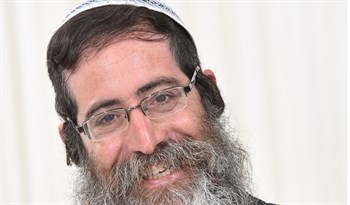
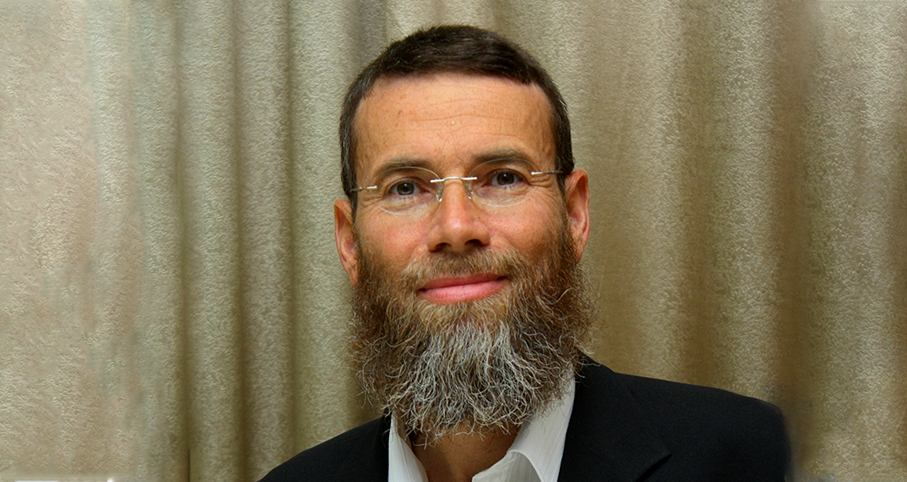
[With painful longing, we share these divrei Torah from our co-Rosh Kollel for close to 40 years, Harav Moshe Ehrenreich zt”l.]