Yeshiva
Beit Midrash
- Shabbat and Holidays
- Shavuot
- Preperation for Shavuot
Coming clean before G-d
What is the meaning of the three days of preparation before getting the Torah ant the three things to do in advance: Sanctify ourselves, set boundaries & wash our clothing?

So how, then, did we prepare for Matan Torah, the most momentous moment of our history?
The Torah tells us we had 3 days to get ready – "Shloshet Y’Mai Hagbala" - & G-d gave us 3 things to do in advance of the Revelation: Sanctify ourselves, set boundaries & wash our clothing. Just what do these things mean?
I suggest the following: Step 1, sanctification, was to impress upon us that we are a holy People, an Am Kadosh, worthy of receiving G-d’s greatest gift to Mankind. Without a healthy, heightened sense of self-respect & self-image, we would not have the sufficient stature to accept the laws of the Torah with the confidence that, yes, we definitely can live up to this most challenging & ambitious way of life.
But we also had to set boundaries. That is, we had to understand that just because we were being "upgraded" to the holiest nation on Earth did not mean that we could go
anywhere or do anything. There are limits. We are not G-d. We can approach Him, but we cannot be Him! At the end of the day, we are still human beings – bound to our
mortal capabilities & bound to make mistakes along the way. We have amazing powers, but yesh g’vul - there is a limit as to what we can & may do with these powers.
And what about this rather strange directive to "wash our clothes?" Seems rather mundane, doesn't it?
While some suggest this meant we should immerse in a Mikva, I have two other thoughts. First, I think this means that, as recipients of the Torah, we should "look the part." Our clothes should be clean. We should look & act in a dignified manner. We should be polite, considerate, kind, mentschlach. We believe, literally, that Derech Eretz Kadma L’Torah; good manners & civility precede the Torah.
Another thought: We have an expression, "Don’t air your dirty laundry in public." Accent on the words "in public." In private, one should indeed "air" his laundry, i.e. reflect on his shortcomings, examine his deeds & resolve to improve himself. For it is only when we bravely face our faults that we can "come clean" before Hashem & do Teshuva. Then and only then we are fully ready to embrace the Torah.
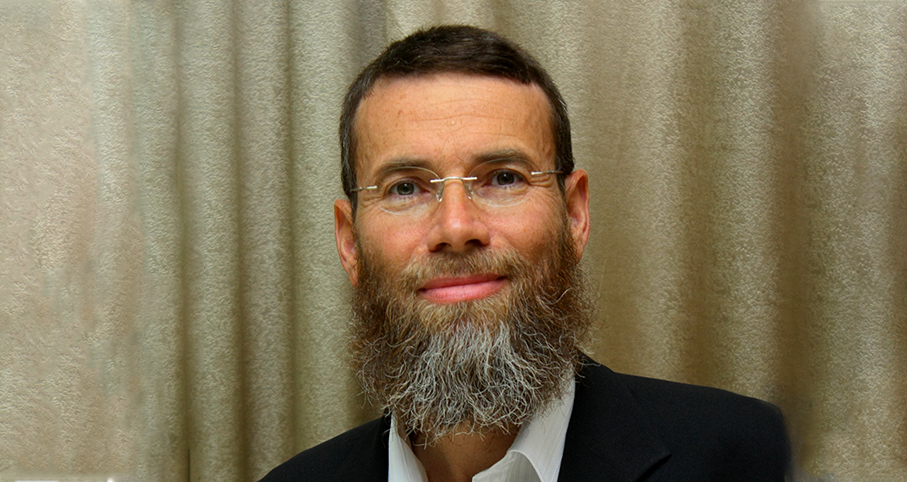
Rabbi Stewart Weiss
Was ordained at the Hebrew Theological College in Skokie, Illinois, and led congregations in Chicago and Dallas prior to making Aliyah in 1992. He directs the Jewish Outreach Center in Ra'anana, helping to facilitate the spiritual absorption of new olim.
Jewish Laws and Thoughts Shul “etiquette:” can we honor Hashem while respecting our fellow congregants?





Rabbis in Midrash















fast navigation





Search lessons
Moreshet Shaul Yavneh and its Scholars
Based on Siach Shaul, Pirkei Machshava V’Hadracha p. 803 (address to students)
Parashat Hashavua “… And I Kept 613 Mitzvot”
Based on Siach Shaul al HaTorah (Rav Shaul Yisraeli), p. 108

The Land of Israel RAMBAM AGAINST ALIYA?!" What is his opinion on Living in Israel?
Some claim the Rambam says one shouldn't make Aliya and live in Israel (the Megilat-Esther's understanding), which is often used as an excuse not to "make the move". This short but encompassing article brings many places in the Mishneh Torah where the Rambam clarifies his own opinion.
Kuzari -Rabbi Ari Shvat Kuzari class 18- Revelation at Sinai Even More Miraculous than we Thought(87-88)