Yeshiva
Beit Midrash
- Shabbat and Holidays
- Purim & The Month of Adar
- The Month of Adar

There are two heroes to the story of Purim. One naturally is the great queen Esther who emerges to be the savior of her people. Esther is the example of the Jew who feels responsible for the Jewish people and its future even at the cost of personal gain or even one’s position of power, influence or life itself. It is an act of desperate courage for her to rise against Haman who apparently has the king’s ear and confidence and who also apparently represents the majority opinion of the people that she rules over and certainly her behavior could not be considered politically correct. There are many Jews today of influence and wealth, power and stature that unfortunately fail to stand up for their fellow Jews and for the only Jewish state in existence in the world. Truth be said, many of them, in all sorts of guises and fancy pious sounding names really stand against us. They fulfill the rabbinic requirement of Purim that they are so drunk on their own Jewish ignorance and assimilation and self-righteousness that they cannot distinguish between Mordecai and Haman. It is Esther who rises to the occasion and sees things as they are and not as many others would naively wish to see them. This is the source of her heroic role in the Jewish story and the reason that she has had so many namesakes of wonderful Jewish women over the ages.
The other hero is Mordecai. Mordecai is the Jew that annoys us, that is stubborn, demanding, prickly, and possessed of great Jewish paranoia. He is described in the book of Esther in a most succinct fashion: "And Mordecai will not bow down and will not prostrate himself." Midrash teaches us that there were many who disagreed with Mordecai’s behavior. They found his stubbornness to be provocative and that somehow therefore he was at least indirectly responsible for Haman’s genocidal intents. Again there are many who feel that the abused bring the abuse upon themselves, that the victims are somehow at least partially or perhaps even fully at fault in their victimization. The UN, the EU, many NGO’s, the boycotters and divestiture activists certainly would pillory Mordecai for his behavior. But without Mordecai there is no Esther and no happy ending to the Purim story. We need stubborn Jews even if we disagree with them ideologically, politically and socially. And we see at the end of the Purim story that even after Mordecai emerges as such a hero not all Jews are happy with him. They found him wanting spiritually, educationally, study wise. Such is the fate of great people in Jewish life. There never is one hundred percent approval of anyone. But history and the Jewish people have immortalized Mordecai’s stubbornness and he remains with Esther the hero of the Purim story. I pray that our Purim story also ends triumphantly and clearly.
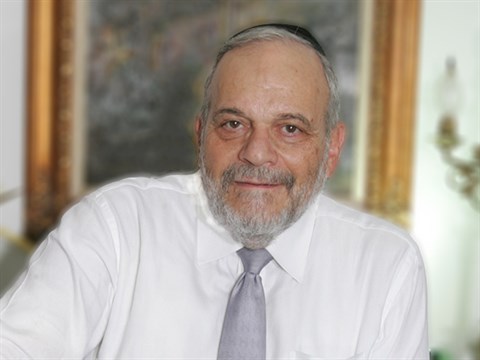







Rabbis in Midrash























Lessons
fast navigation











Various Events FOR WHOM NOT TO VOTE
Rav Zvi Yehuda Kook stressed that Israeli politics is G-dly, so I have no problem answering this common question on a Torani blog. Also, Free-Will is a G-d-given right and obligation, to "destine one's fate" (R. Soloveichik, Kol Dodi Dofek, 67), so I obviously don't tell others how to vote. But once not a few (especially young) have already asked, a couple of personal words from experience and thoughts from chazal & Rav Kook which may be of help to others, mainly for whom NOT to vote.

P'ninat Mishpat Fallout from Failure to Install Elevator – part II
based on ruling 85007 of the Eretz Hemdah-Gazit Rabbinical Courts








