Yeshiva
Beit Midrash
- Torah Portion and Tanach
- Vayikra
- Kdoshim

This week’s parsha contains many varied and different mitzvoth which deal with all areas of human life and experience. In fact, the parsha contains the greatest number of mitzvoth in the Torah. It is not coincidental that this plethora of mitzvoth occurs in the parsha of kdoshim.
The Torah intends to point out to us that mitzvoth are the building blocks - the stepping stones to achieving the goal of kdoshim. However, the mitzvoth therefore are not to be seen as being an end in themselves.
The true and intended end and goal is kdoshim. The mitzvoth are the Torah’s description of the means available to achieve that end goal. We pay great attention to the mitzvoth, their halacha and minutiae, and correctly and necessarily so.
But many times people become bogged down in the mitzvoth without realizing the goal of kdoshim that lies at the heart and purpose of mitzvoth. The Talmud compares mitzvoth to silver, money, wealth. Just as wealth is only a means to do good and achieve a better life and should never be viewed as the end and final goal itself, so too the mitzvoth are the beginning of the process of human elevation and not the end goal all in itself.
Judaism emphasizes the means and not just the goal. Both the means and goal are prescribed to us by heavenly fiat. For Jews, attainment of kdoshim is an elusive target.
All of Jewish history has shown that those who attempted to achieve kdoshim without the means of mitzvoth, in the main have failed. But even punctilious observance of mitzvoth does not always guarantee kdoshim.
Ramban in his famous comment states that one can be a ‘naval’ - an objectionable, obnoxious, even obscene person - within the parameters of seeming Torah observance.
The entire thrust of the famed Mussar movement in nineteenth century Lithuania and of the Chasidic revolution was to rectify this matter. God wants not only our mechanical observance of mitzvoth, as important as that is, but also our heartfelt commitment to be a morally better person.
Thus the Torah’s demand is not an unreasonable one for it describes the only way to achieve true humanity and immortality. By using the mitzvoth as our guide in life’s behavior and by remembering that behind the mitzvoth, so to speak, stands God to Whom we are eventually responsible for our actions, thoughts and deeds, we have an opportunity to reach that sublime goal of being kdoshim.
The discipline of mitzvoth creates an opportunity for spiritual growth and greatness. But it is up to us to truly exploit that opportunity to its fullest.
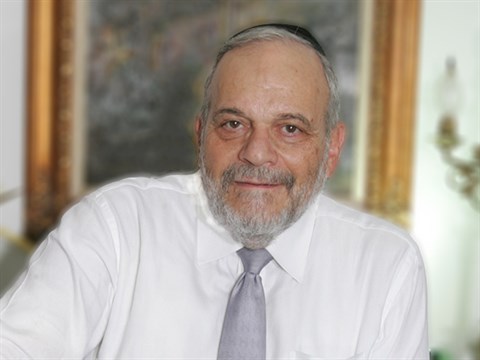







Rabbis in Midrash























Lessons
fast navigation










Various Events FOR WHOM NOT TO VOTE
Rav Zvi Yehuda Kook stressed that Israeli politics is G-dly, so I have no problem answering this common question on a Torani blog. Also, Free-Will is a G-d-given right and obligation, to "destine one's fate" (R. Soloveichik, Kol Dodi Dofek, 67), so I obviously don't tell others how to vote. But once not a few (especially young) have already asked, a couple of personal words from experience and thoughts from chazal & Rav Kook which may be of help to others, mainly for whom NOT to vote.

P'ninat Mishpat Fallout from Failure to Install Elevator – part II
based on ruling 85007 of the Eretz Hemdah-Gazit Rabbinical Courts








