Yeshiva
Beit Midrash
- Torah Portion and Tanach
- Bamidbar
- Beha'alotcha

The Smag (R. Moshe of Coucy, one of the ba'alei Tosafot) in his introduction to his counting of the mitzvot, tells of two dreams which he stresses he is not fabricating! G-d told him in a vision that he should write a new book counting the mitzvot, for the Rambam's Sefer HaMitzvot omits some of the most important commandments. The Smag awoke and got to work, but as he was completing the job, he received a second vision telling him that he also forgot that MOST IMPORTANT mitzva of don't be arrogant which leads to forgetting G-d (Dvarim 8, 11). Just as by Moshe, we must understand why modesty is so central to Torah?
Our first thought would probably be that one who is arrogant doesn't like to be told, even by Hashem, what to do! How much more so regarding the mitzvot bein adam l'chavero (morality between our fellow man), that an egoist has more difficulty not to put down others, not steal, etc. We also know that socially it's much more pleasant to be around thoughtful and considerate people, so society and the Jewish State gain.
But Rav Kook (Orot HaKodesh iii, p. 147) and his prized pupil Rav Charlap (MiMaynei HaYeshua, p. 12) stress that Jewish nationalism inevitably educates to humility & ALTRUISM, selfless giving, which is the key to G-dliness. It's the only possible reason why G-d created the world. As the Ramchal writes (Derech Hashem 1, 2), He doesn't lack or need anything, yet created the world out of the ideal of SELFLESS giving, which is the only motive which doesn't infer that He needed anything.
Living in the context of a Jewish State inevitably brings out in us that Godly altruism. The clearest example is the IDF where one gives 3 entire years, in addition to an annual month in milu'im (not to mention when we are at war, where my boys and sons-in-law have each done more than 400 days away from their wives, children, jobs and yeshivot), and if necessary even give their life for Am Yisrael. Giving time and money is great, but to even sacrifice your very life is as selfless as man can get. One can always volunteer anywhere in the world, but the obligation turns the IDF and Sherut Le'umi into a super-high NORM for all Israelis.
Even showering and flushing toilets in Israel, where there is a constant water shortage, demands us to be considerate. Only in Israel do we listen and follow the news obsessively, for all problems and issues are Jewish ones. If there is chalila a lost child or fire in any community, the Jews will obviously pitch in to help their fellow Jew, but in Israel, all lost children, fires, attacks, kidnapping etc. are all Jewish issues where we must constantly think altruistically, "how can I help out"? If you see a Yid with a kippa with his car broken down along the Chicago highway, we would all help out, but realize that in Israel, even if he is without a kippa it obligates me for he is just as Jewish as anyone.
The stereotype Israeli is often drawn as a kibbutznik, for that "all for one and one for all" is what having a Jewish State is about. I recall reading an article by a gentile sociologist whose thesis is that a culture's dance reflects it's view of society. When the waltz was in, the hugging of the man and woman expressed the strength of marriage and family. As the twist and disco evolved, it paralleled and expressed the turning inward of the "Me Generation". But he then showed the opposite phenomena in the Israeli Dance, the Hora, where the circle expands from the family unit and even includes everyone as partners and equal.
In short, living in a Jewish State, as the Tanach norm, and as obligated by the Rambam (Igrot HaRambam, p. 66), is not just good to prevent assimilation and fight anti-Semitism, for we have the home-court advantage (how much more important in a global world with global culture and anti-Semitism!), but actually helps us achieve humility emulating Moshe Rabbenu and even G-d Himself in the small actions of day to day life!
Shabbat Shalom! Rav Ari Shvat (Chwat)
Rabbi Ari Shvat
Lectures at various yeshivot, michlalot and midrashot. Has published many books & Torani articles and is in charge of Rav Kook’s archives.
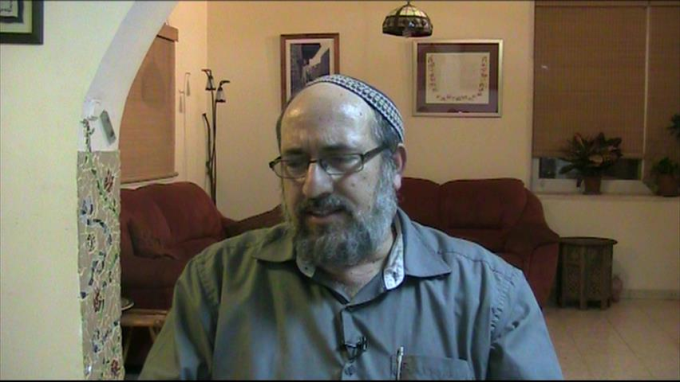
Ein Aya Complete G-dliness Doesn't Weaken But Enhances Natural Drives
Ein Aya Shabat Chapter B Paragraph 50









Rabbis in Midrash























Lessons
fast navigation









Various Events FOR WHOM NOT TO VOTE
Rav Zvi Yehuda Kook stressed that Israeli politics is G-dly, so I have no problem answering this common question on a Torani blog. Also, Free-Will is a G-d-given right and obligation, to "destine one's fate" (R. Soloveichik, Kol Dodi Dofek, 67), so I obviously don't tell others how to vote. But once not a few (especially young) have already asked, a couple of personal words from experience and thoughts from chazal & Rav Kook which may be of help to others, mainly for whom NOT to vote.

P'ninat Mishpat Fallout from Failure to Install Elevator – part II
based on ruling 85007 of the Eretz Hemdah-Gazit Rabbinical Courts






