Yeshiva
Beit Midrash
- Jewish Laws and Thoughts
- Personality Development
- Pathways in Personality Development

The Torah study is dedicatedin the memory of
Refael ben Yosef
The most praiseworthy intention a person can have when serving God is to bring honor to His name. This is the sort of intention sought by the pious, a truly unique class of people. It is achieved after the heart becomes filled with love for God, when a person sincerely desires that God's honor be magnified, when a person is pained by any belittlement of God's honor.
One who reaches this level will also want other people to magnify God's honor. He will greatly desire that all other people magnify the honor of Heaven, and he will suffer when others diminish God's honor. He will be all the more pained when he himself diminishes the honor of heaven, intentionally or inadvertently, or because of a weakness of character which prevents him from eschewing all sin, as it is written (Ecclesiastes 7:20), "A man is not righteous in the land, who will do good and not sin."
Pathways in Personality Development (52)
Rabbi Zalman Baruch Melamed
38 - 38. Love and Devotion to God
39 - 39. For the Sake of God's Honor
40 - 40. The Lofty Service of the Pious
Load More
It has thus been set forth in Tanna d'bei Eiliyahu (Chapter 4): "Every sage in Israel who possesses the words of Torah according to their true significance and grieves for the honor of the Holy One Blessed be He and for the honor of Israel all his days, and lusts and feels pain for the honor of Jerusalem and of the Temple and for the swift flowering of salvation and the ingathering of the exiles, attains to the infusion of the Divine spirit in his words... "
And so, such a pious person, in addition to performing God's commandments with the praiseworthy intention of honoring Him, is constantly anguished because of the Temple's ruined state and the exile of the Jewish people. He is tormented because these matters diminish God's honor, and he longs for the redemption of Israel because this will bring honor to God's blessed name.
A person should not say, "Who am I that I should pray for the ingathering of exiles and the restoration of Jerusalem and the Holy Temple? My prayer certainly is not capable of causing such an ingathering or prompting Israel's salvation." It is important to realize that such prayer itself brings pleasure to God; He is happy that His children make such requests.
The sages, in order to prevent people from saying such things, tell us that this is why God created all of humanity from an individual person - to teach us the value of every single individual, for each of us is capable of producing an entire world.
And when Israel does not awaken to pray for the redemption and for the magnification of God's honor, the prophet storms (Isaiah 59:16), "And he saw that there was no man and he was amazed that there was no contender" and (Ibid. 63:5), "And I looked and there was no helper, and I was amazed and there was no supporter" and (Jeremiah 30:17), "It is Zion; no one inquires after it."
And the sages say that from here we learn that one must inquire after Zion, for God's glory will not be magnified if Israel is not redeemed. These two matters are interdependent, as Tanna d'bei Eliyahu says, "And he grieves over the honor of the Holy One Blessed be He and over the honor of Israel." Regarding a person who performs commandments without such intention, the verse states (Isaaih 40:6), "All flesh is grass and all of his kindness is as the blossoming of the field" and the sages interpret this to mean that "all of their kindnesses are performed for their own sake, for their own good and pleasure."
In sum, perfect intention contains two ingredients: 1) a person must, while performing any religious act, have the intention to bring pleasure, and thus honor, to God. 2) a person must request that God's honor be wholly reestablished, and this is achieved when Israel attains honor and tranquility, for this brings pleasure to God and vests him with the most supreme honor.
---
Some of the material in the above article was taken from Feldheim's translation of Mesillat Yesharim, "The Path of the Just."
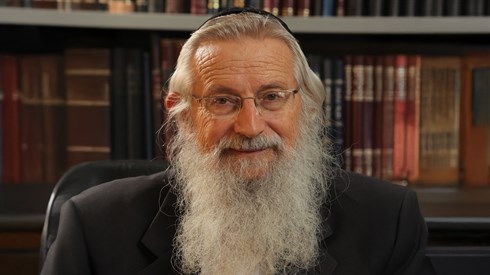




Rabbis in Midrash























Lessons
fast navigation










Various Events FOR WHOM NOT TO VOTE
Rav Zvi Yehuda Kook stressed that Israeli politics is G-dly, so I have no problem answering this common question on a Torani blog. Also, Free-Will is a G-d-given right and obligation, to "destine one's fate" (R. Soloveichik, Kol Dodi Dofek, 67), so I obviously don't tell others how to vote. But once not a few (especially young) have already asked, a couple of personal words from experience and thoughts from chazal & Rav Kook which may be of help to others, mainly for whom NOT to vote.

P'ninat Mishpat Fallout from Failure to Install Elevator – part II
based on ruling 85007 of the Eretz Hemdah-Gazit Rabbinical Courts











