Yeshiva
Beit Midrash
- Sections
- Chemdat Yamim
- P'ninat Mishpat

Ruling: There are two parts to creating a binding agreement – gemirut da’at (a firm decision) and an act of kinyan. Regarding gemirut da’at, we see that def not only received the price estimate but commented on matters relating to it, including asking about payment in installments and asking whether he would receive receipts for his payments. In electronic messaging and voice messages, never did it come up that def did not accept the amount that had been asked. Therefore, we must conclude that pl had decided to accept the fee of 24,000 NIS.
Regarding the act of kinyan, which makes the agreement permanent, there were actually multiple ones that were done. For one, the money paid effects a kinyan kesef (money). Secondly, the beginning of work is also a kinyan, specifically in the realm of workers (see Ramban, Bava Metzia 76b). Therefore, whatever conditions were in place at that time became binding. It is not necessary to sign on a contract or even have one if it is clear what the agreement is, and a price estimate which was never openly put in question is proof thereof. It is less clear if traveling to the place of the work is a valid kinyan regarding work that is paid by the job (kablanut) (see doubt on the matter in Pitchei Choshen, Sechirut 7:(9)), but we have seen that there are other kinyanim that clearly apply here.
One might think that since there is disagreement whether pl agreed to a reduction, that we would say that the one who wants to receive more money must prove that he deserves it. However, this is not so here on a few grounds. In general, we say that a doubt that arose after a kinyan was made does not undo that which occurred through the kinyan (see Bava Batra 29b). Along these lines, if there is a status quo of obligation (chezkat chiyuv), we say that we will go through with the assumption of obligation until proven otherwise (see Taz to Choshen Mishpat 190:13). Finally, the claim that the other party was mochel (relinquished rights) is a particularly difficult claim to accept (Rama, CM 70:1). Whereas the claim that one paid the obligation can be a strong one, that is because obligations are made to be paid (see Rav Nachum Persovitz to Bava Batra 5b). In contrast, obligations are not made to be relinquished by the one who deserves to take advantage of them.
Therefore, def must pay the full amount due based on the price estimate.
P'ninat Mishpat (835)
Beit Din Eretz Hemda - Gazit
752 - P'ninat Mishpat: Hezek Re’iya in Our Times
753 - P'ninat Mishpat: How Much Was Agreed to Pay for Renovations?
754 - P'ninat Mishpat: Realtor Fee Despite the Buyer’s Refusal?
Load More
Beit Din Eretz Hemda - Gazit
P'ninat Mishpat A Commercial Rental for a Closed Business – part II
based on ruling 80047 of the Eretz Hemdah-Gazit Rabbinical Courts
P'ninat Mishpat Repercussions of a Sale that Turned Out Not Happening – part III
(based on ruling 83045 of the Eretz Hemdah-Gazit Rabbinical Courts)
P'ninat Mishpat P'ninat Mishpat: Complaints about Contractor’s Work – part II
(based on ruling 83037.1 of the Eretz Hemdah-Gazit Rabbinical Courts)
P'ninat Mishpat P'ninat Mishpat: A Seller with Questionable Rights to the Property – part II
based on ruling 84062 of the Eretz Hemdah-Gazit Rabbinical Courts
P'ninat Mishpat P'ninat Mishpat: Problematic Lights?
based on appeal of ruling 84085 of the Eretz Hemdah-Gazit Rabbinical Courts




Rabbis in Midrash























Lessons
fast navigation









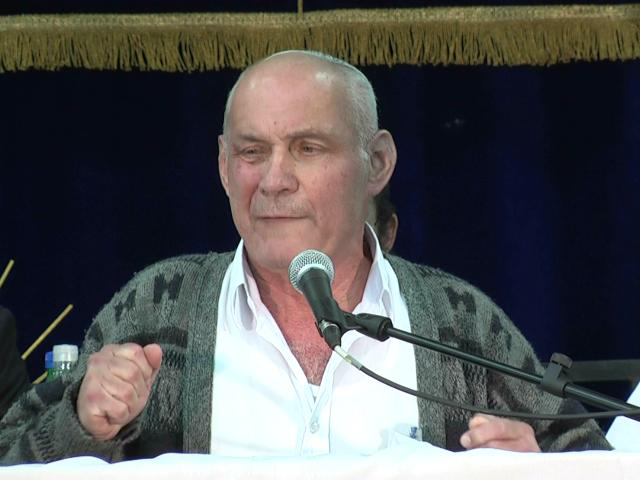

Various Events FOR WHOM NOT TO VOTE
Rav Zvi Yehuda Kook stressed that Israeli politics is G-dly, so I have no problem answering this common question on a Torani blog. Also, Free-Will is a G-d-given right and obligation, to "destine one's fate" (R. Soloveichik, Kol Dodi Dofek, 67), so I obviously don't tell others how to vote. But once not a few (especially young) have already asked, a couple of personal words from experience and thoughts from chazal & Rav Kook which may be of help to others, mainly for whom NOT to vote.
P'ninat Mishpat Fallout from Failure to Install Elevator – part II
based on ruling 85007 of the Eretz Hemdah-Gazit Rabbinical Courts











