Yeshiva
Beit Midrash
- Torah Portion and Tanach
- Bereshit
- Vayechi

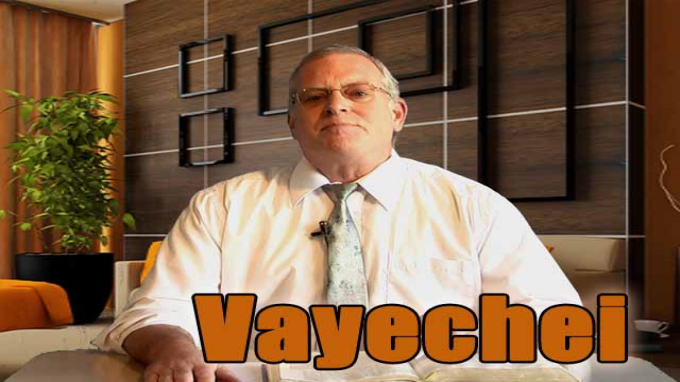
Yakov & Yosef, it begins with the word "Vayechi."
We are all familiar with the idea that "the
righteous, even in death, are considered alive,"
for their influence & effect may carry on far
beyond their years. This lesson we learned way
back in parshat Chaye Sara – literally, "the life
of Sara"- which was centered exclusively on her death & burial.
But something seems strange here. There are 6
different parshiyot in the Torah that are named
for individuals: Noach, (Chaye) Sara; Yitro,
Pinchas, Balak & Korach. It is certainly a great
z’chut to have your name pronounced by millions
for thousands of years! So I ask you: why is this
closing sedra of ours not called "Vayechi
Yakov?!" After all, Chaye Sara does not begin
with the word "Sara;" in fact, it is the third
word in the sedra, while Yakov’s name is the
second in this Sedra! It seems that Yakov’s name
is almost being purposely left off. Why?
We have a rather dramatic tradition that "Yakov
did not die." This is loosely based on the fact
that the pasuk says, "he expired & was gathered
to his people;" rather than saying the more
common "he died," as it says about Avraham &
Yitzchak. That is why we have the popular saying
& song, "Od Avinu Chai, our father still lives."
I want to suggest that, while all the Avot &
Imahot left their mark on future generations,
there is something special about Yakov. Yakov
represents the totality of Am Yisrael; he was not
only the most prominent of the Avot, he was
literally the "father of our country," via the
name Yisrael that is both personal & national.
Yakov had the notable distinction of giving rise
to all Jews & has the bracha of all his offspring
remaining connected to the Jewish People. No, his
children were not always perfect: Yehuda had his
questionable tryst with Tamar, Yosef was sold
into slavery, Efraim would lead a "breakaway"
kingdom, Binyamin’s tribe was involved in the
horrible "pilegesh B’Giva" incident & so forth.
But - there is no Yishmael or Esav in Yakov’s
lineage, no evidence of his offspring deserting
the fold en masse and joining a new religion.
Therefore it seems to me that "Vayechi" is
referring to much more than just Yakov, & so the
word stands alone. Tying it to Yakov would be
limiting it, for "Vayechi" encompasses all the
millions of Jews through the centuries who
proudly identify as descendants of this
patriarch, who cling tenaciously to their faith
in the most challenging of situations. They might
stray from a total observance of the Mitzvot,
they might even be a Jew "in name only," but
that, too, is a merit in their favor, if they maintain some connection.
There is a story about two young boys trying to
escape the Chevron massacre in 1929. They climbed
a tree & were hiding there when a group of Arabs
ran by & saw them. One said, "look at those Arab
boys in the tree!" One of the boys yelled out,
"we’re not Arabs, we are Jews!" They were killed,
but they were killed as Jews, much like Daniel
Pearl, who proclaimed, "I am a Jew!" just before
he was murdered by terrorists.
Am Yisrael lives & it can never be destroyed as
long as we refuse to relinquish our title as Jews, as Bnei Yisrael/Yakov.
Rabbi Stewart Weiss
Was ordained at the Hebrew Theological College in Skokie, Illinois, and led congregations in Chicago and Dallas prior to making Aliyah in 1992. He directs the Jewish Outreach Center in Ra'anana, helping to facilitate the spiritual absorption of new olim.
Jewish Laws and Thoughts Shul “etiquette:” can we honor Hashem while respecting our fellow congregants?






Rabbis in Midrash























Lessons
fast navigation










Hosha'ana Rabba FLYDUBAI & HOSHANA RABBA- ANI VAHU HOSHIA NA- I & HIM SAVE US
"Ani vaHu Hoshia Na", "I and Him, Save Us". We don't just pray to Him, but we also pray to and for ourselves that we should emulate and educate our children to have that instinctive altruism with which He created the world. President Trump seemed amused about Yaniv Hayon, our PLUMBER who confidently worked with G-d like Superman (he learned from a pilot on a TV show!) to save 174 lives on the Dubai hijacking, but we in Israel are totally accustomed already 78 years to our plumbers, teachers, garbage-men, rabbis, farmers & doctors being Hashem's shlichim! This is what Zionism is about.
Moreshet Shaul Hashem Is your Shadow – part I
Based on Siach Shaul, Pirkei Machshava V’Hadracha p. 420 – an address from 1941

P'ninat Mishpat A Non-Contractor in Changing Times – part I
(based on ruling 85128 of the Eretz Hemdah-Gazit Rabbinical Courts)
Moreshet Shaul Our King on Rosh Hashana, Our Father on Yom Kippur.
Based on Aroch Siach, p. 221 (Rav Shaul Yisraeli)






