Yeshiva
Beit Midrash
- Torah Portion and Tanach
- Bamidbar
- Beha'alotcha

Our Sedra is known as Parshat Hamit’lon’nim, of the Complainers. Our downward spiral as a nation from an exalted People who received the Torah directly from G-d, to a wandering generation destined to die out in the desert, began with our grousing. We kvetched about the hardships of traveling in the desert; about the lack of meat & water; even about the miraculous Mahn that fell from the heavens & had any taste imaginable.
Moshe, our loyal defense attorney, tries to present our case in a positive light. He refers to us being "on foot," hinting to G-d that walking through the brutal desert was no simple thing & we could be excused for bemoaning our hardship. He says "asher Anochi b’kirbo;" literally, Anochi (i.e. Hashem) is still among the nation, that when all is said & done, we still are a holy, G-dly people.
But Moshe is also stressing - by saying "Asher anochi b'kirbo - and I am among the nation" - that he is but a part of the general community of Am Yisrael. I want to elaborate on this simple yet sublime sentence.
When Bnei Yisrael complain about the desert fare, about what they miss most from their days in Egypt, they davka single out 5 specific foods: cucumbers, leeks, onions, garlic & watermelon. What do these 5 have in common? Rashi says that these foods are dangerous for nursing mothers. And so, although the Mahn could taste like whatever food one imagined, it could not taste like these 5 items, so as not to bring harm to the nursing women.
Asks the Lubavitcher Rebbe: Why deny the entire nation these foods, if they negatively affected only a minority? Why not just prevent the Mahn from tasting like these foods for only the nursing mothers, but not for everyone else?
He answers: The nursing mothers, who are nurturing the new generation that will enter Israel, might be distressed to see others eating those foods which they desire, yet cannot eat. So, to empathize with their feelings, all the people must sacrifice their enjoyment of those things.
A true leader, like Moshe, is sensitive to the needs of everyone, not just himself. He lets it be known that he will not enjoy any special privileges or protected position that is denied his people. He may be the leader, but he is still one of us. Indeed, it was his very insistence on being one of us - when he left the Egyptian palace to "join his brothers" - that qualified him to be our leader in the first place!
Leaders, present or future, are you listening??
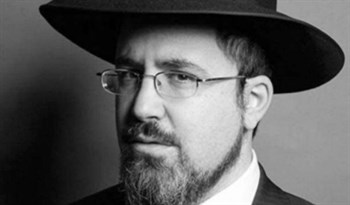
Rabbi Stewart Weiss
Was ordained at the Hebrew Theological College in Skokie, Illinois, and led congregations in Chicago and Dallas prior to making Aliyah in 1992. He directs the Jewish Outreach Center in Ra'anana, helping to facilitate the spiritual absorption of new olim.
Jewish Laws and Thoughts Shul “etiquette:” can we honor Hashem while respecting our fellow congregants?



Rabbis in Midrash























Lessons
fast navigation




Various Events FOR WHOM NOT TO VOTE
Rav Zvi Yehuda Kook stressed that Israeli politics is G-dly, so I have no problem answering this common question on a Torani blog. Also, Free-Will is a G-d-given right and obligation, to "destine one's fate" (R. Soloveichik, Kol Dodi Dofek, 67), so I obviously don't tell others how to vote. But once not a few (especially young) have already asked, a couple of personal words from experience and thoughts from chazal & Rav Kook which may be of help to others, mainly for whom NOT to vote.

P'ninat Mishpat Fallout from Failure to Install Elevator – part II
based on ruling 85007 of the Eretz Hemdah-Gazit Rabbinical Courts