Yeshiva
Beit Midrash
- Torah Portion and Tanach
- Vayikra
- Tazria

The Rabbis moralised the condition of tzara’at – often translated as leprosy – the subject that dominates both Tazria and Metzora. It was, they said, a punishment rather than a medical condition. Their interpretation was based on the internal evidence of the Mosaic books themselves. Moses’ hand became leprous when he expressed doubt about the willingness of the people to believe in his mission (Ex. 4:6-7). Miriam was struck by leprosy when she spoke against Moses (Num. 12:1-15). The metzora (leper) was a motzi shem ra: a person who spoke slightingly about others.
Evil speech, lashon hara, was considered by the Sages to be one of the worst sins of all. Here is how Maimonides summarises it:
The Sages said: there are three transgressions for which a person is punished in this world and has no share in the world come – idolatry, illicit sex, and bloodshed – and evil speech is as bad as all three combined. They also said: whoever speaks with an evil tongue is as if he denied God . . . Evil speech kills three people – the one who says it, the one who accepts it, and the one about whom it is said. (Hilchot Deot 7:3)
Is it so? Consider just two of many examples. In the early 13th century, a bitter dispute broke out between devotees and critics of Maimonides. For the former, he was one of the greatest Jewish minds of all time. For the latter, he was a dangerous thinker whose works contained heresy and whose influence led people to abandon the commandments.
There were ferocious exchanges. Each side issued condemnations and excommunications against the other. There were pamphlets and counter-pamphlets, sermons and counter-sermons, and for while French and Spanish Jewry were convulsed by the controversy. Then, in 1232, Maimonides’ books were burned by the Dominicans. The shock brought a brief respite; then extremists desecrated Maimonides’ tomb in Tiberius. In the early 1240s, following the Disputation of Paris, Christians burned all the copies of the Talmud they could find. It was one of the great tragedies of the Middle Ages.
What was the connection between the internal Jewish struggle and the Christian burning of Jewish books? Did the Dominicans take advantage of Jewish accusations of heresy against Maimonides, to level their own charges? Was it simply that they were able to take advantage of the internal split within Jewry, to proceed with their own persecutions without fear of concerted Jewish reprisals? One way or another, throughout the Middle Ages, many of the worst Christian persecutions of Jews were either incited by converted Jews, or exploited internal weaknesses of the Jewish community.
Moving to the modern age, one of the most brilliant exponents of Orthodoxy was R. Meir Loeb ben Yechiel Michal Malbim (1809-1879), Chief Rabbi of Rumania. An outstanding scholar, whose commentary to Tanach is one of the glories of the nineteenth century, he was at first welcomed by all groups in the Jewish community as a man of learning and religious integrity. Soon, however, the more ‘enlightened’ Jews discovered to their dismay that he was a vigorous traditionalist, and they began to incite the civil authorities against him. In posters and pamphlets they portrayed him as a benighted relic of the Middle Ages, a man opposed to progress and the spirit of the age.
One Purim, they gifted him with a food parcel which contained pork and crabs, with an accompanying message: ‘We, the local progressives, are honoured to present these delicacies and tasty dishes from our table as a gift to our luminary.’ Eventually, in response to the campaign, the government withdrew its official recognition of the Jewish community, and of Malbim as its Chief Rabbi, and banned him from delivering sermons in the Great Synagogue. On Friday, 18 March 1864, policemen surrounded his house early in the morning, arrested him, and imprisoned him. After the Sabbath, he was placed on a ship and taken to the Bulgarian border, where he was released on condition that he never return to Rumania. This is how the Encyclopaedia Judaica describes the campaign:
M. Rosen has published various documents which disclose the false accusations and calumnies Malbim’s Jewish-assimilationist enemies wrote against him to the Rumanian government. They accused him of disloyalty and of impeding social assimilation between Jews and non-Jews by insisting on adherence to the dietary laws, and said, ‘This Rabbi by his conduct and prohibitions wishes to impede our progress.’ As a result of this, the Prime Minister of Rumania issued a proclamation against the ‘ignorant and insolent’ Rabbi... In consequence the minister refused to grant rights to the Jews of Bucharest, on the grounds that the Rabbi of the community was ‘the sworn enemy of progress’.
Similar stories could be told about several other outstanding scholars – among them, Rabbi Zvi Hirsch Chajes, Rabbi Azriel Hildesheimer, Rabbi Yitzhak Reines, and even the late Rabbi Joseph Soloveitchik of blessed memory, who was brought to court in Boston in 1941 to face trumped-up charges by the local Jewish community. Even these shameful episodes were only a continuation of the vicious war waged against the Hassidic movement by their opponents, the mitnagdim, which saw many Hassidic leaders (among them the first Rebbe of Chabad, Rabbi Shneur Zalman of Ladi) imprisoned on false testimony given to the local authorities by other Jews.
For a people of history, we can be bewilderingly obtuse to the lessons of history. Time and again, unable to resolve their own conflicts civilly and graciously, Jews slandered their opponents to the civil authorities, with results that were disastrous to the Jewish community as a whole. Despite the fact that the whole of rabbinic Judaism is a culture of argument; despite the fact that the Talmud explicitly says that the school of Hillel had its views accepted because they were ‘gentle, modest, taught the views of their opponents as well as their own, and taught their opponents’ views before their own’ (Eruvin 13b) – despite this, Jews have continued to excoriate, denounce, even excommunicate those whose views they do not understand, even when the objects of their scorn (Maimonides, Malbim, and the rest) have been among the greatest-ever defenders of Orthodoxy against the intellectual challenges of their age.
Of what were the accusers guilty? Only evil speech. And what, after all, is evil speech? Mere words. Yet words have consequences. Diminishing their opponents, the self-proclaimed defenders of the faith diminished themselves and their faith. They managed to convey the impression that Judaism is simple-minded, narrow, incapable of handling complexity, helpless in the face of challenge, a religion of anathemas instead of arguments, excommunication instead of reasoned debate. Maimonides and Malbim took their fate philosophically. Yet one weeps to see a great tradition brought so low.
What an astonishing insight it was to see leprosy – that disfiguring disease – as a symbol and symptom of evil speech. For we truly are disfigured when we use words to condemn, not communicate; to close rather than open minds; when we use language as a weapon and wield it brutally. The message of Metzora remains. Linguistic violence is no less savage than physical violence, and those who afflict others are themselves afflicted. Words wound. Insults injure. Evil speech destroys communities. Language is God’s greatest gift to humankind and it must be guarded if it is to heal, not harm.
-To engage further with Rabbi Sacks’s teachings, or to sign up to his mailing list, please go to www.rabbisacks.org
Around the Shabbat Table:
1. Do you think the sin of lashon hara justifies public shaming? Why?
2. Where do you see the most lashon hara in the world today? What can be done to address this?
3. Do you think social media brings more good than bad to the world?


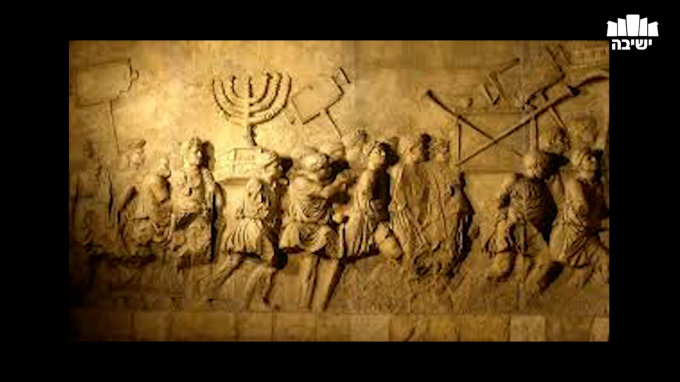




Rabbis in Midrash























Lessons
fast navigation











Various Events FOR WHOM NOT TO VOTE
Rav Zvi Yehuda Kook stressed that Israeli politics is G-dly, so I have no problem answering this common question on a Torani blog. Also, Free-Will is a G-d-given right and obligation, to "destine one's fate" (R. Soloveichik, Kol Dodi Dofek, 67), so I obviously don't tell others how to vote. But once not a few (especially young) have already asked, a couple of personal words from experience and thoughts from chazal & Rav Kook which may be of help to others, mainly for whom NOT to vote.

P'ninat Mishpat Fallout from Failure to Install Elevator – part II
based on ruling 85007 of the Eretz Hemdah-Gazit Rabbinical Courts







