Yeshiva
Beit Midrash
- Shabbat and Holidays
- Purim & The Month of Adar
- The Laws of Purim
- Sections
- Peninei Halakha

Moreover, the disunity of the Jewish people at the time enabled Haman to denounce them before King Aĥashverosh: "There is a certain people, scattered and dispersed among the other peoples in all the provinces of your realm…. If it please Your Majesty, let an edict be drawn for their destruction" (Esther 3:8-9). Similarly, Haman's decree was foiled by Jewish solidarity, as Esther said to Mordechai, "Go, assemble all the Jews who live in Shushan, and fast in my behalf; do not eat or drink for three days, night or day" (ibid. 4:16). In this way, Esther succeeded in nullifying the decree.
Indeed, Jewish unity is a precondition for receiving the Torah, as it says in reference to the giving of the Torah, "Israel encamped (vayiĥan) there in front of the mountain" (Shemot 19:2). Noting the verse’s use of the singular verb vayiĥan, the Sages explain that Israel encamped there "like one man with one heart" (Rashi). They did this "so that they would love each other, and thereby receive the Torah" (Mekhilta ad loc.). Only then did God say, "Behold, the time has come for Me to give the Torah to My children" (Vayikra Rabba 9:9). Just as a Torah scroll that is missing a single letter is entirely invalid, so too, if one of the 600,000 Jews who stood at Mount Sinai when the Torah was given would have been missing, we would not have been privileged to receive the Torah. The same is true of Purim. As a result of the harsh decree that unified the Jewish people, we were redeemed and were even privileged to accept the Torah anew, as the Sages relate that Israel accepted the Torah anew in the time of Aĥashverosh, out of love (Shabbat 88a). The same is true each and every year: We are able to receive the Torah anew, joyously, because of the unity that is revealed on Purim.
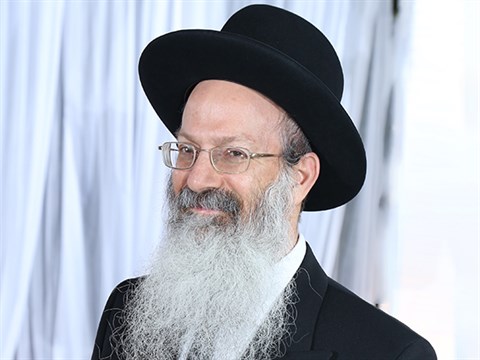
Rabbi Eliezer Melamed
Rosh Yeshiva of Har Bracha and rabbi of the settlement.

Peninei Halakha 18. Torah Verses in the Prayers and in the Berakha of She-asa Li Kol Tzorki
Chapter 10: The Laws of Tisha Be-Av




Rabbis in Midrash






















Lessons
fast navigation



Various Events FOR WHOM NOT TO VOTE
Rav Zvi Yehuda Kook stressed that Israeli politics is G-dly, so I have no problem answering this common question on a Torani blog. Also, Free-Will is a G-d-given right and obligation, to "destine one's fate" (R. Soloveichik, Kol Dodi Dofek, 67), so I obviously don't tell others how to vote. But once not a few (especially young) have already asked, a couple of personal words from experience and thoughts from chazal & Rav Kook which may be of help to others, mainly for whom NOT to vote.

P'ninat Mishpat Fallout from Failure to Install Elevator – part II
based on ruling 85007 of the Eretz Hemdah-Gazit Rabbinical Courts










