Yeshiva
Beit Midrash
- Sections
- Peninei Halakha
- Shabbat and Holidays
- Laws of Hanukkah
- Peninei Halkha - Hanukkah

The mitzva of lighting Ĥanuka candles is very beloved. In general, there are two levels of mitzva observance: fulfillment of the basic obligation and mehadrin, going beyond the basics to beautify the mitzva. When it comes to Ĥanuka candles, however, there are three levels: the basic obligation, mehadrin, and mehadrin min ha-mehadrin, the most beautiful way. Moreover, all of Israel fulfills this mitzva according to the practice of mehadrin min ha-mehadrin.
Minimally, every household must light one candle every night of Ĥanuka on behalf of all household members. This candle enables them to remember and publicize the miracle of Ĥanuka. Those who go above and beyond this (mehadrin) light one candle for every adult member of the household. For example, if four adults live in the house, they light four candles every night of Ĥanuka, demonstrating that everyone has a share in the mitzva.
Those who follow the custom of mehadrin min ha-mehadrin light a different number of candles each night of Ĥanuka. The Sages disputed the number of candles that one must light according to this custom. According to Beit Shammai, we light eight candles on the first night and subtract one candle every subsequent night, eventually lighting one candle on the last night. According to this viewpoint, the number of candles corresponds to the number of days remaining in the holiday of Ĥanuka. On the first night, we light eight candles because there are eight days left in the holiday, and on the last night we light one candle because there is only one day left. According to Beit Hillel, we light one candle on the first night and add a candle each subsequent night, eventually lighting eight candles on the last night. According to them, the number of candles corresponds to the number of days that have already passed – that is, every night we light candles according to the number of days the miracle lasted. This way, we demonstrate the magnitude of the miracle, because every additional day that the Hasmoneans lit the Menora in the Temple using the same small cruse of oil, the miracle increased. In addition, this method allows us to ascend in holiness, until we reach the pinnacle on the eighth night when we light eight candles (Shabbat 21b). All of Israel has accepted the custom of mehadrin min ha-mehadrin, according to Beit Hillel’s interpretation (sa 671:2).
What emerges, in practice, is that we light 36 candles over the course of the eight days of Ĥanuka. The prevalent custom, though, is to light an additional candle every night, to serve as a shamash (lit., "attendant"), so that if one needs to use the light of the candles, he may use the light of the shamash. After all, one may not derive benefit from the Ĥanuka candles. However, we separate the shamash from the other candles, because the main objective of the custom of mehadrin min ha-mehadrin is to make the number of candles recognizable and thus demonstrate the increasing magnitude of the miracle (we will elaborate below, sections 10-11).
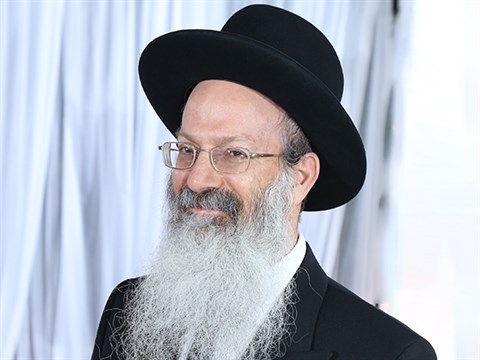
Rabbi Eliezer Melamed

Peninei Halakha 18. Torah Verses in the Prayers and in the Berakha of She-asa Li Kol Tzorki
Chapter 10: The Laws of Tisha Be-Av
The Laws of Purim 4. Traveling between Walled and Unwalled Cities
Chapter 17: Walled and Unwalled Cities



Rabbis in Midrash































Various Events FOR WHOM NOT TO VOTE
Rav Zvi Yehuda Kook stressed that Israeli politics is G-dly, so I have no problem answering this common question on a Torani blog. Also, Free-Will is a G-d-given right and obligation, to "destine one's fate" (R. Soloveichik, Kol Dodi Dofek, 67), so I obviously don't tell others how to vote. But once not a few (especially young) have already asked, a couple of personal words from experience and thoughts from chazal & Rav Kook which may be of help to others, mainly for whom NOT to vote.

P'ninat Mishpat Fallout from Failure to Install Elevator – part II
based on ruling 85007 of the Eretz Hemdah-Gazit Rabbinical Courts










