Yeshiva
Beit Midrash
- Jewish Laws and Thoughts
- Jewish Thought
- Jewish Thought Study
- Sections
- The Life of Tzaddikim
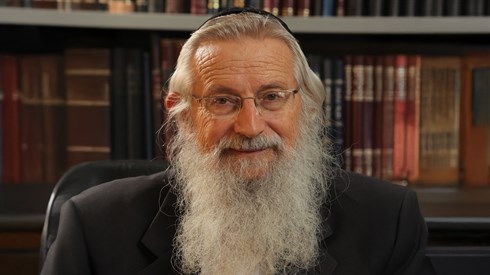
- Harav Tzvi Yehuda Hacohen Kook

The late Chief Rabbi Avraham Shapira, former Rosh Yeshiva of Merkaz HaRav Kook, once said, "Ever since Rav Tzvi Yehuda Kook passed away [in 1982], there has been a general weakening in emuna."
The loss of tzaddikim has an effect on the world. "Save, O Lord - for the pious are gone; for the faithful have vanished from among men" (Psalms 12,2). That is to say, when a righteous man passes away, the world suffers a loss of emuna and trust. Emuna diminishes because tzaddikim help ensure that it remains strong, and when they leave, it becomes weaker. Rav Tzvi Yehuda was a great man of emuna, and his loss left a great vacuum of emuna in the world.
All of the confusion and weakness in our national stand regarding retaining the entire Land of Israel stems from a weakness of emuna. What emuna are we referring to? Precisely this great emuna in G-d, in the Divine promise to give this Land exclusively to the Jewish Nation, that "the time has come to favor Zion" (Tehillim 102,14), and that G-d is He Who is "leading us upright to our Land" – it is this emuna on which is founded the strength we need to retain the integrity of our entire Land, and not agree to give parts of it away.
Where there is emuna, there are no fears and no imaginary dreams of benefits of dividing our Land. When we see things through the glasses of emuna, reality looks totally different. The hardships appear smaller, and the ability to overcome them appears larger.
We know that all the difficulties that we face along the road to our Redemption are so that we may wrest from them new successes. As the Prophet Jeremiah prophesied, "It is a time of distress for Jacob, through which he shall be saved" – from the tribulation itself comes a new salvation. The difficulties are a test of our closeness to G-d and His mitzvot, and the tester – the Master of the Universe – is also He Who gives us the strengths to pass the test, as well as the power to rebuff all the difficulties and reject ideas that stem from weaknesses and fears.
R. Chanina, an Amoraic Sage (ca. 1700 years ago), was a great man of emuna who lived with the constant recognition that "there is none other than Him." This came to the fore when he encountered a mechashefa (witch) who sought to perform magic against him. He told her, "You can try, but you won't succeed – because there is none other than G-d." The stronger the emuna, the more strength there is to withstand challenges.
The Torah's commandments are "good advice," as the Zohar tells us: The 613 commandments given us by G-d are 613 good pieces of advice for Israel. G-d commands us to settle the Land – that means it is for our benefit. Retaining the entire Land for ourselves is for our benefit, and thus we are commanded not to allow gentiles to take over parts of the Land. G-d's advice is given for when we are unsure, when there are difficulties due to the presence of foreigners in the Land - and the Torah advises us for these circumstances: "Do not enable them to settle in the Land." This is for our own national benefit! We must therefore obey G-d's commandments and counsel, and settle and inherit the entire Land of Israel, as written: "You shall inherit the Land and settle in it" (Num. 33,53).
In order to get articles like this delivered straight to your inbox every week, subscribe to the Israel National Torah newsletter here.





Rabbis in Midrash

































Various Events FOR WHOM NOT TO VOTE
Rav Zvi Yehuda Kook stressed that Israeli politics is G-dly, so I have no problem answering this common question on a Torani blog. Also, Free-Will is a G-d-given right and obligation, to "destine one's fate" (R. Soloveichik, Kol Dodi Dofek, 67), so I obviously don't tell others how to vote. But once not a few (especially young) have already asked, a couple of personal words from experience and thoughts from chazal & Rav Kook which may be of help to others, mainly for whom NOT to vote.

P'ninat Mishpat Fallout from Failure to Install Elevator – part II
based on ruling 85007 of the Eretz Hemdah-Gazit Rabbinical Courts









