Yeshiva
Beit Midrash
- Torah Portion and Tanach
- Bamidbar
- Korach

The Torah study is dedicatedin the memory of
Yaakov Ben Behora
One could explain that in the immediate aftermath they were too scared to criticize Moshe but that they were emboldened as things calmed down. However, the Netziv profoundly uses the observations to explain each other. There was a qualitative difference between Moshe’s opponents. Korach, Datan, and Aviram had completely evil intentions and scorned Moshe and Aharon. They were swallowed up and disappeared from the scene. In contrast, the 250 who joined them were excited by Korach’s idea to increase the ranks of those who would serve Hashem in the Mishkan. For this reason, says the Netziv, the utensils used in their improper and ill-fated offering of ketoret could be incorporated in the mizbe’ach. While they were punished, it was in the manner of Aharon’s sons, Nadav and Avihu. They were remembered in a way that prompted others to learn the lesson from their serious mistake.
Upon seeing the respect given to the 250, the people thought that Moshe should have stopped their activities in a manner that protected their lives. Why did Moshe instruct them to bring incense as a deadly test? They were not aware that this was a Heavenly decree.
One can ask on the Netziv’s approach from the mishna in Avot: "Any dispute that is not for Heaven’s sake will not last ... this is the dispute of Korach and his congregation." After all, the Netziv said that the congregation’s intentions were reasonable?
The mishna, which mentions Korach and his congregation separately, may have been hinting that there were different levels of machloket going on simultaneously. The Netziv does point out that the 250 allowed their egos to carry them away and forget the crucial fact that Moshe was the "father of all prophets." Thus, this element of their dispute was not for Heaven’s sake, and Hashem put an end to their position in the dispute. The positive element of their behavior, including sincere service of Hashem with the ketoret, was eternalized in the mizbe’ach. Regarding Korach, there was nothing positive to salvage
We can learn important lessons. Even quality people with good intentions must avoid getting carried away and sinning terribly. Inversely, even those who sin terribly may be good people who, after receiving atonement for their sins, can leave some positive impact.

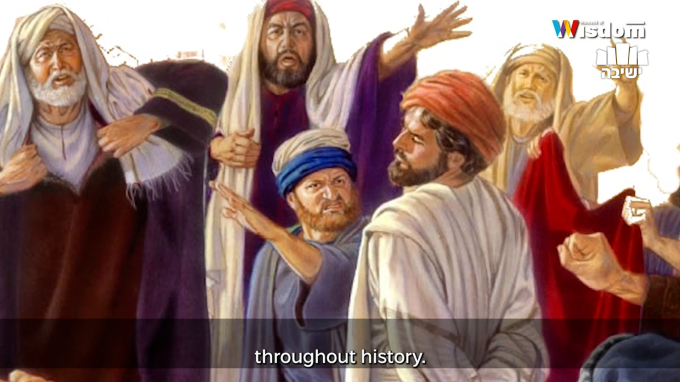







Rabbis in Midrash























Lessons
fast navigation











Hosha'ana Rabba FLYDUBAI & HOSHANA RABBA- ANI VAHU HOSHIA NA- I & HIM SAVE US
"Ani vaHu Hoshia Na", "I and Him, Save Us". We don't just pray to Him, but we also pray to and for ourselves that we should emulate and educate our children to have that instinctive altruism with which He created the world. President Trump seemed amused about Yaniv Hayon, our PLUMBER who confidently worked with G-d like Superman (he learned from a pilot on a TV show!) to save 174 lives on the Dubai hijacking, but we in Israel are totally accustomed already 78 years to our plumbers, teachers, garbage-men, rabbis, farmers & doctors being Hashem's shlichim! This is what Zionism is about.












