Yeshiva
Beit Midrash
- Sections
- Peninei Halakha
- Shabbat and Holidays
- Jewish Holidays
- IDF Memorial Day

From a halakhic standpoint, there is no need to institute a general memorial day for the holy soldiers who were killed in battle. Rather, one should do what the Jewish people have always done for any Jew who dies: on the yahrzeit (anniversary of death), a memorial prayer is recited and the deceased’s son or relatives recite Kaddish, study Torah, and give charity to elevate their loved one’s soul. Those who go beyond this hold a full memorial service with Torah lectures to elevate the deceased’s soul.
We have fought many wars throughout our long history, often losing more soldiers in one war than the IDF has lost in all of its battles combined. Nevertheless, the Sages never instituted a memorial day for those killed in battle. When we were victorious, we celebrated, and when we lost, we mourned individually. The only tragedy for which the Sages instituted public mourning, in the form of fast days, is the destruction of the Temple, which was a spiritual and national destruction. Indeed, the destruction of the Temple is the source of all the troubles, evil decrees, and bloodshed that our nation has suffered throughout the long exile. Even the Fast of Gedalia was instituted in commemoration of the Temple’s destruction, not because Gedalia’s righteousness warranted that all of Israel mourn his death each year. Rather, his assassination extinguished the last flicker of hope for the Jews who remained in Eretz Yisrael after the destruction of the First Temple.
Moreover, just a few years before the State of Israel was established, six million Jews were horrifically and cruelly murdered. They were our brothers no less than the soldiers who fell in battle, and they were far greater in number, more than 300 times the number of soldiers who have died in all of Israel’s wars. How, then, can we establish a day of mourning for Israel’s soldiers on the same scale as for the six million?
Rather, if a memorial day is warranted, it is on condition that we dedicate the day to educating the public about the essence and purpose of the nation of Israel and about the value of self-sacrifice on behalf of the Jewish people. Many people mistakenly believe that the more we bow our heads in grief and express our pain over the fallen soldiers through somber hues, the more we honor their memories. However, the opposite is true. Our attitude toward the fallen should be that they are holy; their entire lives were refined and sanctified through their self-sacrifice for the people and land of Israel. The Sages say about such people, “No one can dwell in the section of the Garden of Eden where those who were killed by the kingdom dwell” (Pesaĥim 50a). A nonbeliever thinks that the fallen are deader than the living, but a believing Jew knows that they are more alive than all the rest. They died young in this world, but they are truly alive in the everlasting world, the World to Come. They are much more alive than we are. They are holy, and, as the Sages say, “What is holy exists forever” (San. 92a).
By dying in sanctification of God’s name, they rose above the personal existence of each individual Jew to the all-encompassing level of the entire Jewish people. By sacrificing their lives for the Jewish people, they were elevated to the status of the Jewish people as a whole, and as a result they are more connected to God, the source of life. Therefore, in dying they added much life in both the World of Truth and this world. Moreover, it is to their credit that we can live in Israel today; everything we accomplish is thanks to them.
Sadly, people who lack faith, who do not understand the Jewish people’s past or its mission, have seized control of the Israel’s media and cultural life. In the beginning, the secularists still possessed an inkling of Judaism, based on what they heard in their parents’ home, but over time, alienation from Torah values took its toll and they turned Yom Ha-zikaron into a day of weakness and defeatism. Instead of honoring the memories of the fallen, trying to understand the essence of the nation of Israel, and investing meaning into the soldiers’ self-sacrifice, they emphasize the pain, despair, and destruction, portraying the deaths of these soldiers as meaningless. They appear to be honoring the fallen, but in reality, there is no greater affront to the honor of these martyrs than the inappropriate character that these people have attached to Yom Ha-zikaron. The fundamental flaw in their approach is their disregard for the Jewish national destiny for whose sake the soldiers sacrificed their lives.
If we nonetheless observe Yom Ha-zikaron, we must underscore the soldiers’ self-sacrifice in sanctification of God’s name. We must emphasize how they demonstrated to us that the vision of the ingathering of the exiles and the rebirth of the nation of Israel in its ancient homeland is so great that it is worth giving up one’s life in this world for its sake. This will strengthen us and inspire us to follow their lead. The children we bear and raise exist in their merit; the settlements we establish flourish because of them; the Torah we learn is theirs; the ethical Jewish society we want to build here, as the prophets foretold, is theirs. If we remember this, and exert a great deal of effort, we will be able to continue in their path, the path of self-sacrifice for the Jewish people. Then we will truly honor them, as holy and pure souls, illuminating the world and shining like the glow of the heavens.
This is also what we must say to the bereaved families, which produced these holy and courageous warriors: do not surrender to death; continue to live by their strength. Do not bow your heads; rather, stand up straight and tall in their honor. Lift your eyes beyond the ordinary horizon and look toward the vision of the redemption and the End of Days. And even if there are tears in your eyes, those are tears of grandeur.
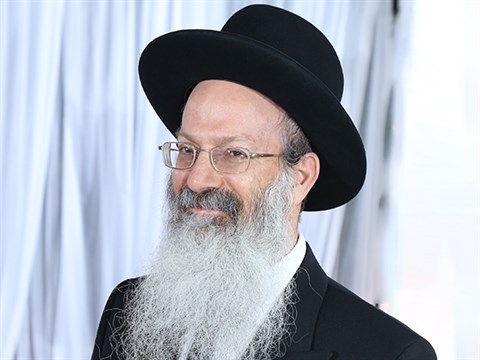
Rabbi Eliezer Melamed

Peninei Halakha 18. Torah Verses in the Prayers and in the Berakha of She-asa Li Kol Tzorki
Chapter 10: The Laws of Tisha Be-Av






Rabbis in Midrash

































Hosha'ana Rabba FLYDUBAI & HOSHANA RABBA- ANI VAHU HOSHIA NA- I & HIM SAVE US
"Ani vaHu Hoshia Na", "I and Him, Save Us". We don't just pray to Him, but we also pray to and for ourselves that we should emulate and educate our children to have that instinctive altruism with which He created the world. President Trump seemed amused about Yaniv Hayon, our PLUMBER who confidently worked with G-d like Superman (he learned from a pilot on a TV show!) to save 174 lives on the Dubai hijacking, but we in Israel are totally accustomed already 78 years to our plumbers, teachers, garbage-men, rabbis, farmers & doctors being Hashem's shlichim! This is what Zionism is about.











