Yeshiva
Beit Midrash
- Sections
- Peninei Halakha
- Shabbat and Holidays
- Jewish Holidays
- Yom Haatzmaut

According to R. Meshulam Rath, since Yom Ha-atzma’ut is a holiday on which Israel was saved, it is appropriate to recite the berakha of She-heĥeyanu on the day, as we do on all our holidays, including Purim and Ĥanuka. He believes, however, that the obligation to recite She-heĥeyanu depends on one’s level of joy. Therefore, one who is not particularly happy may recite the berakha but is not obligated to do so, while one who enjoys and is happy about the establishment of the State is obligated to recite She-heĥeyanu on Yom Ha-atzma’ut.
Many others maintain that one should not recite She-heĥeyanu on Yom Ha-atzma’ut, because the Sages instituted the recitation of this berakha only for holidays on which one may not do work, like the three festivals, Rosh Ha-shana, and Yom Kippur. The reason we recite She-heĥeyanu on Ĥanuka and Purim, on which work is not prohibited, is that we perform special mitzvot on these days: we read the megilla on Purim and light candles on Ĥanuka. The berakha does not pertain to the very essence of the day, as one only recites She-heĥeyanu over the essence of a holiday if work is prohibited on that day.
One who wants to go above and beyond and satisfy all opinions should wear a new garment and recite She-heĥeyanu on it, having in mind that the berakha applies to the holiday as well. If he is the ĥazan, it is best to recite the berakha on the garment right before Hallel. This way, the listeners can also fulfill their obligation.[8]
Some maintain that the salvation of Yom Ha-atzma’ut is similar to that of the Exodus from Egypt, and thus we must recite Hallel at night. This was R. Shlomo Goren’s custom, and some communities follow this practice. However, many authorities maintain that the practice of reciting Hallel on the night of Pesaĥ is a unique law, and we cannot invoke this law to support following this practice on other holidays. The proof for this is that we recite Hallel on the other holidays during the day alone. Therefore, one should not recite Hallel on the night of Yom Ha-atzma’ut. This is the practice of most of R. Zvi Yehuda Kook’s students.[9]
[8] R. Meshulam Rath’s position is found in Responsa Kol Mevaser 1:21. mb concurs in his bhl (692, s.v. "She-heĥeyanu"), writing that one recites She-heĥeyanu over the essence of a holiday, even if work is not prohibited. R. Rath adds that it is preferable to recite the berakha before the recitation of Hallel, as then it might be considered a berakha over the mitzva, like the She-heĥeyanu we recite before lighting the candles on Ĥanuka. He also relies on the opinion of Baĥ and others, who maintain that the principle that we rule leniently in a case of uncertainty regarding berakhot (i.e., one omits the berakha) does not apply to She-heĥeyanu. Ĥatam Sofer, oĥ 55, adds that in any case of uncertainty involving She-heĥeyanu, one must recite the berakha if he knows that he is happy. R. Goren concurs in Torat Ha-mo’adim, as does Mishpetei Uziel, oĥ 3:23. On the other hand, Yaskil Avdi 6:10 writes that one should not recite She-heĥeyanu on Yom Ha-atzma’ut, for the reasons stated above. He is also uncertain whether the miracle took place specifically on Yom Ha-atzma’ut. R. Ovadia Yosef writes the same in Yabi’a Omer 6:42, quoting many poskim who maintain that the principle that we rule leniently in a case of uncertainty regarding berakhot applies to She-heĥeyanu as well. This is also Beit Yosef’s opinion, and, according to Rambam, reciting a berakha le-vatala is prohibited by Torah law. R. Moshe Zvi Neriya agrees that one should not recite She-heĥeyanu on Yom Ha-atzma’ut.
[9] R. Goren’s position is found in Torat Ha-Shabbat Ve-hamo’ed. See R. Shmuel Katz’s article "Ha-Rabbanut Ha-Rashit Ve-Yom Ha-atzma’ut" (sec. 4, nn. 7, 8, 17, 18). A book titled Ke-lavi Shakhen, in memory of Gad Ezra, Hy"d, contains articles on this issue: one by R. Sherki, who supports reciting Hallel at night; and one by R. Yaakov Ariel, who opposes it. R. Moshe Zvi Neriya expressed this view before R. Ariel did (see Kovetz Hilkhot Yom Ha-atzma’ut Ve-Yom Yerushalayim), quoting several reasons why Hallel is recited specifically on Pesaĥ night, none of which are relevant to Yom Ha-atzma’ut. R. Ariel Edri concurs in a booklet called Shaĥar Ahaleleka. According to R. Hai Gaon, it seems that we recite Hallel on the first night of Pesaĥ because one must view himself as if he is actually leaving Egypt that night. Consequently, he must sing praise as the miracle occurs, an element that does not apply to any other holiday. Most rabbis accept this viewpoint, especially since prior to R. Goren’s tenure as Chief Rabbi, everyone agreed that Hallel pertains to the day alone. And when R. Goren publicized his ruling that Hallel should be recited at night, it stirred a dispute, and it is unclear whether the Chief Rabbinate Council agreed with his ruling. In practice, R. Zvi Yehuda Kook instructed his students at Yeshivat Mercaz HaRav to recite Hallel at night, in accordance with R. Goren’s ruling. However, it seems that he personally disagreed. Later on, when R. Avraham Shapiro became Chief Rabbi, the yeshiva stopped reciting Hallel at night. Most of R. Zvi Yehuda’s students follow this practice.
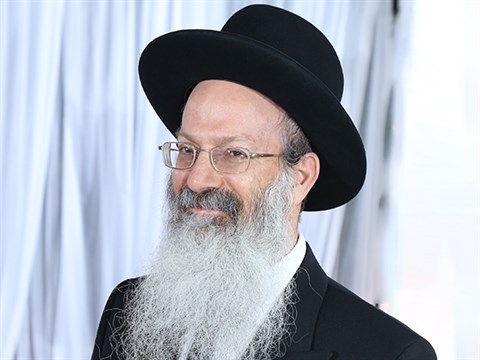
Rabbi Eliezer Melamed

Peninei Halakha 18. Torah Verses in the Prayers and in the Berakha of She-asa Li Kol Tzorki
Chapter 10: The Laws of Tisha Be-Av








Rabbis in Midrash
































Various Events FOR WHOM NOT TO VOTE
Rav Zvi Yehuda Kook stressed that Israeli politics is G-dly, so I have no problem answering this common question on a Torani blog. Also, Free-Will is a G-d-given right and obligation, to "destine one's fate" (R. Soloveichik, Kol Dodi Dofek, 67), so I obviously don't tell others how to vote. But once not a few (especially young) have already asked, a couple of personal words from experience and thoughts from chazal & Rav Kook which may be of help to others, mainly for whom NOT to vote.

P'ninat Mishpat Fallout from Failure to Install Elevator – part II
based on ruling 85007 of the Eretz Hemdah-Gazit Rabbinical Courts







