Yeshiva
Beit Midrash
- Sections
- Peninei Halakha
- Shabbat and Holidays
- Sefirat Haomer
- The Laws of Sefirat Ha'omer

A question arises regarding the issue of shaving during the omer period. May one who shaves regularly throughout the year do so during this period? Many authorities maintain that shaving is included in the prohibition of cutting one’s hair, so whenever haircuts are prohibited, shaving is prohibited as well. Most yeshiva students follow this practice, to the point that refraining from shaving has become the most prominent sign of mourning during the omer period.
Some poskim, however, maintain that there is a fundamental difference between haircuts and shaving: a haircut is special occasion that includes a joyous element. It is common that people get their hair cut in honor of holidays and celebratory events. In contrast, shaving is a routine practice nowadays, done daily or every few days in order to remove unsightly whiskers and stubble. Therefore, the custom to refrain from cutting one’s hair does not apply to shaving. According to this opinion, it is especially appropriate to shave on Fridays, to avoid greeting Shabbat in a disrespectful manner.
Those who want to rely on the lenient opinion may do so, and one should not rebuke them for this practice. However, it is proper for each person to follow the practice of his father or the instruction of his rabbi. Even though, technically, one may rely on the reasoning of those who rule leniently, we cannot ignore the fact that the custom to abstain from shaving during the omer period is a strong expression of one’s willingness to sacrifice for the sake of mitzva observance, so there is concern that abolishing this custom will harm one’s dedication to upholding traditional custom. Therefore, it is proper for each person to do as his father does, or as his rabbi instructs him to do, because, in this case, the issues of tradition and environmental influences are more important than the technicalities of whether the mourning customs apply to shaving.[9]
[9] Many authorities rule stringently, forbidding all shaving during the omer mourning period. So writes Kaf Ha-ĥayim 551:66. In section 493:19, he quotes the Aĥaronim as saying that one may shave only if not doing so will cause a loss of income. Igrot Moshe oĥ 4:102 permits shaving in order to avoid financial loss as well; for example, if one’s employers demand that he shave. On the other hand, one can argue that daily shaving is not like cutting one’s hair. After all, the concept of shaving daily did not exist when the custom to refrain from cutting one’s hair as a sign of mourning first began. And just as, with regard to a mourner’s prohibition to bathe, we distinguish between bathing for pleasure or refreshment and bathing in order to remove filth, so too, one could distinguish between festive shaving and shaving in order to remove unsightly facial hair. The purpose of all the mourning customs of the omer period is to avoid celebrating, not to exhibit mourning, and allowing beard stubble to remain on one’s face is an exhibition of mourning. Granted, one should not be lenient on this issue during shiva and shloshim, but just as we allow shaving during the year-long mourning period after the death of a parent, so may we be lenient during the omer period and the Three Weeks, until Rosh Ĥodesh Av. R. Hershel Schachter cites this position in Nefesh Ha-Rav (p. 191) in the name of R. Yosef Dov Soloveitchik. This is especially true with regard to shaving before Shabbat. After all, ma 551:14 cites Hagahot Asheri as saying that Ashkenazim, who customarily refrain from haircuts for the entire Three Weeks period, should not get haircuts even before Shabbat, because people do not cut their hair every week. This implies that those who have the custom of shaving every week may shave in honor of Shabbat. See bhl 551:3, which states that the Yerushalmi also indicates that one may shave in honor of Shabbat. In addition to all this, it should be noted that, originally, the only custom of mourning during the omer period was to refrain from getting married, and according to the Ge’onim, Jews already began observing this custom soon after R. Akiva’s students died. In contrast, the custom to avoid haircuts is first mentioned in the writings of the Rishonim: Orĥot Ĥayim, Shibolei Ha-leket, and others. Perhaps they instituted it after additional tragedies befell the Jewish people (like the Crusades; see Minhagei Yisrael, vol. 1, pp. 105, 112-117). Responsa Radbaz 2:687 writes that some people have a custom that they may cut their hair the entire month of Nisan, during which fasting and eulogizing is forbidden, while others maintain that one may get a haircut every Friday. He also permits getting a haircut on Rosh Ĥodesh Iyar, disputing the opinion of sa 493:3. His position implies that one may follow the more lenient opinions when it comes to this issue. The original Yemenite custom did not forbid haircuts during the omer period; this community began acting stringently only later on. R. David Mishreqi (the author of Shetilei Zeitim) and Maharitz (Responsa Pe’ulat Tzadik 2:76) rule that one should get a haircut on Erev Shabbat. Thus, when there is an uncertainty whether shaving has the same status as cutting one’s hair, one may certainly take into consideration those who rule leniently. See Responsa Ner Ezra, vol. 2, pp. 155-158, where the author concludes that one may shave before Shabbat, writing that this is the opinion of R. Shlomo Min-Hahar and R. Aharon Lichtenstein. R. Nachum Rabinovitch, rosh yeshiva of Yeshivat Birkat Moshe in Ma’ale Adumim, recommends that everyone act as his father does, to avoid a situation in which a father shaves and his son does not, or vice versa, thus derogating from the father’s honor.
Another reason to permit shaving on Fridays is that those who shave regularly usually feel great discomfort when they are unable to shave for several days. This may be similar to the dispensation allowing one to trim his mustache if it interferes with his eating, or to remove hairs that cause head sores or headaches. See Kaf Ha-ĥayim 493:17, which allows one to cut his hair in honor of Shabbat, if his long hair causes him suffering. In addition, Ĥida mentions (in Yosef Ometz §40) the rationale that those who shave regularly suffer greatly when they do not shave, even more than one suffers due to long hair.
In my humble opinion, it would technically be proper to rule that those who shave throughout the year should shave in honor of Shabbat, and those who wish to be lenient may shave every day, because the customs of mourning do not apply to daily shaving. However, as I stated above, one should be careful not to undermine tradition in the case of a custom that is displayed so prominently. Therefore, everyone should follow his father’s custom or do as his rabbi instructs him. See a similar discussion below, 8:11, regarding shaving during the Three Weeks.
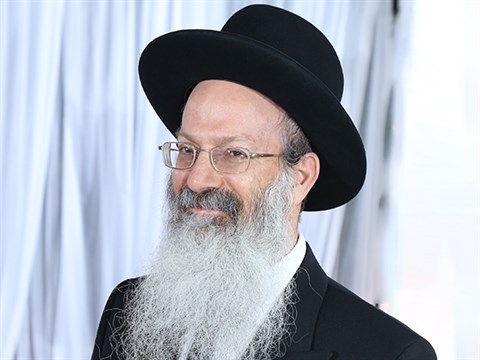
Rabbi Eliezer Melamed

Peninei Halakha 18. Torah Verses in the Prayers and in the Berakha of She-asa Li Kol Tzorki
Chapter 10: The Laws of Tisha Be-Av
Peninei Halakha 10. Listening to Music on Electronic Devices
Chapter 3: Customs of Mourning during the Omer Period






Rabbis in Midrash
































Various Events FOR WHOM NOT TO VOTE
Rav Zvi Yehuda Kook stressed that Israeli politics is G-dly, so I have no problem answering this common question on a Torani blog. Also, Free-Will is a G-d-given right and obligation, to "destine one's fate" (R. Soloveichik, Kol Dodi Dofek, 67), so I obviously don't tell others how to vote. But once not a few (especially young) have already asked, a couple of personal words from experience and thoughts from chazal & Rav Kook which may be of help to others, mainly for whom NOT to vote.

P'ninat Mishpat Fallout from Failure to Install Elevator – part II
based on ruling 85007 of the Eretz Hemdah-Gazit Rabbinical Courts







