Yeshiva
Beit Midrash
- Torah Portion and Tanach
- D'varim
- D'varim

Nuances of difference sometime appear between the descriptions that Moshe attributed to events that occurred, and the more objective description of those events recorded previously in the Torah. This is natural because of the different personal recollections by humans regarding events that occurred in the purely objective description, giving them a view of the same events but from a different perspective.
There is no need to reconcile the two apparent differing descriptions of the same Torah event. We know that human beings can never really be truly objective, and that everything that we see, and experience is always filtered through our own personalities, thoughts and even prejudices. As such, we can never claim objectivity in recalling past events and describing them for later generations.
It is not that truth is a subjective value, but, rather, it is not possible within the limitations of human existence, for truths to be accurately described, without the injection of the personality and the subjective viewpoint of the person recalling or describing the truth as to what occurred. Only heaven achieves ultimate accuracy of truth. We human beings strive for such perfection but should be aware that it is beyond our abilities to actually attain.
We see this clearly in how Moshe describes the origin of the debacle that befell the Jewish people regarding the sending of the spies to gain intelligence about the land of Israel. In the Torah previously, it appears that Moshe himself was the instigator and catalyst for this idea that later went so wrong. However, when Moshe relives the matter here in the book of Dvarim, he casts the incident in a different light completely. It was the people emerging as a mob upon him that forced him to agree to send spies, and to bring back a report about the land of Israel to the Jewish people before their actual entry into the country.
It is not that Moshe was trying to extract himself from blame and participation in this sad incident, which would doom that generation of the desert and never reach the land of Israel. It is simply that he records for us his absolute misgivings when the proposal first surfaced. In his memory, he does not see himself as ever having instigated the proposal and describes himself as an almost unwilling participant in the process that later ensued. In the eyes of heaven, because Moshe later acquiesced to the public demand for the sending of the spies, it made Moshe a prime mover, and instigator, if you will, in the event of the spies.
Oftentimes, in life, we are apparently innocent victims of forces brought upon us, and yet, we are held accountable personally for the consequences of our participation in the event, unwilling and hesitant as it may have been. The book of Dvarim teaches us many lessons in life that otherwise we may overlook, ignore and of which we may not be aware.
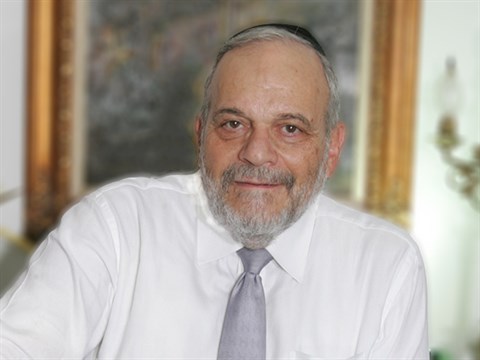




Rabbis in Midrash























Lessons
fast navigation











Various Events FOR WHOM NOT TO VOTE
Rav Zvi Yehuda Kook stressed that Israeli politics is G-dly, so I have no problem answering this common question on a Torani blog. Also, Free-Will is a G-d-given right and obligation, to "destine one's fate" (R. Soloveichik, Kol Dodi Dofek, 67), so I obviously don't tell others how to vote. But once not a few (especially young) have already asked, a couple of personal words from experience and thoughts from chazal & Rav Kook which may be of help to others, mainly for whom NOT to vote.

P'ninat Mishpat Fallout from Failure to Install Elevator – part II
based on ruling 85007 of the Eretz Hemdah-Gazit Rabbinical Courts










