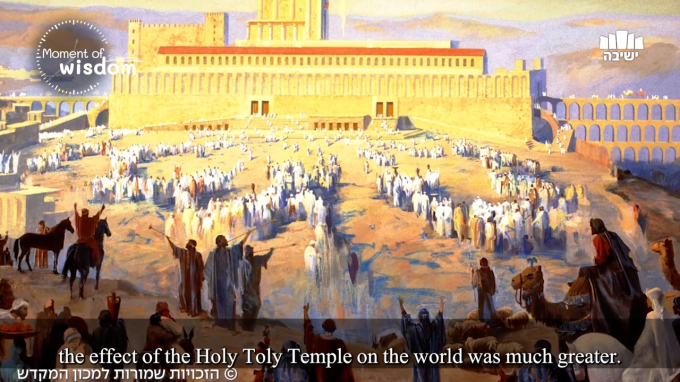
Parashat HashavuaSeries'LibraryPiskei Din (Hebrew)Test YourselfAmong the various items used to build the Mishkan, the verse tells us that our ancestors used something called "tachash skins" for the outer covering of the Mishkan and as a slipcover for the holy vessels while they traveled in the desert. The exact identity of the tachash has been a matter of great speculation. Some say it was a (reddish or violet) dye used to color skins or cloth in the Mishkan, but most say it was an animal. Which one? Among the opinions: Ermine, badger, a one-horned animal called a keresh; an antelope, giraffe, the narwhal (whose left tooth developed into a single horn-like appendage); the sea cow or seal, okapi or zebra. Most say it was a non-kosher animal, but others (Rav Moshe Sofer) say it was miraculously made kosher just for use in the Mishkan. The Lubavitcher Rebbe explains that the uniqueness of the tachash is that it is the only creation that was used exclusively for holy purposes. Thus, the tachash illustrates that the ultimate purpose for all of creation is to be used only in service of Hashem. This will be fully realized with the building of the Third Temple, may it be speedily in our days!
Can we play darts on Shabbat? The darts are classic ones that pierce the board’s surface; the board hangs loosely from a nail in the wall; in between uses, the darts often stay on the boar
Just as water has the ability to convert desolate and nonproductive desert land into a veritable Garden of Eden, so too can Torah fill the void in our hearts and souls and make us productive holy people.
A person must maintain total integrity in all his dealings – after all, we are
commanded to act like Hashem in all our deeds, and Hashem’s seal is truth (Shabbos
55a). Furthermore, someone who is meticulously honest and truthful will merit
receiving the Presence of the Shechinah.