Yeshiva
Beit Midrash
- Torah Portion and Tanach
- Bamidbar
- Bamidbar

Our rabbis have characterized the generation of the desert as being one of great intelligence, knowledge and understanding. Yet it was a generation of seemingly no purpose because it was doomed to die in the desert and not accomplish the goal that was entrusted to it when it left Egypt. It was told that it would accept the Torah and then march into the land of Israel. Moshe was successful in having them accept the Torah, but he was unsuccessful in attempting to have them move to the land of Israel. In fact, an element of the people would say that not only would they not go forward to the land of Israel, but they would be willing to retreat and go backwards into the land of Egypt, the land of affliction and of plagues.
It is hard for us to imagine such a generation, with its sole task only to mark time until it passed away and made room for the next generation, which would perforce enter the land of Israel and build there a society. The desert had however positive aspects to it as well. The Talmud teaches us that the Torah was given to a generation that could live in the desert. If one can relieve oneself of desires and of outside pressures and live as though one is in a desert, then the Torah can find a real home and purpose in the life of that person.
The generation of the desert represents to us a two-faced and double-edged society. On the one hand, negative because of its refusal to progress towards its ultimate goal, the land of Israel and, on the other, a society of blessedness, free from daily wants and pressures with the ability to intellectualize Torah into its very being.
In Jewish tradition, the generation of the desert is always represented not so much as a transitional generation but as a wasted generation. One who has opportunity and ability and does not employ that ability to fulfill the opportunity presented, is seen, in the eyes of the Torah, as wasting one's existence. And the Torah has a prohibition against wasting anything, certainly time and opportunities.
Because of this, we are always troubled when reading these portions of the Torah that will follow for the next few weeks and this section of the Torah which bears the name of the desert as its title. We are struck with a feeling of pity and sadness that the generation that had the possibility of being the greatest ended up being a wasted generation, dying in the desert, having no home, and little or no opportunity, after its great start when freed from Egypt.
Every generation must be on the watch, that it should not be a generation of the desert. We can learn to take advantage of situations which allow us to study and to employ intellectual realism, but we have to also beware that a generation of the desert that does not build for the future and does not take hold of its opportunities will not be remembered as a positive and great generation amongst the story of the people of Israel. We are faced with great challenges, but with great opportunities. And our generation certainly will not be remembered as a generation of the desert, but rather as a generation of Jews who helped build the land of Israel and who have rebuilt the Jewish world, wherever Jews exist.
Shabbat Shalom,
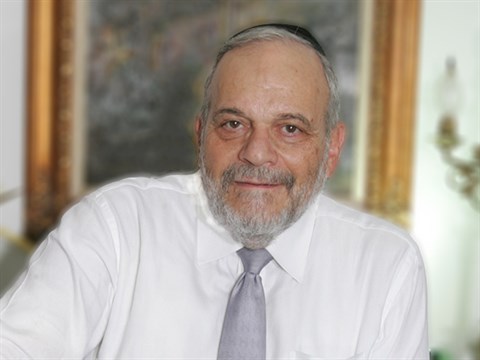
Rabbi Berel Wein





Rabbis in Midrash























Lessons
fast navigation











Various Events FOR WHOM NOT TO VOTE
Rav Zvi Yehuda Kook stressed that Israeli politics is G-dly, so I have no problem answering this common question on a Torani blog. Also, Free-Will is a G-d-given right and obligation, to "destine one's fate" (R. Soloveichik, Kol Dodi Dofek, 67), so I obviously don't tell others how to vote. But once not a few (especially young) have already asked, a couple of personal words from experience and thoughts from chazal & Rav Kook which may be of help to others, mainly for whom NOT to vote.

P'ninat Mishpat Fallout from Failure to Install Elevator – part II
based on ruling 85007 of the Eretz Hemdah-Gazit Rabbinical Courts