Yeshiva
Beit Midrash
- Torah Portion and Tanach
- Shmot
- Yitro

The answer is that when people know that there are things that they're not capable of achieving, they don't even dream about them. If a person understands that he can't achieve things because they don’t belong to him he won't want them.
At first glance, it is unclear why such an imperative is so fundamental that it should be included in the Ten Commandments of the Torah, but only when a person realizes that there is a God above him who gives each one exactly what he should get and He is the One who manages the world man can understand that he can't take something that belongs to someone else.
When the individual puts himself at the center of things, he thinks he deserves everything and it doesn't matter if it is in someone else's possession right now. He does not see the person facing him at all because he sees only himself and his desires. But the truth is that if a person sees God everywhere, he understands that everything belongs to God and everything is arranged by how God has decided to order it. Therefore, when he looks at another person owning something, he understands that God decided to give that thing to the other person and not to him and if he thinks of taking it he thinks of changing God's plan and this is something he absolutely cannot achieve.
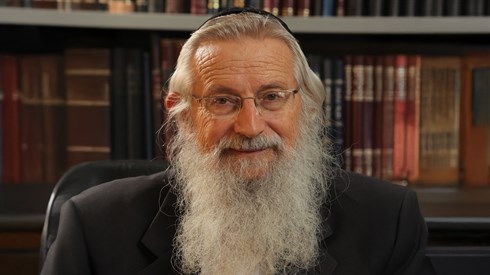





Rabbis in Midrash























Lessons
fast navigation










Various Events FOR WHOM NOT TO VOTE
Rav Zvi Yehuda Kook stressed that Israeli politics is G-dly, so I have no problem answering this common question on a Torani blog. Also, Free-Will is a G-d-given right and obligation, to "destine one's fate" (R. Soloveichik, Kol Dodi Dofek, 67), so I obviously don't tell others how to vote. But once not a few (especially young) have already asked, a couple of personal words from experience and thoughts from chazal & Rav Kook which may be of help to others, mainly for whom NOT to vote.

P'ninat Mishpat Fallout from Failure to Install Elevator – part II
based on ruling 85007 of the Eretz Hemdah-Gazit Rabbinical Courts









