YeshivaThe torah world Gateway
Beit Midrash
- Jewish Laws and Thoughts
- Jewish Thought
- Foundations of Faith

The Torah study is dedicatedin the memory of
Yaakov Ben Behora
The Rabbi says, "A saintly person is one who is concerned with his country. He provides all of its citizens with their every provision and need. He leads them justly, does not oppress any one of them, and does not give to any one of them more than his rightful share. Thus, in his time of need they will come to his aid, and will rush to answer him when he calls out to them. He can command them, and they will fulfill his command; he can admonish them, and they will accept his admonishment."
The Khazar king says, "I asked you about a saintly person, not a leader."
Foundations of Faith (51)
Rabbi Zalman Baruch Melamed
44 - 44. The Servant of God
45 - 45. The “Hassid” (Saintly Person)
46 - 47. The “Hassid” - The Ideal Jew
Load More
"He muzzles his physical desires and prevents them from intensifying by feeding them their due and providing them enough to satisfy their needs. He also muzzles those aggressive tendencies which seek to vanquish other people. He feeds his senses their due in a productive fashion by defeating others in scholarly and philosophical debates and by rebuking evil people when necessary.
"Similarly, he uses his hands, legs, and mouth when necessary and when for productive objectives, and he does the same with his hearing and vision and the portion of his intellect which processes sensory information. He then continues by controlling his imagination, perception, discretion, and recollection, and finally his decision-making faculty. He does not allow any of the aforementioned faculties within himself to get stronger than it should, because that would diminish the other faculties. He causes all of his faculties to function properly and in perfect harmony.
"Once he provides the needs of all his faculties, provides his natural faculties their necessary rest and sleep, and provides his faculties of animation their necessary waking hours and integration with the active world, he can then call upon his 'community' like a highly regarded ruler who calls upon his obedient legion to come to his aid. He can call upon these faculties to attain a level which is higher than his current level, namely, the Divine level, which is higher than the intellectual level. He will be able to organize and rectify his 'community,' similar to the way that Moses organized his community around Mount Sinai.
"He will command his decision-making faculty to accept and observe everything he commands, and to do so in a timely fashion. This faculty will then utilize his limbs and other resources as it was commanded without rebelling. He will also command this faculty not be led astray by his imagination - not to accept or believe its council without first consulting his intellect.
"Only if the intellect endorses what these thoughts suggest will he accept them; otherwise, he will rebel against them. And if the intellect endorses them, he will command his imagination to project only images of the highest quality which are stored in his soul, such as the image of Mount Sinai during the giving of the Torah, or the image of Abraham and Isaac on Mount Moriah during the binding of Isaac. In this manner he uses all of his inner resources in order to serve God."
------
Much of the text in the above article is taken from or based upon Rabbi N. Daniel Korobkin's translation of The Kuzari (Jason Aronson Inc.).
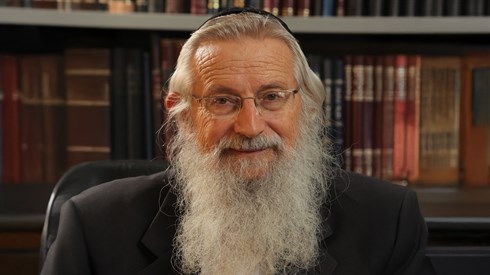





Rabbis in Midrash























Lessons
fast navigation









Moreshet Shaul Hashem Is your Shadow – part I
Based on Siach Shaul, Pirkei Machshava V’Hadracha p. 420 – an address from 1941

P'ninat Mishpat A Non-Contractor in Changing Times – part I
(based on ruling 85128 of the Eretz Hemdah-Gazit Rabbinical Courts)
Moreshet Shaul Our King on Rosh Hashana, Our Father on Yom Kippur.
Based on Aroch Siach, p. 221 (Rav Shaul Yisraeli)
P'ninat Mishpat A Non-Contractor in Changing Times – part II
(based on ruling 85128 of the Eretz Hemdah-Gazit Rabbinical Courts)
Moreshet Shaul Hashem Is your Shadow – part II
Based on Siach Shaul, Pirkei Machshava V’Hadracha p. 420 – an address from 1941
Parashat Hashavua Happiness for the Right Reasons
[With painful longing, we share these divrei Torah from our co-Rosh Kollel for close to 40 years, Harav Moshe Ehrenreich zt”l.]