Yeshiva
Beit Midrash
- Sections
- Chemdat Yamim
- Parashat Hashavua
- Torah Portion and Tanach
- Vayikra
- Metzora

One of the biggest questions in the analysis of the Chumash is whether the mitzvot of the Mishkan and the korbanot came about as a result of the Chet Haegel or whether they were always intended to be part and parcel of our religious lives. However, everyone agrees that the Korban Pesach was always central to our nation’s religious life. Korban Pesach and brit mila are the two mitzvot upon which, says the midrash (Shemot Rabba, Bo 17), liberation relied. The navi’s metaphorical description of Bnei Yisrael’s emergence as worthy for liberation states, "And I said to you: ‘In your blood shall you live.’ And I said to you: ‘In your blood shall you live’" (Yechezkel 16:6). The midrash says that this refers to the blood of Korban Pesach and of brit mila.
Korban Pesach is unique in that it is the only korban brought by the individual (albeit, many individuals) that is not offered as a result of a specific event that occurred to him, whether positive or negative. We note also that Korban Pesach and brit mila are the only two positive commandments for which one who does not fulfill it is due the severe punishment of karet.
Let us look at the question of the "wicked son" about Korban Pesach: "And it shall be, should your sons say to you: ‘What is this service to you?’ And you shall say: ‘It is the Pesach feast to Hashem who passed over the houses of Bnei Yisrael …’" (Shemot 12:26-27). We have explained elsewhere that this question casts aspersions on the concept of renewing the covenant with Hashem. Jewish parents renew the covenant when they accept to raise their child as a member of the covenantal nation from the time of his brit on the eighth day of his life. The child accepts his own responsibility to Hashem when he becomes bar mitzva, becoming a servant to Hashem and a free man in relation to people. The wicked son, who questions this process, removes himself from the collective of people who willingly enter the covenant.
The Torah refers to the three other sons (with their questions or that which they are told), using singular, whereas for the wicked son, plural is used. What is the significance of this difference?
Etrogs (which represent the religious elite) tend to separate themselves from the other "species" in society. Understand their motivation – they want to protect their level and that of those closest to them from bad influences. They do it for a noble cause, to make sure that there will remain a high spiritual level within the nation.
At the seder night they receive the hint that it is time to "recalculate route." The great majority of our nation are not etrogs, and Korban Pesach does not interest the aravot (the lowest on the religious totem pole), who correlate to the wicked son. There are many such people, says the Torah. The Rabbis exhort us not to break the connection with this part of the nation. Rather, we must continue to invite them to our table, hear what is on their mind, and relate the Pesach story to them on some level. Let us remember, in our times, to unite with all the sections of our nation, even as we do not hide that there are real differences between us.

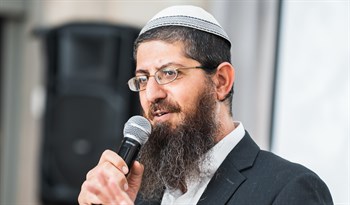



Rabbis in Midrash























Lessons
fast navigation










Hosha'ana Rabba FLYDUBAI & HOSHANA RABBA- ANI VAHU HOSHIA NA- I & HIM SAVE US
"Ani vaHu Hoshia Na", "I and Him, Save Us". We don't just pray to Him, but we also pray to and for ourselves that we should emulate and educate our children to have that instinctive altruism with which He created the world. President Trump seemed amused about Yaniv Hayon, our PLUMBER who confidently worked with G-d like Superman (he learned from a pilot on a TV show!) to save 174 lives on the Dubai hijacking, but we in Israel are totally accustomed already 78 years to our plumbers, teachers, garbage-men, rabbis, farmers & doctors being Hashem's shlichim! This is what Zionism is about.
Moreshet Shaul Hashem Is your Shadow – part I
Based on Siach Shaul, Pirkei Machshava V’Hadracha p. 420 – an address from 1941











