Yeshiva
Beit Midrash
- Shabbat and Holidays
- Jewish Holidays
- Yom Haatzmaut

The Torah study is dedicatedin the memory of
R. Avraham ben-tziyon ben shabtai
2. The Early "Lovers of Zion"
3. Moshe's Error
4. Let the Miracle Happen
OUR LAND
This day - Yom Ha'atzma'ut - is a great day. Perhaps the blessing, "Chag Sameach" or "Happy holiday," is inappropriate, since the terminology "chag" in Hebrew is reserved for Torah-ordained holidays. Neither Purim nor Chanukah are technically referred to as "chag", either. Yet, this fact does detract from the joy and exuberance that we feel on those days.
Most of us have just returned from tours - "tiyulim" - of our Holy land. During the Pesach break, we "reconnected" somewhat with our land. We walked, treading on the pure, holy clumps of earth of Eretz Yisrael; we got a chance to feel the earth under our feet in not-yet-built-up areas. We witnessed the natural beauty of Israel's mountains, as yet-untouched by technology. These are the hills that continue to absorb the nation of Israel returning to its land.
THE EARLY "LOVERS OF ZION"
We spoke yesterday, until the wee hours of the morning, of the many people who initially opposed the return of the Jewish people to Zion; when the "Chibat Zion" - "Lovers of Zion" movement first started, it had numerous opponents. Even people with strong Torah backgrounds disapproved for their reasons of their own. Nevertheless, it was a movement founded by Torah-committed Jews, and with the consent of prominent Torah personalities. But not just observant Jews were involved. The activists were not the "cream of the crop" of the Jewish religious leadership. In fact, to the observer, it did not at all seem that the Torah leaders of the generation were in favor of a return of the Jewish people to Israel, or, for that matter, that it all began with them.
MOSHE'S ERROR
The Netziv - Rabbi Naftali Tzvi Yehuda Berlin of Volozhin - saw, in this situation, a proof that the return to Zion would not necessarily have to be conducted in a manner that struck an obviously respondent chord within the community of observant Jews.
These are his words: ("Return to Zion A, pages 17-18): "When God commanded Moshe to be His messenger to redeem the Jewish people, Moshe responded: 'They won't believe me and won't listen to my voice, because they will say that God did not appear to me.' According to our sages, Moshe was punished for this statement, since it implied that he doubted the level of trust and faith of the Jewish people. But did Moshe truly think that they truly would not believe?" The Netziv explains that Moshe did not intend to say that the Jews would not believe in the redemption, since they had long been crying out to God for the redemption to finally arrive. If someone in the end would come to save them, would they not believe that the redemption had arrived? Rather, explains the Netziv, "Moshe felt that they would not believe that he was to be the redeemer. Why? 'Because they will say God did not appear to you"'.
It's not that they would doubt that Hashem wishes to redeem His people; this He surely wants. But, people would claim, "Who are you, Moshe? Where did you grow up? In the house of Pharaoh! At the time, Moshe was not known as "Moshe Rabeinu" (Moshe our leader); he was known as someone who did not grow up in his parents' home, in the house of Levi. As a youth, Moshe grew up in Pharaoh's house, was engaged in the study of wisdom and systems of thinking other than Torah, and even dressed like an Egyptian. This is why the daughters of Yitro - when Moshe arrived in Midian - believed that Moshe was indeed an Egyptian! (Midrash, Shmot Rabbah 1:32) People actually thought that Aharon the High Priest would be the human redeemer, since he had already been prophesying in Egypt. In their opinion, he was surely a more appropriate representative of God than his brother, Moshe...
Thus, Moshe was punished for suspecting that Israel would not believe that God appeared to him. The Holy One, Blessed be He, redeems us in all sorts of ways. Not always are the personalities that we would have chosen - the people that Hashem chooses to carry out His mission.
LET THE MIRACLE HAPPEN!
R. Rubele Medenburg, the Rabbi of Dvinsk, saw the issue from a similar perspective. (R. Rubele was the first mentor of Rabbi Avraham Yitzchak Kook of blessed memory. The "Rav" spoke of R. Rubele with tremendous respect). His son, R. Kolonimus Kalman, was once asked to express his view on the return of the Jews to Eretz Yisrael and to note what his father thought of the matter. (Return to Zion, pages 92-93) He responded: "[My father] would become very excited and inspired when speaking of Eretz Yisrael. I remember what my late father once told me of his conversation with a prominent wealthy man of the community who asked him scoffingly, 'If you believe this to be such a great mitzvah, then why don't you uproot your home from the Diaspora in order to fulfill the commandment of living in the Land of Israel"?...
"My father [answered]: 'If I would say to you: 'Go forth from your land and your birthplace to the Holy Land' - then you would be able to ask me why I am not doing the same myself, but I am only saying that it is proper to appreciate those people who have decided to make their homes in Eretz Yisrael and to be sensitive to their requests for help. If so, why should we not help them and offer them a portion of the money with which Hashem has blessed us?' The wealthy man retorted: 'Why was this mitzvah first initiated only by those people, who, on the surface of things, are not so involved in Torah and mitzvot? ...If the mitzvah of Yishuv Eretz Yisrael is so great, it would be more fitting for great rabbis and people who fear Heaven to be more involved?' To this my father answered: 'There is not one issue that our holy sages overlooked; in response to this question, we find an assertive response in the Talmud, Tractate Me'ila (page 17): When the Jews were forbidden by a Roman decree to observe the Shabbat, to circumcise their sons, and when they were compelled by the same edict to have intimate relations with women in an impure menstrual state, they asked: 'Who will go and ensure that these decrees are annulled? Rabbi Shimon Bar Yochai, who was well-versed in miracles, was joined by R. Eliezer the son of R. Yossi. On their way to have the decree annulled, the two were confronted by a demon named Ben Talmion; the demon confronted them and said: 'Do you want me to come along with you and to bring about a miracle? I can enter the [non-Jewish] minister and drive him crazy...
Rabbi Shimon cried and said: 'The maidservant of my father's house was visited by an angel three times [the reference is to Hagar, Sarah's maidservant] and I am not worthy to be visited by an angel on even one occasion! Let the miracle happen however it is decided that it should happen".
"R. Shimon Bar Yochai was prepared to have the miracle come about even by the agency of a demon! This demon entered the daughter of Caesar; she went insane, and the Jewish sages (Rabbi Shimon and Rabbi Eliezer) said they knew how to heal her. This is how they annulled the decree. 'Here we have it,' said my father. 'We should not pay attention how a miracle comes about. This is a fundamental principle of the sages: 'Let the miracle happen however it is meant to happen...'"
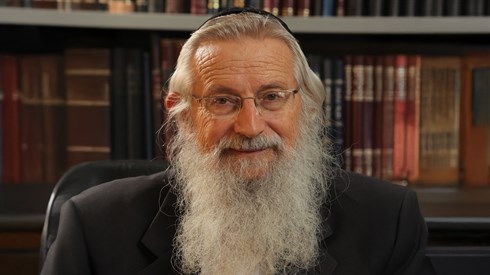





Rabbis in Midrash























Lessons
fast navigation










Hosha'ana Rabba FLYDUBAI & HOSHANA RABBA- ANI VAHU HOSHIA NA- I & HIM SAVE US
"Ani vaHu Hoshia Na", "I and Him, Save Us". We don't just pray to Him, but we also pray to and for ourselves that we should emulate and educate our children to have that instinctive altruism with which He created the world. President Trump seemed amused about Yaniv Hayon, our PLUMBER who confidently worked with G-d like Superman (he learned from a pilot on a TV show!) to save 174 lives on the Dubai hijacking, but we in Israel are totally accustomed already 78 years to our plumbers, teachers, garbage-men, rabbis, farmers & doctors being Hashem's shlichim! This is what Zionism is about.
Moreshet Shaul Hashem Is your Shadow – part I
Based on Siach Shaul, Pirkei Machshava V’Hadracha p. 420 – an address from 1941

P'ninat Mishpat A Non-Contractor in Changing Times – part I
(based on ruling 85128 of the Eretz Hemdah-Gazit Rabbinical Courts)
Moreshet Shaul Our King on Rosh Hashana, Our Father on Yom Kippur.
Based on Aroch Siach, p. 221 (Rav Shaul Yisraeli)







