Yeshiva
Beit Midrash
- Shabbat and Holidays
- The High Holidays
- Yom Kippur

The Torah study is dedicatedto the full recovery of
Lea Bat Rachma
2. The Certainty that God Will Judge us Favorably
3.Some Laws Of Yom Kipor
4. Ask an Observant Doctor
The Reason for the Commandment to Eat on Yom Kippur Eve
It is a Mitzvah to eat on Yom Kippur eve and to increase one’s amount of consumption (Shulchan Arukh, Orach Chaim 604:1). On the face of things, it would appear to be more appropriate to fill oneself with fear and trembling. What reason could there be for joyful eating and drinking at such a time?
Rabbi Moshe Cordovero explains that we rejoice in anticipation of fulfilling the commandment of repentance on Yom Kippur. For, it is fitting that we rejoice greatly in our fulfillment of each and every Torah commandment, and all the more so when it comes to such an important commandment as repentance. But because repentance, by its nature, involves grief, regret, confession, and a firm resolution to improve, it is impossible, while involved in the act of repentance, to rejoice openly. Therefore, the Torah commands us to rejoice through food and drink before Yom Kippur, and, in this spirit, to enter this sacred day - a day wherein God has paved the way for us to return to him in repentance.
The Certainty that God Will Judge us Favorably
In preparation for Rosh Hashanah we shave, dress in holiday clothes, eat, and drink. On Yom Kippur, too, we dress in white attire, and we finish off the day joyfully, confident that the Almighty will judge us favorably. Indeed, the Sages teach: "Is there any nation as wonderful as this one, who knows the ways of its God? It is customary that a person who stands to be put on trial, out of excessive anxiety lest he be sentenced to death, dresses in black clothing, grows his beard, and does not cut his fingernails. But Israel is different; they dress in white, shave, and cut their fingernails, and eat and drink, for they know that God will perform a miracle for them and acquit them of their sentence. (See Tur, Orach Chaim 581)
Yet, do we not see with our own eyes how every year so many Jewish souls are lost, some of them even after great suffering? Why, then, should we be so joyous at Yom Kippur’s close? Answer: The true judgment on the Day of Atonement is regarding the real life - the life which depends upon our relation with the Almighty. And one who does not repent during the Days of Awe after having been sentenced to death is doomed to a death of ruin: completely suffering and deep sorrow. Yet, one who completed the Days of Awe as he should have can be certain that he merited coming closer to the Almighty, and even if, Heaven forbid, he was judged unfavorably above, this too is for the best, for it serves to rectify him and prepare him for life in the world to come. Therefore, it is only fitting that we be happy on this occasion (based on the Shlah, Rosh HaShannah, Torah Or, 17).
Some Laws of Yom Kippur
The Yom Kippur fast is Biblical in origin (Levitucus 23:27), and therefore its laws are more severe than those of other fasts. For example, on Tisha B’Av, the sick are exempt from fasting, while on the Day of Atonement they are not. A person who might possibly die as a result of the fast is exempt from fasting, for the preservation of life overrides the commandment to fast.
All the same, if it is possible to avoid the danger by drinking and eating small amounts, at intervals, one must do this. In this manner he will not be considered to have broken the fast completely. As far as drinking is concerned, this means consuming less than a "melo-logmav" every nine minutes. "Melo-logmav" is the amount of liquid which fills the mouth when one check is inflated - each according to the size of his mouth (the average amount for an adult is approximately 45 millimeters). Concerning eating, one should eat less than a "cotevet" - the volume of a large date - every nine minutes. A "cotevet" is equal to the volume of two-thirds of a an ordinary sized egg. If one figures this according to the weight of water, it comes out about thirty grams. But it should be measured according to volume.
If one needs to eat or drink more than this, he should shorten the intervals to every seven or eight minutes, and if even this is not sufficient, the intervals should be cut down to four minutes, for there are opinions that the necessary minimum interval for food consumption is only four minutes. As far as drinking is concerned, if an interval of four minutes is still not enough, one should drink less than a "melo logmav" every minute. This is due to the fact that there are opinions that laws applying to drinking differ from those which apply to eating.
Ask an Observant Doctor
A person who is sick, yet is uncertain as to whether or not his sickness falls into the category of life-threatening, must ask a religious doctor before Yom Kippur what his status is. But a doctor who is not an observant Jew cannot grasp the importance of the fast and tends to tell all of his patients that they are in a life-threatening situation. Therefore, one cannot rely purely upon such a doctor’s opinion, but must find a religious doctor and get his opinion. Only in a situation where there in no choice - e.g., the fast arrived before one had a chance to consult with an observant doctor - and one received advice from another doctor to the effect that it is permissible to eat and drink, may one eat and drink (according to the above-mentioned instructions, for this is a case of possible life-endangerment.
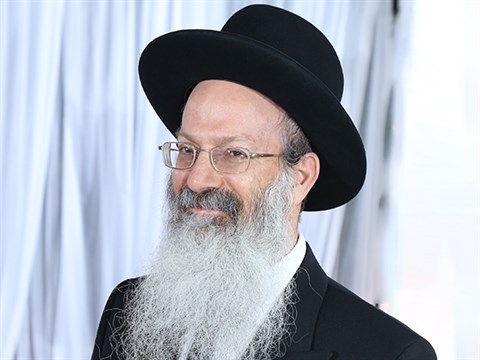
Rabbi Eliezer Melamed
Rosh Yeshiva of Har Bracha and rabbi of the settlement.

Peninei Halakha 18. Torah Verses in the Prayers and in the Berakha of She-asa Li Kol Tzorki
Chapter 10: The Laws of Tisha Be-Av






Rabbis in Midrash






















Lessons
fast navigation










Hosha'ana Rabba FLYDUBAI & HOSHANA RABBA- ANI VAHU HOSHIA NA- I & HIM SAVE US
"Ani vaHu Hoshia Na", "I and Him, Save Us". We don't just pray to Him, but we also pray to and for ourselves that we should emulate and educate our children to have that instinctive altruism with which He created the world. President Trump seemed amused about Yaniv Hayon, our PLUMBER who confidently worked with G-d like Superman (he learned from a pilot on a TV show!) to save 174 lives on the Dubai hijacking, but we in Israel are totally accustomed already 78 years to our plumbers, teachers, garbage-men, rabbis, farmers & doctors being Hashem's shlichim! This is what Zionism is about.
Moreshet Shaul Hashem Is your Shadow – part I
Based on Siach Shaul, Pirkei Machshava V’Hadracha p. 420 – an address from 1941

P'ninat Mishpat A Non-Contractor in Changing Times – part I
(based on ruling 85128 of the Eretz Hemdah-Gazit Rabbinical Courts)
Moreshet Shaul Our King on Rosh Hashana, Our Father on Yom Kippur.
Based on Aroch Siach, p. 221 (Rav Shaul Yisraeli)






