Yeshiva
Beit Midrash
- Jewish Laws and Thoughts
- Middot - Character Traits

Nonetheless, we then read of the conversation of Miriam and Aharon regarding Moshe’s personal domestic life. Once more this is an instance of evil speech. Though their intentions may have been noble, and in their eyes even justified, the Lord punished Miriam publicly for initiating such a conversation. Again, the message should have been clear to the Jewish people - do not engage in evil speech, the Lord does not tolerate such a breach of etiquette and holy behavior.
However, for some reason the message did not sink into the Jewish psyche of the time. Even great leaders did not yet internalize the destructive powers of evil speech. Thus the leaders of Israel who were sent forth by Moshe to explore the Land of Israel and report back upon its goodness and wonders spoke negatively about the land that God had promised to our ancestors and to us.
The prohibition against evil speech is herewith expanded. One cannot say bad things not only about other humans. One cannot say bad things even upon inanimate objects such as the Land of Israel. Evil speech is evil speech and it damages the speaker surely as much as it does the subject of the evil speech.
The fact that the Land of Israel is inanimate is really irrelevant to the issue of evil speech. Ultimately, when one speaks evilly about anything in God’s world, indirectly one is speaking about the One Who is the creator of that person, object or place. And therefore evil speech is always evil speech no matter whom or what the subject of the speech may be.
The Torah then continues with the story of Korach and his rebellion against Moshe and Aharon. Korach, Datan and Aviram, the instigators and ringleaders of the rebellion have terrible things to say about Moshe particularly and the Jewish state of affairs generally. In their twisted diatribe against Moshe, it is the land of Egypt that suddenly is the land of milk and honey and Moshe’s intent is to destroy the Jewish people in the desert of Sinai or later in the Land of Israel.
Though they couch their words in populist high-sounding sloganeering, their statements are again only pure evil speech, demagoguery of the worst sort. Having learned apparently nothing from the complainers over the manna, the fate of Miriam and the incident of the spies, they too are doomed to destruction because of this sin of evil speech.
Evil speech wreaks terrible havoc amongst its perpetrators. But tragically, it always seems to live on in Jewish life and society, continually punishing everyone involved in it - victim, perpetrator and society at large.
Then we read in the Torah of the champion of evil speech, Bilaam. His profession and means of supporting himself is evil speech. He is available for hire to curse and ridicule others. The Lord Himself, so to speak, has to intervene in order to prevent his nefarious scheme of cursing the people of Israel from taking hold or effect.
Bilaam’s words have a magical quality of literary beauty that envelops them. But they are poisonous and virulently so, evil speech incarnate. In the great literary storehouse of civilization there certainly is much beauty and genius. Tragically there is also much evil speech and base opinion. And as King Solomon noted in Kohelet: "Dead flies can make even the sweetest and most desirable ointments repugnant."
The harm done by evil speech has over and over again overcome any beauty or genius in the words of that literature. So Bilaam, like his predecessors before him dooms himself to punishment and death because of his intemperate violation of the prohibition against evil speech.
We see that the entire pattern of the parshiyot of the Torah this month revolves itself about this cardinal issue of evil speech and its deleterious effects upon the nation of Israel. I feel this to be a very important lesson that we should take to heart in our current situation and society as well The absence of evil speech will enhance every aspect of our personal and national lives.
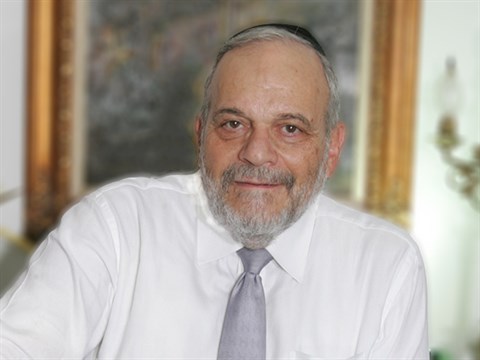





Rabbis in Midrash























Lessons
fast navigation











Various Events FOR WHOM NOT TO VOTE
Rav Zvi Yehuda Kook stressed that Israeli politics is G-dly, so I have no problem answering this common question on a Torani blog. Also, Free-Will is a G-d-given right and obligation, to "destine one's fate" (R. Soloveichik, Kol Dodi Dofek, 67), so I obviously don't tell others how to vote. But once not a few (especially young) have already asked, a couple of personal words from experience and thoughts from chazal & Rav Kook which may be of help to others, mainly for whom NOT to vote.

P'ninat Mishpat Fallout from Failure to Install Elevator – part II
based on ruling 85007 of the Eretz Hemdah-Gazit Rabbinical Courts










