YeshivaThe torah world Gateway
Beit Midrash
- Jewish Laws and Thoughts
- Jewish Thought
- Foundations of Faith

The Torah study is dedicatedto the full recovery of
Asher Ishaayahu Ben Rivka
There is, at any rate, need for additional explanation. For, it is impossible to ignore the fact that there are a great many discrepancies between Rabbis when it comes to Jewish law. One Rabbi prohibits while another permits. One deems fit for consumption while another deems unfit. Rabbis sometimes disagree concerning what they both heard from their own mentor; one says that the Rabbi permitted, while the other says that he prohibited. It would be no exaggeration to say that there is almost no issue in the Torah concerning which Rabbis do not disagree. This being the case, should not these many discrepancies in Jewish law and the different schools of thought in Judaism weaken our sense of security in Torah scholars? Does this not prove that there are many inaccuracies and mistakes? How is it possible to rely on such an ancient tradition when we find so many discrepancies within the tradition itself?
Answer: To the contrary, the many discrepancies between Torah scholars serve to strengthen our faith and trust in the reliability of the tradition. The fact that each Rabbi maintains his opinion and refuses to give in bears out the adamancy of Torah scholars to defend the truth. The Torah itself commands us to possess such adamancy when it states: "Do not fear any man!" From where do we learn that a student of Torah who is convinced that the position taken by his rabbi is a mistaken one must speak up despite the respect he holds for his mentor? Answer: "Do not fear any man!" Do not hold back your opinion from anybody.
Foundations of Faith (51)
Rabbi Zalman Baruch Melamed
7 - 7. The Reliability of Tradition
8 - 8. Rabbinic Discrepancies
9 - 9. The Unique Status of the Jewish People
Load More
All of the disagreements in the Torah exist within a wide and agreed upon framework. All accept the basic foundations, all accept the Written Tradition, and in this regard, there is no discrepancy. There are no variant readings of the Torah which has been handed down generation after generation. All accept the Oral Tradition. Controversy arises only when it comes to the fine points, the details, the outer limits of the law - not the fundamental obligations.
The variety of opinions and positions, the stubborn adamancy of each approach and view to maintain its way, the devotion of each congregation and each community to its heritage - these things do not weaken our faith in tradition. Rather, they strengthen our faith in the shared, the foundation, the rules upon which all of the approaches agree. Because the fundamentals are shared by all of us, it is possible to state with regard to all of these approaches that, as our sages teach: "Both are the words of the living God" - God's praise ascends from all of them together. The Sages teach: "Every disagreement for the sake of Heaven is destined to endure. What is an [example of a] disagreement for the sake of Heaven? The disagreement between Hillel and Shamai."
In summary, we see that, to the contrary, disagreements between Torah scholars serve to strengthen our trust and faith in the reliability of the tradition that is accepted by all. It, then, is for us like eyewitness account.
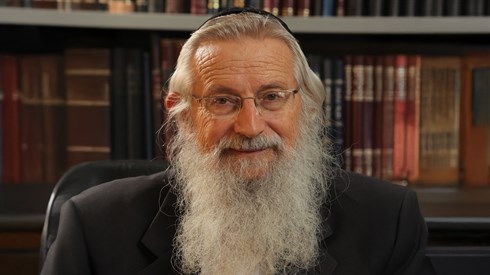


Rabbis in Midrash























Lessons
fast navigation









P'ninat Mishpat A Non-Contractor in Changing Times – part II
(based on ruling 85128 of the Eretz Hemdah-Gazit Rabbinical Courts)
Moreshet Shaul Hashem Is your Shadow – part II
Based on Siach Shaul, Pirkei Machshava V’Hadracha p. 420 – an address from 1941
Parashat Hashavua Happiness for the Right Reasons
[With painful longing, we share these divrei Torah from our co-Rosh Kollel for close to 40 years, Harav Moshe Ehrenreich zt”l.]

Israel and the Nations A Few Minutes & Many Innovative Ideas on Antisemitism & What to do About It
As we approach the High Holidays, this short lecture (18 minutes) deals with the unfortunate situation of how Israel and the Jewish People stand against antisemitism, analyzing its cause according to Rav Kook, and how to deal with the issue pragmatically & via our prayers.
Ha'azinu PURSUIT is PERFECTION
p. Ha'azinu, Shabbat Shuva
Rav Kook deals with the question of the seemingly hopeless nature of Tshuva. For G-d Himself knows that He created us with free will, which inevitably means we will sometimes make mistakes and choose wrong. This can easily be frustrating, freezing us into inaction and ye'ush (loss of hope). If one sins even once, does he chalila have no choice but suicide?! Moreover, our Godly conscience demands justice, righteousness and perfection, but we all know this is impossible, so what's the solution? Rav Kook's innovative thinking, strongly based on chazal (our sages), offers an inciteful and important aspect to this topic, especially this time of year!
Sukkot Bug-Free Sukkah: Essential Halachic and Practical Schach Guide
How to inspect, clean, and store bamboo mats and palm branches to protect your mitzvah and holiday meals.