Yeshiva
Beit Midrash
- Family and Society
- The Jewish Household
- Various Subjects

All of this was brought to my mind very recently when my newest great granddaughter was named after her departed great grandmother. Even though I have had other grandchildren and great grandchildren named after my departed parents I felt this name giving more emotionally and deeply than those other occurrences. It was a great sense of comfort and complete closure that swept over me. The importance of names in Jewish life became very real and unexpectedly personal to me. I see that no one really knows one’s self until real life situations actually arise. I always thought that I was above the name game. Not so.
One of the facets of Israeli pioneer life was to abandon the custom of naming children after deceased ancestors and relatives. Instead new names of Biblical origin or of pure Hebrew names describing flowers, fruits, emotions, etc became and to a great extent still remains the popular vogue. As a complete departure from tradition and custom, and make no mistake about it, the original secular pioneers were determined to throw off all vestiges of Jewish tradition, these new biblical names included names of villains, idolaters and other people who Jewish tradition rejected as being any sort of role model for future generations. Their ancestors would have been shocked to learn that their descendants bore such names as Omri, Nimrod, Avuyah, Shimi, Yeravam, etc. But times change and so do names. The old Yiddish names that were so common in Eastern European Jewish life are slowly disappearing from common usage even in very religious circles. They are now pretty much relegated to being middle names that are really rarely used in everyday life. This trend of lessening the use of traditional Yiddish names is now common throughout the entire Jewish world, not only in Israel. I imagine as Eastern European Jewry fades from time and memory, in spite of all of the Holocaust remembrances, the Yiddish names will also wither into disuse. So was it regarding the names of Babylonian Jewry and the great men of the Talmud - Abayei, Rava, Rav Papa, etc. - that have all disappeared from current Jewish life. If such names are no longer present in the world then the Yiddish names no matter how common they once were will probably suffer a similar fate. The Hebrew names of the tanaaim of the Mishna, which in the main were pure Hebrew names, have survived rather nicely till our day. The Greek names and the Roman names that were common in Second Temple times amongst Jews have also almost completely disappeared. English, French, Spanish and Russian names now take their place within Jewish society. It is really possible to trace the events of Jewish history simply by studying the names borne by Jews in certain times and places. So names are important to Jews. They tell our story, our past and our aspirations.
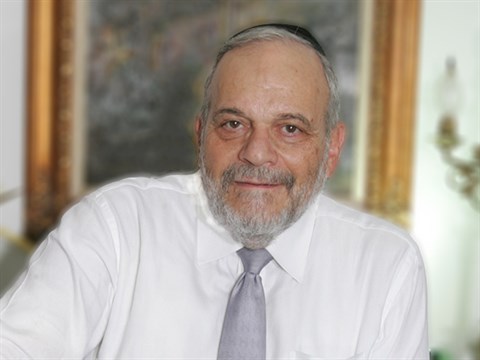
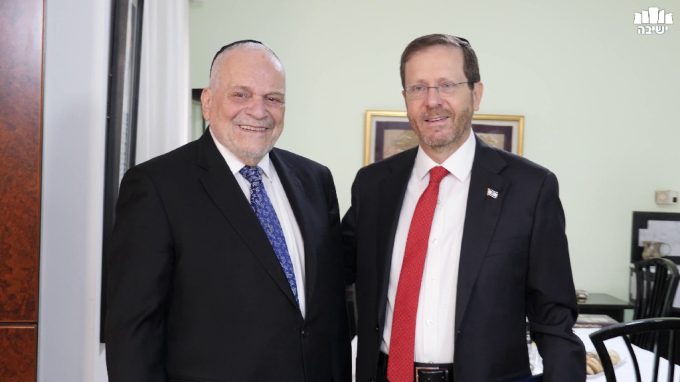





Rabbis in Midrash























Lessons
fast navigation










Hosha'ana Rabba FLYDUBAI & HOSHANA RABBA- ANI VAHU HOSHIA NA- I & HIM SAVE US
"Ani vaHu Hoshia Na", "I and Him, Save Us". We don't just pray to Him, but we also pray to and for ourselves that we should emulate and educate our children to have that instinctive altruism with which He created the world. President Trump seemed amused about Yaniv Hayon, our PLUMBER who confidently worked with G-d like Superman (he learned from a pilot on a TV show!) to save 174 lives on the Dubai hijacking, but we in Israel are totally accustomed already 78 years to our plumbers, teachers, garbage-men, rabbis, farmers & doctors being Hashem's shlichim! This is what Zionism is about.
Moreshet Shaul Hashem Is your Shadow – part I
Based on Siach Shaul, Pirkei Machshava V’Hadracha p. 420 – an address from 1941

P'ninat Mishpat A Non-Contractor in Changing Times – part I
(based on ruling 85128 of the Eretz Hemdah-Gazit Rabbinical Courts)
Moreshet Shaul Our King on Rosh Hashana, Our Father on Yom Kippur.
Based on Aroch Siach, p. 221 (Rav Shaul Yisraeli)








