Yeshiva
Beit Midrash
- Shabbat and Holidays
- Jewish Holidays
- Tu Bishvat

The excellence of the fruits of the land of Israel does not stem from their flavor, size, and beauty alone. Beyond these virtues they enjoy a spiritual distinction: they possess sanctity. Therefore, there are special commandments that relate to them, "mitzvot ha-tluyot ba'arezt," ("commandments dependent on the land"): terumot, ma'aserot, bikkurim, etc. (tithes, first-fruit offerings, etc.).
The sages teach us that the food we consume influences not only our physical selves but also our spiritual selves (BaMidbar Rabba 20:22): There are springs [whose waters] rear courageous people, and others [whose waters] rear feeble people; springs that rear handsome people, others that rear ugly people; there are springs rear chaste people, and others that rear people steeped in lewdness.
This implies that spring water influences a person's character. And the same can be said of food. There are foods that contain sanctity, and one who eats them becomes spiritually elevated; there are other foods that contain impurity, and one who eats them deteriorates spiritually. This is how Jewish mystics explain the phenomenon of good, decent, righteous, honest people suddenly changing their ways, to the point of abandoning the Torah completely, and even betraying their Jewishness. This, for example is what happened to Yochanan the High Priest who became a Sadducee.
And just as impure food has negative effects on a person, so does sanctified food have a positive effect on a person. This is the special quality of the fruits of the land of Israel. They are blessed with the sanctity of the land of Israel.
This is what Rabbi A.I. Kook writes in his Orot HaKodesh (volume 3): "Food grown in the land of Israel is essentially sacred, and is only outwardly physical." On the other hand, one must distance himself from foods grow outside the land of Israel. Yet even food grown outside the land of Israel improves according to the degree a person longs for the land of Israel.
What steps should a person take so that the food he eats enrich him spiritually? It was this that the sages had in mind when they introduced the "birkot ha-neh'nim" (blessings said before partaking of certain earthly pleasures). By blessing before eating, by praising God Who created the food, a person ties the food to its source, thus improving and purifying it. If a food contains some negative element, the blessing rectifies it so that it benefits the person who consumes it. And if the food is sacred to begin with (for example, fruits grown in the land of Israel), the blessing raises the food to an even higher level of sanctity.
In sum, what distinguishes food grown in the land of Israel is that its mere physical consumption has a sanctifying effect: "Bring us up into it and gladden us in its rebuilding and let us eat from its fruit and be satisfied with its goodness and bless You upon it in holiness and purity" (from the Three-Faceted Blessing).
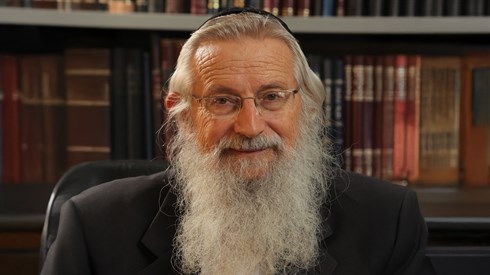






Rabbis in Midrash























Lessons
fast navigation










Various Events FOR WHOM NOT TO VOTE
Rav Zvi Yehuda Kook stressed that Israeli politics is G-dly, so I have no problem answering this common question on a Torani blog. Also, Free-Will is a G-d-given right and obligation, to "destine one's fate" (R. Soloveichik, Kol Dodi Dofek, 67), so I obviously don't tell others how to vote. But once not a few (especially young) have already asked, a couple of personal words from experience and thoughts from chazal & Rav Kook which may be of help to others, mainly for whom NOT to vote.

P'ninat Mishpat Fallout from Failure to Install Elevator – part II
based on ruling 85007 of the Eretz Hemdah-Gazit Rabbinical Courts







