Yeshiva
Beit Midrash
- Shabbat and Holidays
- Jewish Holidays
- Sukkot

However, there are other unique qualities of Kohelet. One, which "got it in trouble," is the several apparent open contradictions within the work and between it and basic tenets of Judaism. In fact, the gemara (Shabbat 30b) relates that there had been a motion among the Rabbis to ban Kohelet because of the contradictions within it. It survived because of the important messages it contains, and the Rabbis were able to reconcile the contradictions. The two the gemara mentions are whether anger is better than laughter and whether joy is positive or not. The gemara answers that anger is better than laughter when Hashem acts harshly in this world in order to reward the righteous in the World to Come, whereas laughter with the righteous in the World to Come is good. Regarding joy, it says that joy related to mitzvot is praiseworthy.
Ibn Ezra discusses more apparent contradictions in Kohelet and offers different types of distinctions. The question is why there are so many apparent contradictions in the first place. If it is just hard to write deeply without appearing to contradict oneself, why do a disproportionate number of examples appear specifically here?
Perhaps the chronological thesis of R. Yonatan (above) answers the question. When one is young, he thinks emotionally. When he matures, he thinks intellectually, but he still sees things in terms of clear truths upon which to act. After one has completed much of his life experiences, the deep thinker will see that no one set of conclusions will explain what is right and what is wrong. So much depends on the circumstances, making the truth seem contradictory. That is part and parcel of Kohelet’s message. Try to do your best but realize that you will not be able to conquer the meaning of life and the exact path to fulfillment and perfection. Therefore, as Kohelet concludes, "At the end of the matter, when all is heard, fear Hashem and follow his instructions, for this is all of man."
Various Rabbis
Various Rabbis including those of of Yeshivat Bet El, such as Rabbi Chaim Katz, Rabbi Binyamin Bamberger and Rabbi Yitzchak Greenblat and others.
Moreshet Shaul Moreshet Shaul: A Crown and its Scepter – part II
Based on Siach Shaul, Pirkei Machshava V’Hadracha p. 294-5



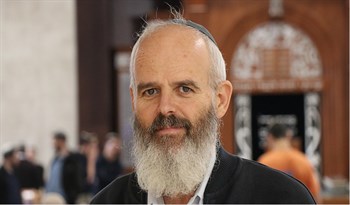




Rabbis in Midrash























Lessons
fast navigation










Various Events FOR WHOM NOT TO VOTE
Rav Zvi Yehuda Kook stressed that Israeli politics is G-dly, so I have no problem answering this common question on a Torani blog. Also, Free-Will is a G-d-given right and obligation, to "destine one's fate" (R. Soloveichik, Kol Dodi Dofek, 67), so I obviously don't tell others how to vote. But once not a few (especially young) have already asked, a couple of personal words from experience and thoughts from chazal & Rav Kook which may be of help to others, mainly for whom NOT to vote.
P'ninat Mishpat Fallout from Failure to Install Elevator – part II
based on ruling 85007 of the Eretz Hemdah-Gazit Rabbinical Courts







