Yeshiva
Beit Midrash
- Shabbat and Holidays
- Jewish Holidays
- Holocaust Memorial Day
- Shabbat and Holidays
- The Tenth of Tevet
- Yom Hakaddish Haklali

The Torah study is dedicatedin the memory of
Refael ben Yosef
"A siren will sound throughout the country for two minutes during which all work will cease and all traffic will halt; memorial services, public assemblies, and commemorative ceremonies will be held on military bases and in educational institutions; flags on public buildings will fly at half mast; radio programs and broadcasts will give expression to the uniqueness of the day." The two minutes of silence are observed at 11:00 a.m., and the ceremonies take place around this time.
However, unlike Israel's Memorial Day for Fallen Soldiers which was approved by the Chief Rabbinate, Holocaust and Heroism Memorial Day on 27 Nisan was instituted against the will of the rabbinate.
This is because Nisan is traditionally a month of joy, and Jewish law rules (Shulchan Arukh, Orach Chaim 429:2) that throughout the month of Nisan we do not recite "Tachanun" or "Nefilat Apayim," nor do we establish public fast days or eulogize the deceased at funerals. Many people customarily refrain from visiting the cemetery during Nisan, and if a person has a Yartzeit (anniversary of a death) to observe during the month of Nisan, the grave is visited on the last day of Adar (the month preceding Nisan).
In light of this, establishing a memorial day for the victims of the Holocaust in Nisan is obviously inappropriate. Rather, the most fitting time to establish such a day is on one of the existing fasts commemorating the destruction of the Temple. And indeed, the Chief Rabbinate chose the fast of the Tenth of Tevet as a general day of sanctification (Kaddish) for martyrs whose date of death is unknown.
It would appear that, in light of the circumstances, the best way to imbue 27 Nisan with an appropriate character would be to establish it as a day dedicated to the promotion of the "Jewish family." Certainly the last request of the six million Holocaust martyrs must have been that the Jewish people should persevere and thrive, that the tremendous suffering endured by our nation for so many generations should not have been in vain, that every remaining Jew should strive to marry, reproduce, and preserve our Jewish heritage, in keeping with the verse, "The more that they oppressed them, the more they multiplied and spread" (Exodus 1:12).
It is therefore fitting that on this day public figures should work to come up with ways to support Jewish marriage and birth, and teachers should discuss our great responsibility to preserve and increase the Jewish people.
When the siren is sounded on Holocaust and Heroism Memorial Day, we can think about ways to nurture the growth of the Jewish people on behalf of the dead. By doing this we will avoid any expression of mourning or memorializing the deceased; we will instead be giving expression to the sort of revival and rebirth appropriate in the month of Nisan. In addition, such thoughts will not constitute a waste of Torah study time. Nonetheless, even if a person chooses not to dwell upon such matters, he should not behave differently than the general public.
May the Almighty speedily restore God-fearing judges to Israel so that they be able to decide when and how to commemorate the memory of the Holocaust martyrs.
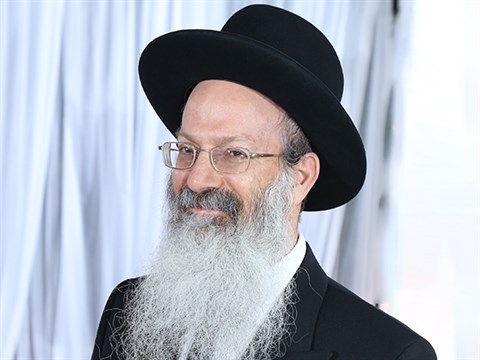






Rabbis in Midrash























Lessons
fast navigation











Hosha'ana Rabba FLYDUBAI & HOSHANA RABBA- ANI VAHU HOSHIA NA- I & HIM SAVE US
"Ani vaHu Hoshia Na", "I and Him, Save Us". We don't just pray to Him, but we also pray to and for ourselves that we should emulate and educate our children to have that instinctive altruism with which He created the world. President Trump seemed amused about Yaniv Hayon, our PLUMBER who confidently worked with G-d like Superman (he learned from a pilot on a TV show!) to save 174 lives on the Dubai hijacking, but we in Israel are totally accustomed already 78 years to our plumbers, teachers, garbage-men, rabbis, farmers & doctors being Hashem's shlichim! This is what Zionism is about.













