Yeshiva
Beit Midrash
- Jewish Laws and Thoughts
- Personality Development
- Pathways in Personality Development

The Torah study is dedicatedto the full recovery of
Dvorah bat Miriam
We have dealt thus far with the first two qualities: " Zehirut" and " Zerizut ."
Zehirut implies inspecting ones actions and habits, in order to determine which are good and which are not. This, then, is the first step: becoming familiar with the situation by recognizing the state of one's behavior, determining what is acceptable and what is not, and deciding what needs fixing. It is, of course, important that in addition to recognizing weaknesses, a person be aware of his good points. Exaggerated self criticism is no less dangerous than no self criticism at all, for criticism which is out of proportion causes despair, and loss of faith in one's ability to affect change. Regarding this the Rabbis said: "Judge every man favorably" - even yourself. Do not go overboard when it comes to self criticism; judge even yourself agreeably.
At first glance, close self scrutiny appears to be praiseworthy, indicative of personal integrity, honesty, and humility. Yet the truth of the matter is that exaggerated self criticism is the origin of all sin. By destroying a person's self confidence, it denies him the ability to advance, and to improve.
Pathways in Personality Development (52)
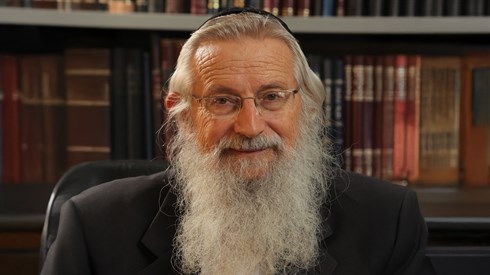
Rabbi Zalman Baruch Melamed
1 - Fear of Sin - Punishment and Loftiness
2 - Fear of Sin - Punishment and Loftiness
3 - 51. Sanctity
Load More
After a person has inspected himself - recognizing his positive traits and taking comfort in them; recognizing his weaknesses and desiring to fix them - comes the second stage in Zehirut: developing the capacity to control one's self and the ability to overcome one's desires. "Who," ask the Sages "is the true hero? The one who conquers his desire !" Every victory in the battle against one's passions adds to one's strength. The individual, instead of playing slave to his evil inclinations, rules over them and becomes king over himself. The attribute of Zehirut is the first step on "the Path of the Righteous." First of all, avoid evil.
After Zehirut comes the second quality, "Zerizut." After avoiding evil comes the performance of good. Here, too, a person must first recognize his points of weakness, those weak areas which prevent him from doing good, whether it be the laziness before even beginning to act, or a lack of ability to follow through and complete good deeds. Here too one should be careful not of be overly critical. One should always strive to see his own strong points, so that they provide the encouragement necessary for him to continue and advance.
So, after pinpointing the sources of one's weakness, laziness and fear, and the hindrances which keep one from doing good, one must develop the quality of Zerizut. One does this by way of constant practice, acting with alacrity, vigor and swiftness, denying the possibility of weakness to develop. Every success brings in its trail additional successes, or, as the Talmud teaches, "Mitzvah Goreret Mitzvah" - the fulfillment of one Mitzvah (commandment), brings about the fulfillment of another. With the fulfillment of one Mitzvah, the soul is inspired, and becomes filled with energy in order to more good deeds, with alacrity and perfection.
The Ramhal , Rabbi Moshe Haim Lutzatto, we have noted in previous lessons, constructed his book according to an ancient saying by the Mishnaic sage Rabbi Pinhas Ben Yair. R' Pinhas asserts that " Zehirut" and "Zerizut" are the first two qualities which need to be cared for and established if one wishes to develop his personality. After these two qualities, comes a third. After Zehirut and Zerizut, comes the quality of "Nekiyut." This is a new stage in the advancement of the building of the soul. After initial repairs have been made comes the stage of fundamental improvement, fundamentally cleaning one's qualities of every speck of filth.
---------------------
Rabbi Moshe Haim Lutzatto - (b. Padua, Italy, 1707 c.e.; Acco, 1746) Mystic, poet and theologian. Despite the shortness of his life, the Ramhal , as he has become known, authored many works on Jewish thought and mysticism. His works are unique in that they are written in simple language, and in a style which makes them accessible to those not learned in mysticism. His book Mesilat Yesharim has become the classic of Jewish ethics.
Rabbi Melamed is a leading student and exponent of the teachings of Rabbi Tzvi Yehudah Kook, and serves as Rabbi of the ever growing settlement of Bet El in the Israel's Shomron. He is also the Head Rabbi of the Yeshiva of Bet El.





Rabbis in Midrash























Lessons
fast navigation










Various Events FOR WHOM NOT TO VOTE
Rav Zvi Yehuda Kook stressed that Israeli politics is G-dly, so I have no problem answering this common question on a Torani blog. Also, Free-Will is a G-d-given right and obligation, to "destine one's fate" (R. Soloveichik, Kol Dodi Dofek, 67), so I obviously don't tell others how to vote. But once not a few (especially young) have already asked, a couple of personal words from experience and thoughts from chazal & Rav Kook which may be of help to others, mainly for whom NOT to vote.

P'ninat Mishpat Fallout from Failure to Install Elevator – part II
based on ruling 85007 of the Eretz Hemdah-Gazit Rabbinical Courts










