Yeshiva
Beit Midrash

On the other hand, all yeshivot close their doors from Rosh Chodesh Nissan, because cleaning for Pesach, like many mitzvot, is about "being religious" or G-dly, even if they don't get most of us to "feel religious". Similarly, when remembering to wait 6 hours, or stopping in the middle of a good joke upon remembering that it's Lashon HaRah, or even while observing Shabbat, often Judaism teaches that being religious is no less important than "feeling religious".
Once a Ba'al Teshuva called me about 15 minutes before candle-lighting, upon being informed that you're not allowed to play guitar on Shabbat. He somehow heard that I use music as an educational means, and figured I could "find him a leniency" for his religious predicament. He explained that as a follower of R. Shlomo Carlebach, his singing with his guitar is the spiritual climax of his Shabbat, and he was not willing to "take no for an answer". As Shabbat came closer, I had no choice but to starkly present his problem, and asked him, "What would you say if I told you that wearing a cross makes me feel more spiritual? I might "feel more religious", but it is the wrong religion!"
Similarly, often a sick person feels wrong when the doctor and rabbi insist that he not fast on Yom Kippur. Yes, it doesn't "feel religious" to eat on that day, but Judaism is based upon many G-dly actions (including saving life), many of which only activate our religious feeling upon learning the deeper or kabbalistic aspects of those mitzvot. Nevertheless, we "give G-d credit", that they are worthwhile and beneficial nationally, morally & spiritually even if at present we don't understand how brushing my teeth the right way on Shabbat makes me more G-dly. True, the Samaritans told me they will not eat on Yom Kippur or drive in an ambulance on Shabbat, and self-righteously tell us "we are more religious than you, and don't just observe mitzvot when they're easy!". On the level of a 5th grader, I could understand them. But a more knowledgeable Jew knows that when seriously ill, it's precisely MORE religious to eat on Yom Kippur or drive to the hospital or in an IDF patrol on Shabbat.
One of the major problems among many Haredim is their claim "we feel more religious learning in yeshiva than serving in the IDF". Again, even if I can sympathize with the rationale of that claim on some level, nevertheless after the halacha clearly states that every healthy Jewish man must actively participate when Am Yisrael is in danger, before worrying about "feeling religious", one should first "be religious". We are not Christians nor Samaritans, and rather than me deciding, we are better off letting Hashem, the prophets (who all went to war, e.g. Shoftim 5), the Talmud (Sotah 44a), Rambam (hil. Shabbat ch. 2; M'lachim u'Milchamoteihem 7, 4 & 5, 1) and Shulchan Aruch (Or. Ch. 329), as well as any rabbi who knows and appreciates the needs of the IDF, decide what is "more religious" when Am Yisrael needs combat soldiers.
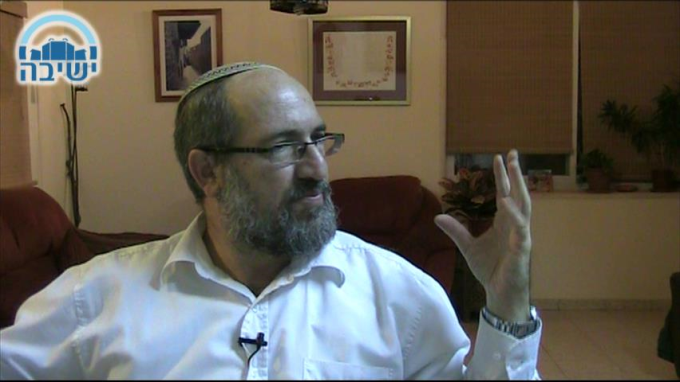
Shabbat Shalom & Chag Same'ach!! Rav Ari Shvat (Chwat)


Rabbis in Midrash























Lessons
fast navigation










Various Events FOR WHOM NOT TO VOTE
Rav Zvi Yehuda Kook stressed that Israeli politics is G-dly, so I have no problem answering this common question on a Torani blog. Also, Free-Will is a G-d-given right and obligation, to "destine one's fate" (R. Soloveichik, Kol Dodi Dofek, 67), so I obviously don't tell others how to vote. But once not a few (especially young) have already asked, a couple of personal words from experience and thoughts from chazal & Rav Kook which may be of help to others, mainly for whom NOT to vote.

P'ninat Mishpat Fallout from Failure to Install Elevator – part II
based on ruling 85007 of the Eretz Hemdah-Gazit Rabbinical Courts












