Yeshiva
Beit Midrash
- Torah Portion and Tanach
- Bamidbar
- Beha'alotcha
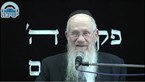
This week's very multi-faceted Torah portion of Beha'alotkha – Numbers, chapters 8-12 – begins with the command to Aharon HaCohen to light the Menorah in the Tabernacle. It then continues with details thereof, followed by the training of the Levites, the Paschal sacrifice, the "Pesach Sheni" offering for those who missed the first one. The portion then discusses several other interesting issues, and culminates with Miriam's week-long quarantine for speaking with Aharon about their brother Moshe (Bamidbar 12,1).
Where Aharon was told to kindle the lamps of the Menorah, the great commentator Rashi explains why that follows the Torah passage dealing with the special Tabernacle dedication sacrifices offered by the heads of the Tribes. Aharon felt bad that neither he nor his tribe of Levites shared in those offerings – and so G-d told him that arranging the lamps and lighting the Menorah was an even greater privilege. It is well-known that the reason it was greater is because the sacrificial service was not eternal, as it was nullified when the Holy Temple was destroyed, whereas the matter of the Menorah, which stands for the Light of Torah, exists forever. This is in fact a great consolation.
But there is yet more depth to Aharon's consolation. We know that each of the Tribal heads brought the exact same sacrifice for the dedication ceremony. Each of these princes is the representative of his Tribe, the emissary, the one who brings water from the miraculous well for his Tribe and generally takes care of their physical and spiritual needs. In fact, it was precisely this "tribal" aspect of each one's dedication offering that made it impossible for all the princes to bring all their sacrifices together, and certainly not one for all.
This explains why the Torah emphasizes that each sacrifice was brought separately, on its own day, and with its own itemization in the Torah – even though this involves many long repetitions, which the Torah is usually careful to avoid.
On the other hand, the task of arranging of the lamps and lighting the Menorah has two aspects: It is specifically of the Tribe of Levy, parallel to the tribal aspect of the sacrifices brought earlier by the heads – but it also has a very national/public aspect. Bringing light to the Menorah is the responsibility of the entire tzibbur (public), and is that which attests to the dwelling of the Shechina (Divine Presence) in Israel. It is clearly, then, also a Divine service on behalf of the entire nation.
It should also be noted that the Menorah itself involves both individual sacrifices and communal offerings, which explains why the Menorah was unable to be fashioned by humans; only G-d could make this paradoxical formation. Rav Kook also brings other examples of this phenomenon, including the Sanctification of the New Moon, the half-shekel, the Paschal sacrifice, and more, which must be elaborated on elsewhere.
It is now clear why Aharon was consoled when G-d told him that his task of lighting the Menorah was greater than that of the other Tribal leaders – for it was on behalf of both his individual Tribe and also the entire nation.
Rav Kook ended his talk by adding that Adam HaRishon was also a manifestation of this duality, being both an individual but also the father of all humanity. The attempt to rectify his shortcomings, and our attitude towards this attempt, explains the "added" law of Pesach Sheni, which as stated includes both aspects as well.
Translated by Hillel Fendel






Rabbis in Midrash


































Various Events FOR WHOM NOT TO VOTE
Rav Zvi Yehuda Kook stressed that Israeli politics is G-dly, so I have no problem answering this common question on a Torani blog. Also, Free-Will is a G-d-given right and obligation, to "destine one's fate" (R. Soloveichik, Kol Dodi Dofek, 67), so I obviously don't tell others how to vote. But once not a few (especially young) have already asked, a couple of personal words from experience and thoughts from chazal & Rav Kook which may be of help to others, mainly for whom NOT to vote.

P'ninat Mishpat Fallout from Failure to Install Elevator – part II
based on ruling 85007 of the Eretz Hemdah-Gazit Rabbinical Courts







