Yeshiva
Beit Midrash
- Shabbat and Holidays
- Jewish Holidays
- Lag Ba'omer

This was written four years ago, but it is still perfectly timely… The main "minor" difference is that there were no Lag BaOmer bonfires on Mt. Meron that year because of Corona, while the reason there will be no bonfires there this year is because of Hizbullah missile threats.
Every year at this time, the holy nation of Israel is busy studying and engaging with the legacy of the holy Rabbe Shimon bar Yochai (Rashbi), master of the Zohar, whose yahrtzeit (date of passing) is on Lag BaOmer (the 33rd day of the Omer period).
There are those who ascend on this date to Meron in the Galilee to study his teachings and dance and sing in his honor. Others sit around traditional bonfires near their homes and speak of his greatness and light. All recount the wondrous story of his salvation in the cave from his Roman pursuers, and how he cured the world when he came out.
This year, because of Corona, we cannot make the trip to Meron, nor can we even dance in large groups around the fires. Still and all, the beautiful light of Rabbe Shimon will ascend and shine with holy Divine spirituality, possibly helping us to discuss his stories and profound teachings in even more depth.
In fact, this is a good time to take a look at another story, slightly less familiar, which reveals another angle regarding what Rashbi learned when he came out of the cave. That is to say, while the Babylonian Talmud recounts that after 12 years of hiding in the cave, Rabbe Shimon was informed by the Prophet Elijah that the Roman decrees had been canceled – the Jerusalem Talmud has a slightly different account. As follows (in free translation):
Rabbe Shimon said, "Let's go out and see what sound there is in the world." He went and sat at the entrance to the cave. He saw a hunter, laying traps for birds. R. Shimon then heard a Heavenly voice saying "acquitted," and the bird was saved. R. Shimon said to himself, "If a bird has Heavenly providence, how much more so do humans" – and he left the cave… and purified Tiberias.
The traditional story is that Rabbe Shimon was encouraged from Above to exit the cave, while in the Jerusalem Talmud, he takes his own initiative to get up and go out to see what's happening in the world, to see what "voice" he can hear.
This is a profound allusion to the "esoteric Torah" that Rasbhi brought to the world from his cave. He listens for the sound. A spiritual voice is hiding in the physical world, and we have to listen to the world's deep spiritual quality, as in "from my flesh I will see G-d" (Iyov (Job) 19,26). The entire physical creation sings spiritual praise to G-d, and He speaks through it – and it is this that Rabbe Shimon and the Zohar come to reveal. Hashem speaks to us via our reality! In this context the Kabbalists are the students and the successors to our Prophets, in that they are attentive to G-d's voice that continues to echo throughout the expanse of the world. (And the Kabbalists' tradition is that the Kabbalah they received dates all the way back to Elijah the Prophet.)
It is intriguing to note that R. Shimon said here that he will go out to "see" the "voice in the world." Voices are heard, not seen! But this is precisely the crux of the matter: Just as at Mt. Sinai, where "the nation heard the sounds" (Sh'mot 20,15) - they heard sounds of spirituality with their physical ears - R. Shimon constantly reveals to us the special nature of the Stand at Mt. Sinai also in our own physical reality. He helps us see the spiritual voices as if they are a physical reality.
And behold, Rabbe Shimon bar Yochai comes out and sees a hunter placing traps, but when a voice sounds in the skies that the bird must be free, it is saved – and from this he learns about G-d's supervision and concern for the world, and that on Him everything is dependent.
But this is quite strange. After all, every Jew knows there is Divine Providence and that everything depends on G-d's will – so what was the great message inherent in the story of the bird that R. Shimon did not know before?
The answer could be a simple one: What Rashbi learned from the bird was that G-d was signaling to him that the danger from the Romans had passed for him.
But possibly the Gemara is teaching us something deeper. In fact, that which is generally accepted in Jewish thought today, and appears to be simple to every Jew, was not always that simple. Even the Rambam holds that Divine Providence is not specific for each individual, but instead is general. That is, G-d ensures that there are and will be sheep, birds, etc., but not what will happen to each one of them.
Actually, the ones who taught and imbued in Israel the idea that G-d watches over and controls every single detail and individual, no matter how small, were those great Torah giants who were steeped in Kabbalah and the teachings of R. Shimon bar Yochai. And this is what the Jerusalem Talmud comes to teach us: "When Rabbe Shimon came out of the cave, he came out to teach us that Hashem watches over us in every detail, up to the very last one."
The fact that so many people already know this idea shows us just how prevalent Torat HaSod, the Torah of Kabbalah, has become. Of course, in every pure dispute among Torah scholars, both positions are "the word of the living G-d" – but still, the fact that the idea of personal Providence has come to be so accepted is remarkable; in a certain respect, it is one of those important concepts that are already like a Halakhic norm. It is something that gives us comfort and support, and causes us to embrace God's care and providence, as a son embraces his father.
And during this difficult period of Corona, when we see how a tiny little virus can have such a revolutionary effect on the entire world, our faith that G-d watches over us down to the last detail is only strengthened! Even the wizards of Pharoah's Egypt, when they saw the plague of lice come upon them, understood the situation: "This is the finger of G-d!" (Sh'mot 8,15)
Translated by Hillel Fendel
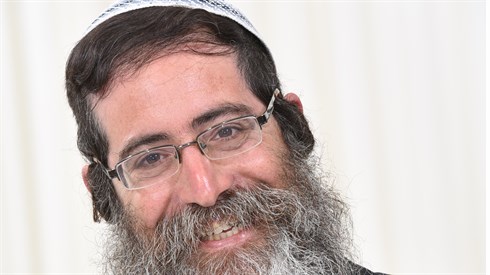

Ein Aya "Reality Has No Wings" - Revolutions & Improvements Must be Done Patiently
Ein Aya, Shabbat 2, 274





Rabbis in Midrash

































Hosha'ana Rabba FLYDUBAI & HOSHANA RABBA- ANI VAHU HOSHIA NA- I & HIM SAVE US
"Ani vaHu Hoshia Na", "I and Him, Save Us". We don't just pray to Him, but we also pray to and for ourselves that we should emulate and educate our children to have that instinctive altruism with which He created the world. President Trump seemed amused about Yaniv Hayon, our PLUMBER who confidently worked with G-d like Superman (he learned from a pilot on a TV show!) to save 174 lives on the Dubai hijacking, but we in Israel are totally accustomed already 78 years to our plumbers, teachers, garbage-men, rabbis, farmers & doctors being Hashem's shlichim! This is what Zionism is about.











