Yeshiva
Beit Midrash
- Sections
- Chemdat Yamim
- Bemare Habazak - Rabbis Questions

Ruling: While it is true that the funds that pl put up were 10% of the purchase and building’s expected budget, logically, pl should not receive an equal part per investment to def1’s part, as the latter was the developer, whose idea the project was and who put in massive amounts of work and expertise into the project. Pl could have even gotten all his investment back, in which case it would take a strong proof to convince one that he had been given profits plus ownership.
Still there is a need to analyze agr’s language, which is the most influential factor. The term partnership is found in agr’s title but not in the rest of the long document, which makes it more likely that it is an investment agreement. Beit din made several inferences from the language, all of which appear to support def1’s version of the agreement. One of def1’s stronger inferences is the fact that the apartment pl received was priced and it was discussed how it impacted the remainder of pl’s rights. If pl were a partner in the property, an apartment in the building would be a natural right, which would not have to be bought. In general, when there is a doubt how to interpret a contract, the one who needs it to give him rights, which, in this case, is pl, begins with the weaker position (see Bava Batra 150b). This just strengthens the indications that def1 is correct that the contract views pl as no more than an investor. The language of the letter of understanding also fits better with def1’s claims.
Furthermore, in a hearing before another beit din on an internal conflict between residents of the building, in explaining the financial dynamics in the building, pl stated that the roof belonged to def1. If pl were a 10% partner in the building as a whole, he should have said that he was also a partner in the roof. Statements made before a beit din, even in a different context, can be used as an admission if that is what comes out of the content of the statement.
We continue next time.
Bemare Habazak - Rabbis Questions (660)
Rabbi Daniel Mann
515 - May we make the Kiddush before Kri’at Hatorah?
516 - Extent of Partnership – part I
517 - An Oleh Who Wants to Lain His Aliya
Load More
Beit Din Eretz Hemda - Gazit
P'ninat Mishpat Payment for Not Clearing Warehouse On Time – part II
based on ruling 75076 of the Eretz Hemdah-Gazit Rabbinical Courts
Igrot Hare’aya Connecting Disciplines in Torah Study
Igrot Hare’aya – Letters of Rav Kook 103 – part III
P'ninat Mishpat Who Breached the Contract? – part IV
Based on ruling 81087 of the Eretz Hemdah-Gazit Rabbinical Courts
Igrot Hare’aya Connecting Disciplines in Torah Study
Igrot Hare’aya – Letters of Rav Kook #103 – part II




Rabbis in Midrash























Lessons
fast navigation




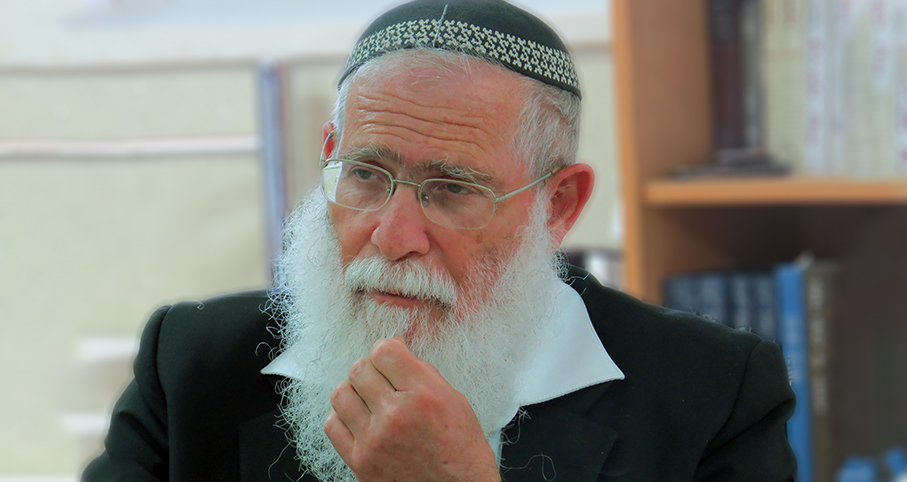






Various Events FOR WHOM NOT TO VOTE
Rav Zvi Yehuda Kook stressed that Israeli politics is G-dly, so I have no problem answering this common question on a Torani blog. Also, Free-Will is a G-d-given right and obligation, to "destine one's fate" (R. Soloveichik, Kol Dodi Dofek, 67), so I obviously don't tell others how to vote. But once not a few (especially young) have already asked, a couple of personal words from experience and thoughts from chazal & Rav Kook which may be of help to others, mainly for whom NOT to vote.
P'ninat Mishpat Fallout from Failure to Install Elevator – part II
based on ruling 85007 of the Eretz Hemdah-Gazit Rabbinical Courts










