Yeshiva
Beit Midrash
- Jewish Laws and Thoughts
- Personality Development
- Pathways in Personality Development

The Torah study is dedicatedin the memory of
Yaakov Ben Behora
This idea is reflected in the words of King Solomon, "In all of your ways know Him, and He will straighten your path." "In all of your ways" - everything you do should be done with an awareness of God. This same idea is expressed by the sages of the Mishnah: "All of your deeds should be carried out for the sake of Heaven." Even those actions necessary to sustain the body should be carried out with the proper intention, with a pure heart and free of base appetites.
However, just as there must be purity of thought regarding physical conduct, which is inherently close to the evil inclination, so too must there be purity of thought regarding the sort of good deeds which draw a person close to God. Such purity of though is necessary if one wants his good deeds to be carried out for the sake of Heaven, free of evil inclinations.
Pathways in Personality Development (52)
Rabbi Zalman Baruch Melamed
28 - 28. Types of Pious Abstinence
29 - 29. Abstinence Leads to Purity
30 - 30. Proper Intention When Serving God
Load More
And then there is a type of "not for the sake of Heaven" which while not so negative as boasting or insulting others is still undesirable. Some study Torah with the sole intention of making a living from it, and regarding such people the sages say, "One who makes use of the crown, disappears." A person who uses the crown of the Torah for his personal needs deserves to disappear from the world. While such a person does not intend to disparage the Torah or to act in a negative manner, he uses the Torah with ulterior motives, and this has grave consequences.
And there is one more type of "not for the sake of Heaven" - studying Torah in order to be rewarded by God. However, while such study contains an ulterior motive, the sages say, "A person should always occupy himself with Torah and mitzvot (commandments), even if not for the sake of the mitzvah itself, for doing so will lead one to serve for the sake of the mitzvah itself" (Pesachim 50b). All the same, such a person is still far from perfection.
Sometimes a person performs a commandment with the pure intention of fulfilling God's will. However, he may at the same time harbor undesirable thoughts; he also acts this way in order that those who see him will praise him. Sometimes his intentions are completely pure, but when he receives praise for his behavior he exerts himself even more in performing the commandment. This too is an influencing factor, and even though it is not his principal intention, his heart is not completely pure. While there is great value even in actions that contain some undesirable intention, the goal of those who truly with to serve God should be to achieve completely pure service, with no ulterior motive whatsoever.
-----
Some of the material in the above article was taken from or based upon "The Path of the Just" (Feldheim), a translation of Rabbi Moshe Chayim Luzzatto's "Mesillat Yesharim."
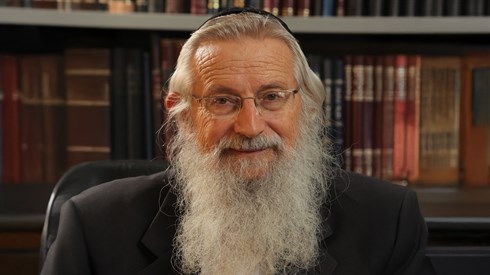





Rabbis in Midrash























Lessons
fast navigation










Hosha'ana Rabba FLYDUBAI & HOSHANA RABBA- ANI VAHU HOSHIA NA- I & HIM SAVE US
"Ani vaHu Hoshia Na", "I and Him, Save Us". We don't just pray to Him, but we also pray to and for ourselves that we should emulate and educate our children to have that instinctive altruism with which He created the world. President Trump seemed amused about Yaniv Hayon, our PLUMBER who confidently worked with G-d like Superman (he learned from a pilot on a TV show!) to save 174 lives on the Dubai hijacking, but we in Israel are totally accustomed already 78 years to our plumbers, teachers, garbage-men, rabbis, farmers & doctors being Hashem's shlichim! This is what Zionism is about.












