YeshivaThe torah world Gateway
Beit Midrash
- Shabbat and Holidays
- Purim & The Month of Adar
- The Laws of Purim
- Sections
- Peninei Halakha

Even though the obligation is to conduct one festive meal during the day, there is nevertheless a mitzva to conduct a meal on the night of Purim, serving foods that bring joy, and to eat and drink a little more than usual. Some have a custom to eat seeds and legumes on the night of Purim, to commemorate the food that Daniel, his colleagues, and Esther ate in the king’s palace. All of the cooked foods were prohibited to them, so they ate seeds and legumes in order not to defile themselves by eating prohibited foods.
There is a mitzva to increase one’s joy throughout the night and day of Purim. The more one rejoices, the more he enhances the mitzva. Thus, the Jewish people have a custom to sing, dance, get together with friends, study Torah, eat good food, and drink beverages that make one happy throughout the holiday of Purim.9
One must ideally prepare meat for the main se’uda during the day, because most people agree that eating meat makes one happy. One who has difficulty eating meat should try to eat poultry, as poultry brings people joy as well. If one cannot obtain poultry or does not like it, he should prepare other tasty foods and rejoice in eating them while drinking wine.
One must formalize the meal (kove’a se’uda) with bread, because according to some of the greatest poskim, a meal without bread is not considered a significant meal. 10
It is a mitzva to eat the meal together with others – family members or friends – in order to enhance its joy. After all, one who eats alone cannot rejoice properly (Shlah; MB 695:9).
There is a mitzva to engage somewhat in feasting and joy on the second day of Purim as well, as it says, "days of feasting and joy." In other words, residents of Jerusalem should rejoice somewhat on the fourteenth of Adar, and people who live elsewhere should do the same on the fifteenth (Rema 695:2).
^ 9.The mitzva to eat a se’uda is elaborated upon in Megilla 7b. By eating a meal, one fulfills the injunction of the verse, "To observe them as days of feasting and joy" (Esther 9:22). While it is true that the Sages derive from here that one may not fast or deliver eulogies on Purim (Megilla 5b), there is certainly also a mitzva to rejoice actively, which one accomplishes by partaking in a joyous meal. So explains Shibolei Ha-leket §201. (Some maintain that the festive meal is a rabbinic mitzva; Binyan Shlomo §58 discusses this.) The mitzva includes eating meat and drinking wine, which is why SA 696:7 rules that even an onen (a mourner whose deceased relative has not yet been buried) must observe it.
According to Rambam (MT, Laws of Megilla 2:14), Rashba, and Ritva (Megilla 4a), the mitzva of eating and drinking is only during the day, as the verse in Esther says "days." MA 695:6 cites Kol Bo as stating that some have a custom not to eat meat at night, so as not to mistakenly think that this counts as the Purim meal. On the other hand, Raavya maintains that one must have a meal with meat and wine at night, just as it is a mitzva to read the Megilla at night in addition to the main reading of the day. The only difference is that the main, more dignified meal must take place during the day. Baĥ concurs. Tosafot (Megilla 4a) also seem to agree that there is a mitzva to have a festive meal at night as well. Rema 695:1 rules similarly in the name of Mahari Brin, as do MB ad loc. 3, Kaf Ha-ĥayim 695:4. Either way, it is clear, according to the simple understanding of the issue, that one enhances the mitzva by engaging in all types of joyous activities throughout the day, as is customary.
^ 10.It is a mitzva to make an elaborate Purim meal, as Rambam, Tur, and Rema state. It seems that according to these authorities, the meal should be even more elaborate than a Yom Tov meal. The term "joy" includes eating meat and drinking wine, as the Sages state in Pesaĥim 109a regarding Yom Tov. Even though the obligation to eat meat on Yom Tov used to relate specifically to the meat of a peace offering (shelamim), there is nonetheless a mitzva to eat meat on Yom Tov even after the destruction of the Temple, since doing so makes one happy, as SAH 529:7 and BHL 529:2 explain. See Yeĥaveh Da’at 6:33. Eating chicken also brings joy, as the Gemara and Tosafot in Beitza 10b indicate.
The poskim disagree about whether one must eat bread at the Purim meal. According to Me’iri, Raavya, Maharshal, and Mor U-ketzi’a, one must eat bread, just as it is a mitzva to rejoice on Yom Tov and to eat bread at the meals. Terumat Ha-deshen and MA 695:9 maintain that one does not need to eat bread. They explain that the obligation to eat bread on Yom Tov is not based on the obligation to rejoice, but on the concept of honoring Yom Tov, which the Torah calls, "sacred occasions" (Vayikra 23:4). They similarly disagree about one who forgot to recite Al Ha-nisim in Birkat Ha-mazon (see above ch. 15 n. 19). Nevertheless, MB 695:12 states that one should not repeat Birkat Ha-mazon, since we are lenient in cases of uncertainty about berakhot, and AHS 695:7, 12 rules, on the one hand, that it is a mitzva to eat bread at the Purim meal, but on the other hand, one who forgets Al Ha-nisim does not need to repeat Birkat Ha-mazon, as the obligation to recite Al Ha-nisim in Birkat Ha-mazon cannot be more stringent than the obligation to recite it in the Amida. See Yeĥaveh Da’at 6:89.
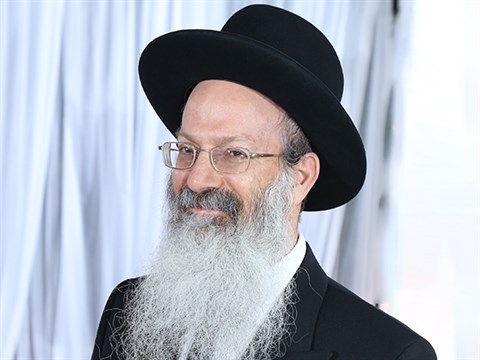
Rabbi Eliezer Melamed
Rosh Yeshiva of Har Bracha and rabbi of the settlement.

Peninei Halakha 18. Torah Verses in the Prayers and in the Berakha of She-asa Li Kol Tzorki
Chapter 10: The Laws of Tisha Be-Av
The Laws of Purim 14. Can a Drunk or Tipsy Person Recite Berakhot and Pray Ma’ariv?
Chapter 16: The Mitzvot of Joy and Kindness
The Laws of Purim 14. Al Ha-nisim, Torah Reading, Eulogies, and Tahanun
Chapter 15: Purim and Reading the Megilla
The Laws of Purim 10. The Mitzva of Reading the Megilla and the Status of One who Missed a Word
Chapter 15: Purim and Reading the Megilla


Rabbis in Midrash






















Lessons
fast navigation










Moreshet Shaul Hashem Is your Shadow – part I
Based on Siach Shaul, Pirkei Machshava V’Hadracha p. 420 – an address from 1941

P'ninat Mishpat A Non-Contractor in Changing Times – part I
(based on ruling 85128 of the Eretz Hemdah-Gazit Rabbinical Courts)
Moreshet Shaul Our King on Rosh Hashana, Our Father on Yom Kippur.
Based on Aroch Siach, p. 221 (Rav Shaul Yisraeli)
P'ninat Mishpat A Non-Contractor in Changing Times – part II
(based on ruling 85128 of the Eretz Hemdah-Gazit Rabbinical Courts)
Moreshet Shaul Hashem Is your Shadow – part II
Based on Siach Shaul, Pirkei Machshava V’Hadracha p. 420 – an address from 1941
Parashat Hashavua Happiness for the Right Reasons
[With painful longing, we share these divrei Torah from our co-Rosh Kollel for close to 40 years, Harav Moshe Ehrenreich zt”l.]