Yeshiva
Beit Midrash
- Shabbat and Holidays
- Purim & The Month of Adar
- The Laws of Purim
- Sections
- Peninei Halakha

These gifts must consist of food items in order to enhance the joy of Purim, as it is known that when a person eats good, tasty foods that he received from a friend, the love between them becomes strengthened. Another reason for mishlo’aĥ manot is that some people are not actually poor – they have the ability to purchase basic provisions for the Purim meal – yet are unable to buy foods for a more respectable Purim meal. By sending mishlo’aĥ manot, we can provide them with good food for the Purim meal in an honorable fashion.
The law is that one discharges his obligation by sending two portions of food to one person. The Sages enacted that one must send at least two portions so that the gift will be an expression of love. After all, a single portion of food can help a friend avoid hunger, but when one sends two portions, it means that he wants his friend to enjoy a variety of foods as well. One who gives more mishloĥei manot in order to increase feelings of love, brotherhood, peace, and friendship between oneself and one’s friends is praiseworthy.3
^ 3.The main reason for mishlo’aĥ manot is to increase love and brotherhood among Jews, as that is the main focus of the day. So writes Maharal in Or Ĥadash 9:22 and R. Shlomo Alkabetz in Manot Ha-Levi. Terumat Ha-deshen §111 states that mishlo’aĥ manot are for the Purim se’uda and to help those who are in need.
Responsa Binyan Tziyon §44 states that, le-khatĥila, one should send mishlo’aĥ manot via a shali’aĥ (proxy), but many poskim do not mention this. Rema 695:4 writes that if one sends mishlo’aĥ manot to his friend and the friend refuses to accept it, one nevertheless fulfills his obligation, as he has still expressed his love just by sending the mishlo’aĥ manot. However, Pri Ĥadash and Ĥatam Sofer disagree. Most Aĥaronim are stringent on the matter.
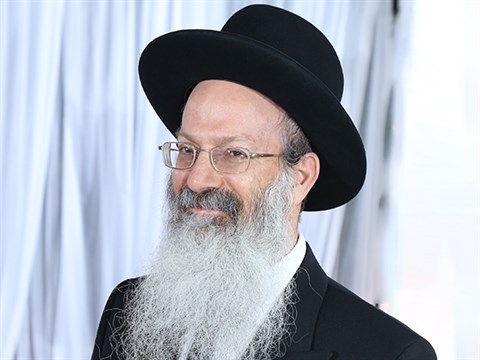
Rabbi Eliezer Melamed
Rosh Yeshiva of Har Bracha and rabbi of the settlement.

Peninei Halakha 18. Torah Verses in the Prayers and in the Berakha of She-asa Li Kol Tzorki
Chapter 10: The Laws of Tisha Be-Av



Rabbis in Midrash






















Lessons
fast navigation











Various Events FOR WHOM NOT TO VOTE
Rav Zvi Yehuda Kook stressed that Israeli politics is G-dly, so I have no problem answering this common question on a Torani blog. Also, Free-Will is a G-d-given right and obligation, to "destine one's fate" (R. Soloveichik, Kol Dodi Dofek, 67), so I obviously don't tell others how to vote. But once not a few (especially young) have already asked, a couple of personal words from experience and thoughts from chazal & Rav Kook which may be of help to others, mainly for whom NOT to vote.

P'ninat Mishpat Fallout from Failure to Install Elevator – part II
based on ruling 85007 of the Eretz Hemdah-Gazit Rabbinical Courts