Yeshiva
Beit Midrash
- Sections
- Peninei Halakha
- Shabbat and Holidays
- Laws of Hanukkah
- Peninei Halkha - Hanukkah

In the year 3591 from creation (169 BCE), around 160 years after the Greeks conquered Eretz Yisrael, Antiochus IV Epiphanes began oppressing the Jews. Under his rule, the Greeks plundered the holy vessels of the Temple, breached the walls of Jerusalem, murdered thousands of Jews, and enslaved many others. In 3593 (167 BCE), Antiochus decreed that the Jews must forsake the Torah and its mitzvot and worship idols. He made it a capital crime to perform mitzvot, abolished the sacrificial service in the Temple, and turned the Temple into a place of idolatry. Torah scrolls were torn and burned. Antiochus’ soldiers went from town to town forcing the Jews to eat pork and erect an altar for idol worship. They prohibited the practice of brit mila and Jewish women who insisted on circumcising their sons were executed. As a result of these decrees, many pious Jews fled to the wilderness, caves, or other countries; and many were murdered in sanctification of God’s name.
The intense pressure that the Greeks exerted against the Jews kindled a spark in their souls, and when the Greeks arrived in the village of Modi’in, with the intention of forcing Matityahu b. Yoĥanan the High Priest to worship idols, Matityahu rose up and killed the Greek officer and his Hellenized Jewish collaborators. The novelty of his action was that instead of dying in sanctification of God’s name, like the other pious Jews, he decided to kill the oppressor. By doing so, he and his sons raised the banner of rebellion against the Greeks and Hellenization.
The war was difficult. Yehuda the Maccabee, the boldest of Matityahu’s sons, led the fighters. With courage and skill, the Hasmoneans overcame the Greek forces, and after two years of fighting they succeeded in conquering Jerusalem. On the 25th of Kislev, 3596 (165 BCE), they began purifying the Temple and restoring the sacrificial service to its original state. This is when the miracle of the oil took place.
Later on, the Greeks returned to Eretz Yisrael in greater numbers, conquered Jerusalem, and put Hellenized Kohanim in charge of the Temple. However, in order to avoid increasing tensions with the Jews, they abolished the evil decrees and allowed the Jews to observe the Torah and the mitzvot. But this did not stop the rebellion; the Hasmoneans continued to fight against the Greeks and Hellenism. The war effort had ups and downs, but the Hasmonean brothers combined strength, diplomacy, and cunning to eventually gain political independence, decades later. Granted, the Jews lived under the aegis of the mighty empires of the ancient world – first the Greeks and then the Romans – but rule over Eretz Yisrael was by the Jews and for the Jews.3
It seems quite evident that had the Greeks been more patient, Judea would have succumbed to Hellenism, just like the other nations did. But the hand of God, which conceals itself in the historical process, generated the conflict. Just as He hardened Pharaoh’s heart during the Exodus, so too, He hardened Antiochus’ heart, and in the process helped reveal the faith, self-sacrifice, and courage of the Jewish people.
On the thirteenth of Adar, 3599 (161 BCE), Yehuda the Maccabee’s troops defeated the army of Greek general Nicanor; Nicanor was killed and the remnants of his troops retreated. This day was celebrated as "the Day of Nicanor" for generations. Immediately thereafter, the Greeks sent Bacchides at the head of a large army. Yehuda, unable to mobilize a greater number of fighters, stood against him with a mere 800 soldiers. Yehuda was killed in this battle (3600/ 160 BCE). Bacchides conquered the entire Eretz Yisrael and awarded the position of High Priest to Alcimus, a Hellenist, who executed sixty of Israel’s elder sages. Yonatan, Yehuda’s brother, assumed command of the remaining Hasmonean fighters, who had fled and gone into hiding. Over time, the Hasmoneans regained their strength and managed to harass the Greeks, but they were unable to reconquer Jerusalem. Then, a threat arose against King Demetrius’ rule, and in order to maintain his power he made a pact with the Hasmoneans, giving them Jerusalem and autonomy. Yonatan took advantage of the struggle for power in the Seleucid dynasty and obtained additional concessions from Demetrius’s rival. Thus, in the year 3608 (152 BCE), the Hellenist administrators of the Holy Temple were deposed and Yonatan began serving as High Priest. Diodotus Tryphon, one of the Greek rulers who opposed Yonatan’s increasing power in Jerusalem, lured him into meeting for a friendly conference and then murdered him (3618/ 142 BCE). Shimon inherited his brother’s command and made a treaty with Tryphon’s rival, in exchange for a tax exemption for the Jews of Judea. While the Greek kings were preoccupied with internal battles, Shimon cleansed Eretz Yisrael of the vestiges of Greek influence, conquered the fortress of Accra (23 Iyar, 3619/ 141 BCE, a date later established as a holiday), as well as additional cities surrounding Judea, and fortified its political independence. When Antiochus VII Sidetes defeated his enemies and no longer needed Shimon’s aid, he instigated a conspiracy against him, and indeed, Shimon’s son-in-law Ptolemy murdered Shimon, along with two of his sons (3625/ 135 BCE). With Antiochus’s help, Ptolemy tried to take control of Judea, but Yoĥanan Hyrcanus, Shimon’s faithful son, fought him. Then, Antiochus came to assist the murderous Ptolemy, pillaging Judea and bringing Jerusalem under heavy siege. However, Antiochus was forced to retreat because of revolts that sprang up against him elsewhere. He accepted Yoĥanan’s peace proposal, which stated that the Jews would pay a heavy tax to the Greeks in exchange for partial autonomy. Yoĥanan was appointed High Priest and nasi. Shortly thereafter, Antiochus’ army was crushed by the Parthians and Antiochus himself was killed. At this time, Yoĥanan began conquering additional territory in Eretz Yisrael, in order to expand Jewish settlement at the expense of the gentiles and to cleanse the land of idolatry. These conquests brought the Jews wealth and economic prosperity. Yoĥanan ruled Judea for 31 years (3625-3656/ 135-104 BCE), acting righteously most of his lifetime and strengthening the Sanhedrin. At the end of his life, however, he joined the Sadducees.↩︎
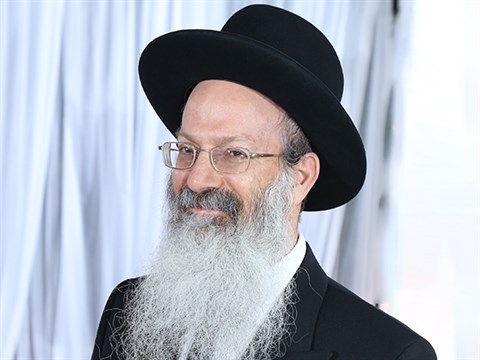
Rabbi Eliezer Melamed

Peninei Halakha 18. Torah Verses in the Prayers and in the Berakha of She-asa Li Kol Tzorki
Chapter 10: The Laws of Tisha Be-Av
Peninei Halakha 4. Listening to Music on Personal Electronic Devices
Chapter 8: The Customs of the Three Weeks







Rabbis in Midrash

































Various Events FOR WHOM NOT TO VOTE
Rav Zvi Yehuda Kook stressed that Israeli politics is G-dly, so I have no problem answering this common question on a Torani blog. Also, Free-Will is a G-d-given right and obligation, to "destine one's fate" (R. Soloveichik, Kol Dodi Dofek, 67), so I obviously don't tell others how to vote. But once not a few (especially young) have already asked, a couple of personal words from experience and thoughts from chazal & Rav Kook which may be of help to others, mainly for whom NOT to vote.

P'ninat Mishpat Fallout from Failure to Install Elevator – part II
based on ruling 85007 of the Eretz Hemdah-Gazit Rabbinical Courts







