Yeshiva
Beit Midrash
- Sections
- Peninei Halakha
- Shabbat and Holidays
- The Three Weeks
- The Laws of Tisha B'Av

Technically, there is no obligation to sleep or lie on the ground on Tisha Be-Av. This is because the Sages’ statement, "All mitzvot that apply to a mourner apply on Tisha Be-Av" (Ta’anit 30a), refers only to prohibitions, like washing, anointing oneself, wearing high-quality shoes, engaging in sexual relations, greeting others, and studying Torah. However, the mitzvot that a mourner must observe, like turning over his bed and sitting on the floor, technically do not apply on Tisha Be-Av (Tur §555). Nonetheless, it is customary to express our mourning on Tisha Be-Av in the way we lie down and sit as well. Since this law is based on custom, however, it is more lenient than the other prohibitions, as we will explain presently.
Some people sleep on the ground on Tisha Be-Av; others sleep without a pillow; still others place a stone beneath their heads (sa 555:2). One who finds it difficult to sleep in this manner may sleep normally (mb 555:6). The prevalent custom is to place one’s mattress on the ground, thus precluding the need to remove one’s pillow. It is best to place a stone underneath the mattress. This way, one observes the custom of mourning without making it too difficult to fall asleep.
It is customary to sit on the ground like mourners on Tisha Be-Av. However, since there is technically no halakhic obligation to do so, we are not stringent about this for the entire day (Baĥ 559:1). The Ashkenazic custom is to sit on the ground until midday, while the Sephardic custom is to do so until Minĥa (sa and Rema 559:3). Thus, one who takes a nap in the afternoon does not need to place his mattress on the ground.15
We already learned (above 9:3) that some have a kabbalistic custom to refrain from sitting on the ground without a piece of cloth or wood between one’s body and the floor (Birkei Yosef 555:8). If the floor is tiled, however, many poskim maintain that there is no need for a separation, even according to Kabbala. Some are meticulous and use a separation even on tiled floors.
Since there is technically no obligation to sit on the ground, one may sit on a small cushion or a low bench, but they should preferably be no higher than a tefaĥ (handbreadth) off the ground. If it is difficult to sit so low, one may be lenient and sit on a chair that is less than three tefaĥim high. If even this is difficult, one may sit on a chair that is slightly higher than three tefaĥim.16 Sitting on stairs is considered sitting on the ground, because people step on them (Mekor Ĥayim).
Pregnant women, elderly people, sick people, and those who suffer from back pain – who find it difficult to sit on a low chair – may sit on regular chairs (ahs yd 387:3).
Some rule that one may sit on a chair immediately after he is finished reciting Kinot. This is the opinion of Sefer Ha-brit, and it is also implied in Sofrim 18:7. Those who find it difficult to sit on the ground may rely on this ruling. Sephardim, as well, may be lenient, in a time of need, starting midday, or half an hour after midday, which is the earliest time one can pray Minĥa.↩︎
Maharil sat directly on the ground, but since there is no obligation to do so, ma 559:2 allows one to sit on a cushion. Ben Ish Ĥai, Year 1, Devarim 20 states that it should be no higher than a tefaĥ. Many are lenient and permit up to three tefaĥim, which is viewed as still attached to the ground (based on the principle of lavud), and Ĥazon Ish permits even more than three tefaĥim. mb 559:11 and sht ad loc. 9 permit one to sit on a low bench (which would likely be higher than three tefaĥim) in a time of need. Regarding the kabbalistic custom not to sit directly on the ground, see Kaf Ha-ĥayim 552:39, which states that there is no obligation to use a separation when sitting on tiled floors. However, it is best to be stringent, when possible.↩︎
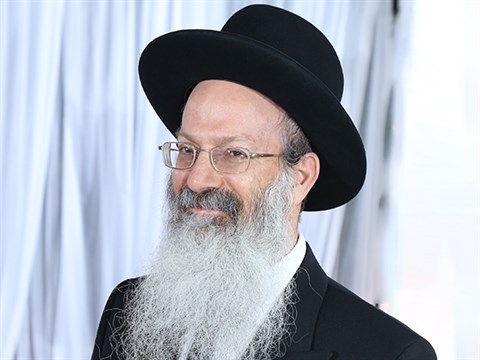
Rabbi Eliezer Melamed

Peninei Halakha 18. Torah Verses in the Prayers and in the Berakha of She-asa Li Kol Tzorki
Chapter 10: The Laws of Tisha Be-Av
Peninei Halkha - Hanukkah 11. A Married Person Who Is Away from Home
Chapter 13: When and Where to Light Hanuka Candles





Rabbis in Midrash
































Various Events FOR WHOM NOT TO VOTE
Rav Zvi Yehuda Kook stressed that Israeli politics is G-dly, so I have no problem answering this common question on a Torani blog. Also, Free-Will is a G-d-given right and obligation, to "destine one's fate" (R. Soloveichik, Kol Dodi Dofek, 67), so I obviously don't tell others how to vote. But once not a few (especially young) have already asked, a couple of personal words from experience and thoughts from chazal & Rav Kook which may be of help to others, mainly for whom NOT to vote.

P'ninat Mishpat Fallout from Failure to Install Elevator – part II
based on ruling 85007 of the Eretz Hemdah-Gazit Rabbinical Courts








