Yeshiva
Beit Midrash
- Sections
- Peninei Halakha
- Shabbat and Holidays
- The Three Weeks
- The Laws of Three Weeks

The prohibition on eating meat includes all types of meat: beef and poultry, fresh, frozen, and cured. Fish, however, is permitted.
It is customary to be particular even regarding foods that were cooked together with meat. For example, if potatoes were cooked with meat, one should not eat even the potatoes alone during the Nine Days, because the flavor of meat can be discerned in them. However, one may cook food in a pot that is usually used for meat, as long as the meat flavor in the food is not perceptible (mb 551:63, Kaf Ha-ĥayim 551:142).
Grape juice is included in the prohibition on wine, but alcoholic beverages like whisky and beer are permitted. One also may season a dish with wine vinegar.
If wine was added to dough, the resulting baked goods may be eaten during the Nine Days, because one cannot detect the flavor of wine in them. Le-khatĥila, however, one should not mix wine into dough during this period.[9]
One who is even slightly ill may eat meat and drink wine, if it helps him (mb 551:61). A woman who has given birth within the last thirty days may eat meat in order to regain her strength. Similarly, a nursing mother who needs meat in order to increase her milk supply may eat meat during the Nine Days.
According to the custom of Sephardim and some Ashkenazim, the person who recites havdala after Shabbat Ĥazon may drink the wine in the havdala cup; in fact, he may drink the entire cup. Despite this, it is preferable to use grape juice, which does not bring joy. According to the custom of other Ashkenazim, if there is a child present who has reached the age of ĥinukh for reciting berakhot before eating, but does not yet understand why we mourn over Jerusalem (age six to nine, approximately), the person reciting havdala has the child in mind when reciting the berakha of Ha-gafen, and the child drinks the wine. If no such child is available, however, the adult who recites havdala drinks the wine.[10]
[9] Some poskim permit drinking distilled wine (brandy, cognac) that includes ingredients in addition to wine, while others prohibit it.
According to many poskim, one may eat meat that is left over from Shabbat Ĥazon or from before the first of Av, because it will spoil if no one eats it. Some Aĥaronim rule stringently on the matter. Apparently, though, today, when there is no concern of wasting food because one can freeze the meat, there is no allowance to eat meat left over from the Shabbat meals.
Regarding melaveh malka (the festive meal eaten after Shabbat): Kaf Ha-ĥayim 551:144 cites opinions of Aĥaronim who permit eating leftovers from Shabbat at the “fourth meal,” as long as one does not buy more food than usual for Shabbat in anticipation of this additional meal. Piskei Teshuvot writes that some permit one who is accustomed to eating meat every Motza’ei Shabbat at the melaveh malka meal to do so after Shabbat Ĥazon as well. Some rule stringently on this issue, too.
[10] sa 551:10 states that one may drink the wine from havdala. Rema and mb 551:70 state that one should give the wine to a minor. In Darkhei Moshe 551:9, Rema quotes Maharil as saying that, le-khatĥila, an adult may drink the wine from havdala, and all the more so wine from a se’udat mitzva. Other Ashkenazic Rishonim and Aĥaronim followed this practice. It is preferable to recite havdala over grape juice, because even though it is included in the prohibition against wine, it does not make one happy. Mikra’ei Kodesh (Harari) 1:14 quotes this in the name of R. Mordechai Eliyahu.
The age of ĥinukh for berakhot is approximately six. According to Eshel Avraham (Buczacz), the age of ĥinukh for mourning over the Temple is when the child can understand the meaning of the destruction of the Temple and the fact that we do not eat meat because the sacrifices were annulled. According to many poskim, this occurs at the age of nine or ten. Others say that it occurs at the age of thirteen.
According to ma and Ĥayei Adam, one may, le-khatĥila, feed meat and wine to children who have not yet reached the age of ĥinukh. Basing himself on Eliya Rabba, Dagul Me-revava, and Derekh Ha-ĥayim, mb 551:70 writes that this is permissible only in the case of havdala or if they are weak.
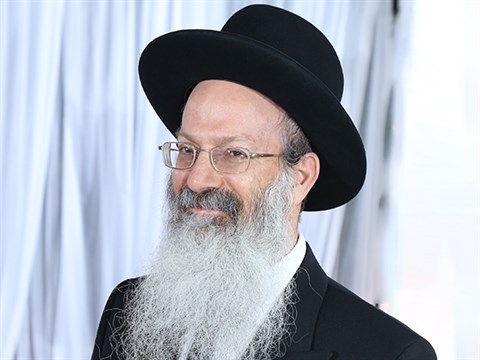
Rabbi Eliezer Melamed

Peninei Halakha 18. Torah Verses in the Prayers and in the Berakha of She-asa Li Kol Tzorki
Chapter 10: The Laws of Tisha Be-Av




Rabbis in Midrash
































Various Events FOR WHOM NOT TO VOTE
Rav Zvi Yehuda Kook stressed that Israeli politics is G-dly, so I have no problem answering this common question on a Torani blog. Also, Free-Will is a G-d-given right and obligation, to "destine one's fate" (R. Soloveichik, Kol Dodi Dofek, 67), so I obviously don't tell others how to vote. But once not a few (especially young) have already asked, a couple of personal words from experience and thoughts from chazal & Rav Kook which may be of help to others, mainly for whom NOT to vote.

P'ninat Mishpat Fallout from Failure to Install Elevator – part II
based on ruling 85007 of the Eretz Hemdah-Gazit Rabbinical Courts









