YeshivaThe torah world Gateway
Beit Midrash
- Shabbat and Holidays
- Jewish Holidays
- Rosh Chodesh
- Sections
- Peninei Halakha

God created the sun and the moon and placed them in the heavens, and time is marked by them. The sun shines during the day, the moon at night. Years are determined by the solar cycle, and months by the lunar cycle. Indeed, the Torah states: "God said, ‘Let there be luminaries in the heavenly firmament, to separate day from night; they shall serve as signs for the seasons, days, and years’" (Bereishit 1:14).
Each month, the moon makes one revolution around the earth. One can perceive this cycle by following the appearance of the moon. At the beginning of each month, the moon looks very small to us, like a thin sliver. Its apparent size gradually increases until the middle of the month, when it appears as a complete circle. During the second half of the month, the moon wanes, until it completely disappears at the end of the month for approximately 24 hours. Afterward, it reappears as a thin sliver once more, indicating that a new month has begun.
A full lunar cycle lasts approximately 29.5days. Since this cycle does not coincide with the earth’s daily rotation around its axis, due to the extra half-day, a Jewish month lasts either 29 or thirty days. A 29-day month is called an "incomplete month," while a thirty-day month is called a "full month."
Establishing the beginning of a month is extremely important, as all of our festivals depend on the Hebrew date: Pesaĥ commences on the fifteenth of Nisan, Yom Kippur falls out on the tenth of Tishrei, Sukkot begins on the fifteenth of Tishrei, etc. In fact, it is so important that the Torah permits witnesses who have seen the new moon to desecrate Shabbat in order to travel to Jerusalem and testify before the beit din (rabbinic court; mt, Laws of Sanctifying the Month 3:2). The court would sanctify the new month based on their testimony and then dispatch messengers to inform all of Israel when the new month began.
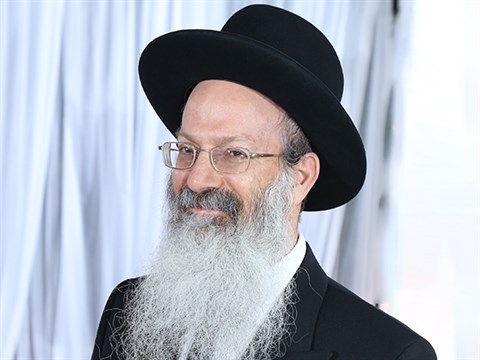
Rabbi Eliezer Melamed

Peninei Halakha 18. Torah Verses in the Prayers and in the Berakha of She-asa Li Kol Tzorki
Chapter 10: The Laws of Tisha Be-Av






Rabbis in Midrash






























Moreshet Shaul Hashem Is your Shadow – part I
Based on Siach Shaul, Pirkei Machshava V’Hadracha p. 420 – an address from 1941

P'ninat Mishpat A Non-Contractor in Changing Times – part I
(based on ruling 85128 of the Eretz Hemdah-Gazit Rabbinical Courts)
Moreshet Shaul Our King on Rosh Hashana, Our Father on Yom Kippur.
Based on Aroch Siach, p. 221 (Rav Shaul Yisraeli)
P'ninat Mishpat A Non-Contractor in Changing Times – part II
(based on ruling 85128 of the Eretz Hemdah-Gazit Rabbinical Courts)
Moreshet Shaul Hashem Is your Shadow – part II
Based on Siach Shaul, Pirkei Machshava V’Hadracha p. 420 – an address from 1941
Parashat Hashavua Happiness for the Right Reasons
[With painful longing, we share these divrei Torah from our co-Rosh Kollel for close to 40 years, Harav Moshe Ehrenreich zt”l.]