Yeshiva
Beit Midrash
- Shabbat and Holidays
- Jewish Holidays
- Rosh Chodesh

The Torah study is dedicatedto the full recovery of
Lea Bat Rahma
It is impossible to ignore the significance of a calendar and the manner in which we count the days and the years.
Some say, "Who thinks about the original intentions of the creators of these calendars anyway? Their intentions do not interest anybody today. Usage of the non-Jewish calendar does not imply any ideology; it is simply more convenient. It is even necessary, for we here in the modern state of Israel do not live in a vacuum. We maintain tight relations with the western world; Europe and the United States both use this calendar, and therefore we too must use it. It is extremely convenient that there is a single calendar, and not using it will certainly confuse all of our accounting and will lead to all sorts of complications - so why confuse and complicate things for no reason? The universality of this calendar, a common reckoning of dates, is a technical-organizational matter. It's all a question of convenience, and there is no reason to see in it any particular ideology or intention beyond technical calculations." However, they are mistaken.
Some say, "Using the non-Jewish calendar does not have any spiritual significance." This is not true. Perhaps it is not the intention of the user to give it spiritual significance, yet, unintentionally, the usage of a particular calendar has such significance. It is impossible to divorce the fiscal-organizational order from the ideological-conceptual order in the world. Economic and commercial strategies along with communal-religious planning are grounded in the in the yearly order. If economic and revenue systems are determined according to yearly frameworks, then it follows that the spiritual and social arrangements are also determined according to these yearly frameworks. Every yearly plan begins from some date, and that date is necessarily imbued with significant value.
When the end of the fiscal year arrives, one summarizes the year that passed and prepares for the coming one. At that time there is a feeling of having reaching the end of a cycle and the beginning a new one. One makes a financial accounting, and this spills over into moral accounting - spiritual matters. We, the Jewish people, have a rich spiritual world of our own, and it is intimately bound to the unique Hebrew calendar. The Jewish New Year is on the first of Tishrei. This is the conclusion of the year in all respects: personal accounting, repentance, and rectification. At this point each Jew considers and reflects upon what he managed to accomplish during the previous year, deciding in which areas improvement is needed, and in which areas matters should be allowed to continue as they have up until now.
It is no coincidence that the Hebrew calendar is arranged such that Rosh Hashanah, the Jewish New Year, falls on the first of Tishrei. The intention is to count the days of the year and the number of years that have passed since the creation of the world by the Almighty, according to our Torah-based tradition.
Because the economic and social-religious systems are interlocked, and because they are connected to time, there is great significance to one's choice of calendar.
Indeed, the time has come to reintroduce ever more the usage of the Hebrew calendar.
The Hebrew calendar is ours, and we have four New Years: the first of Nissan is the New Year for kings; the first of Elul is the New Year for the tithing of animals; the first of Tishrei is the New Year for the reckoning of ordinary years, Sabbatical years, and Jubilee years etc.; the fifteenth of Shevat is the New Year for the trees.
This is our calendar. A practical worldly calendar, bound to nature and the seasons of the year by the Creator of nature Himself.
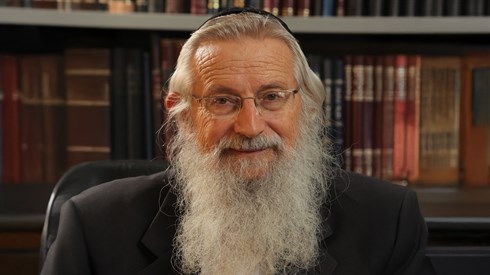






Rabbis in Midrash























Lessons
fast navigation









Various Events FOR WHOM NOT TO VOTE
Rav Zvi Yehuda Kook stressed that Israeli politics is G-dly, so I have no problem answering this common question on a Torani blog. Also, Free-Will is a G-d-given right and obligation, to "destine one's fate" (R. Soloveichik, Kol Dodi Dofek, 67), so I obviously don't tell others how to vote. But once not a few (especially young) have already asked, a couple of personal words from experience and thoughts from chazal & Rav Kook which may be of help to others, mainly for whom NOT to vote.

P'ninat Mishpat Fallout from Failure to Install Elevator – part II
based on ruling 85007 of the Eretz Hemdah-Gazit Rabbinical Courts









