Yeshiva
Beit Midrash
- Torah Portion and Tanach
- Bamidbar
- Pinchas

In contradistinction to this assessment of character and behavior, the Torah describes Pinchas as a zealot who takes violent action against those who publicly defame and destroy Torah values and the Jewish people. He rises to the occasion by killing one of the leaders of the tribes of Israel. He is criticized by the Jewish people for such behavior, and they attributed his conduct to his lineage. Pinchas was not only descended from Aaron but he also was descended from non-Jewish priests, and his violent characteristics are attributed to his non-Jewish grandfather. Yet, the Torah chooses to emphasize the priestly lineage of Pinchas and attribute his behavior and his response to the public defamation of God in Israel specifically to his grandfather Aaron.
There is a strong lesson being taught with this nuance of lineage that appears in this week's Torah reading. We will find later in Jewish history, at the time of the Greek persecution of the Jews and of Judaism, that another descendent of Aaron, Matityahu, together with his family, also kills a renegade who defames the God of Israel and the Jewish people publicly by sacrificing to idolatry. Here we again see that within the holy and gentle character of Aaron and the priestly clan of Israel, there resides an iron will to stand strong against the defamation of everything that is holy and eternal.
When the situation demands it, the gentle priest becomes a man of war, who can and must take decisive and even violent action, to preserve the integrity of Torah and Jewish life. The Torah is generally not in favor of zealotry. However, as in the case of Pinchas, and later Elijah, sometimes zealotry is not only acceptable but necessary for Jewish survival. The problem always is how can a person measure whether the situation calls for such zealotry and even violent behavior.
This eternal difficulty of life is presented to us. We can rarely be certain as to the correctness of our attitudes and behavior under a given situation or in response to a certain challenge. The Torah does not demand from us the wisdom of angels. But it does show us that there are different, even opposing responses, that are valid in difficult situations in both public and private life. The wise and holy person will be able to choose correctly.
Shabbat Shalom
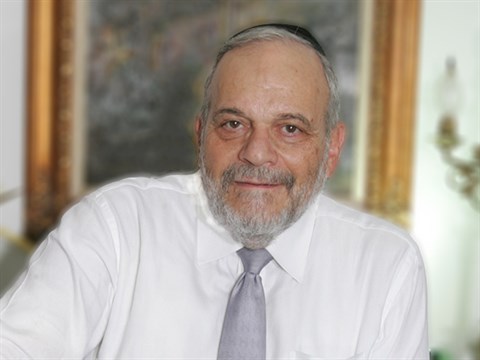
Rabbi Berel Wein




Rabbis in Midrash























Lessons
fast navigation










Various Events FOR WHOM NOT TO VOTE
Rav Zvi Yehuda Kook stressed that Israeli politics is G-dly, so I have no problem answering this common question on a Torani blog. Also, Free-Will is a G-d-given right and obligation, to "destine one's fate" (R. Soloveichik, Kol Dodi Dofek, 67), so I obviously don't tell others how to vote. But once not a few (especially young) have already asked, a couple of personal words from experience and thoughts from chazal & Rav Kook which may be of help to others, mainly for whom NOT to vote.

P'ninat Mishpat Fallout from Failure to Install Elevator – part II
based on ruling 85007 of the Eretz Hemdah-Gazit Rabbinical Courts











