Yeshiva
Beit Midrash
- Jewish Laws and Thoughts
- Personality Development
- Pathways in Personality Development

The Torah study is dedicatedin the memory of
Revital Bat Lea
The Torah says, "Do not place a stumbling block before the blind," and, in addition to its plain meaning (that it is forbidden to place an object in the path of a blind person) this verse comes to teach us that if somebody approaches you for advice regarding a matter that you are familiar with and he is not, consider him blind. Do not give him poor advice, advice that will cause him to err.
If somebody asks you, "Is so-and-so's daughter fit to marry a Kohen?" do not say, "She is fit" if in fact she is not. And if somebody comes to ask your advice regarding a matter in which you have a self-interest, do not give him detrimental advice from which you can benefit. Do not say to him, "Sell your field and buy an ass," so that you yourself can buy the field. Explaining that you really had his best interest in mind will not help.
Pathways in Personality Development (52)
Rabbi Zalman Baruch Melamed
16 - 16. Deceit and Humiliation
17 - 17. Sound Advice
18 - 18. Slander, Defamation, and Tale-bearing
Load More
This, then, is what an honest person must do when somebody comes to ask his advice: he must give him the same advice that he would give to himself. He should consider the welfare of the one who seeks advice, and nothing else.
And what should a person do when somebody approaches him for advice, and he sees that if he gives him good advice he himself is liable to suffer? In other words, is a person obligated to give advice to others even if it will have a negative effect on himself? The answer is that he must explain his dilemma to the inquirer, and if he is unable to explain, he should maneuver his way out of it rather than give poor advice. One should never give advice which is motivated by intentions other than those which are meant to benefit the inquirer.
This rule, of course, does not apply where the inquirer harbors evil intentions. In such a situation one is obligated to mislead the inquirer and to prevent him from carrying out his evil intentions, and regarding such it is written, "With the perverse show yourself subtle" (Psalms 18:27).
In other words, the warning "Do not place a stumbling block before the blind," includes a prohibition against helping a person perform an offense, i.e., causing somebody else to stumble into a forbidden act. If somebody wishes to perform a forbidden act and asks for your help, you must "not place a stumbling block before the blind."
If a person gives this matter some thought, he will realize that seeking and giving advice takes place quite often. It is not uncommon for acquaintances to ask each other for advice on various matters, and great caution is needed if one is to avoid giving unsound advice.
As a matter of fact, this prohibition implies an obligation: if you see that somebody who is "blind" with regard to a certain matter is about to stumble, remove the stumbling block from his path. If you have the capacity to prevent him from stumbling, do not stand by passively; help him avoid the danger.
Causing verbal deception or humiliation, giving unsound advice, slandering, bearing animosity, taking revenge, lying, desecrating God's name - these are all common matters and one must exert great effort in order to find ways to avoid them. Unless one pays close attention and puts himself on constant guard, it is impossible to reach a level of "cleanliness." However, if a person is careful and pays close attention to his behavior, he can advance, improve himself, and develop his personality, fostering affection for God's creatures and becoming the target of their affection as well.
---
Some of the translated biblical verses in the above article were taken from, or based upon, Davka's Soncino Judaic Classics Library (CD-Rom).
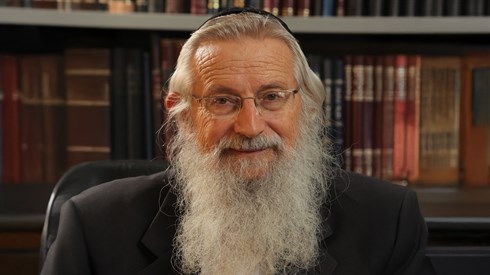






Rabbis in Midrash























Lessons
fast navigation









Hosha'ana Rabba FLYDUBAI & HOSHANA RABBA- ANI VAHU HOSHIA NA- I & HIM SAVE US
"Ani vaHu Hoshia Na", "I and Him, Save Us". We don't just pray to Him, but we also pray to and for ourselves that we should emulate and educate our children to have that instinctive altruism with which He created the world. President Trump seemed amused about Yaniv Hayon, our PLUMBER who confidently worked with G-d like Superman (he learned from a pilot on a TV show!) to save 174 lives on the Dubai hijacking, but we in Israel are totally accustomed already 78 years to our plumbers, teachers, garbage-men, rabbis, farmers & doctors being Hashem's shlichim! This is what Zionism is about.
Moreshet Shaul Hashem Is your Shadow – part I
Based on Siach Shaul, Pirkei Machshava V’Hadracha p. 420 – an address from 1941










