YeshivaThe torah world Gateway
Beit Midrash
- Sections
- Chemdat Yamim
- Bemare Habazak - Rabbis Questions
- Shabbat and Holidays
- Purim & The Month of Adar
- The Laws of Purim

Answer: According to the normal rules, we would think that this is not an optimal practice. Presumably, every moment and element of festivity of Purim adds to the mitzva (Rama, Orach Chayim 695). We do not find a halacha of tosefet (adding on to the day before and/or after Purim). Therefore, it all should be during the day.
Bemare Habazak - Rabbis Questions (657)
Rabbi Daniel Mann
339 - Davening Late with a Minyan
340 - Extended Purim Seuda
341 - When Does a Negative Practice Become Binding?
Load More
The way the Terumat Hadeshen paints the minhag, it developed based on trading off the preferences of one mitzva vs. another. The morning and even part of the afternoon is full with Kri’at Hamegilla, mishloach manot, and matanot la’evyonim. The latter two are open-ended mitzvot which are strongly recommended to be done on a large scale (Shulchan Aruch, OC 695:4 regarding mishloach manot; Rambam, Megilla 2:17 and Mishna Berura 294:3 regarding matanot la’evyonim). One should also daven Mincha before the big and sometimes incapacitating meal (see Shulchan Aruch, OC 232:2). Thus, allowing the meal to start later enables one not to rush the other mitzvot. One may also add that in order to enable the inclusion of others (which is desirable, family or not), including those coming from a distance, one must give time for them to finish their mitzvot and make it.
The Terumat Hadeshen describes the minhag as having the main part of the meal in the evening, although, he also writes that he personally had his in the morning. The way the Rama (OC 695:2) sets out the minhag in the manner he considers acceptable, people should not start the meal too close to the end of the day; the main part of the meal should be during the day. It seems logical that he does not care how long one continues after nightfall but whether there was enough time to have the majority of what would have been a proper meal (including merriment and songs and words of inspiration).
Is the festivity into the next night worth anything religiously? There are three ways to explain how it can be. The Terumat Hadeshen seems to say that the two time periods of the meal form one unit, and thus the day-rooted meal was lavish, which is what is important. The Meshech Chochma (see Mikraei Kodesh (Frank) 53)) says that in the time of the Purim story, the celebrations started in the day and continued into the night (as do the laws of korbanot – see Y’mei Hapurim, p. 157) so that the night is an appropriate time for festivities. The Levush (OC 695:2) says that both days of Purim (14 & 15 Adar) are days of festivity, so that the night is appropriate as the second day of Purim. According to the Levush, this minhag should logically not be as desirable in Yerushalayim, where the evening after the seuda is the 16th. That being said, the minhag, at least for Ashkenazim (see Mikraei Kodesh (Harari), 13:5), is to allow extending the meal into the night – even in Yerushalayim.
In theory, there could be a practical consequence of this minhag. The Rosh (see Tur, OC 695) says that Al Hanisim can be said only if Birkat HaMazon is recited during the day. He says the same thing regarding R’tzei at seuda shlishit (Shut 22:6). On the other hand, the Beit Yosef cites a Hagahot Maimoniot that Al Hanism can be said at night if the meal started during the day, as we do in practice regarding seuda shlishit (Shulchan Aruch, OC 188:2). While the Shulchan Aruch elsewhere (OC 695:3) cites two opinions on the matter, his conclusion and that of the Rama is that Al Hanisim is to be recited in this case.

P'ninat Mishpat Complaints about Contractor’s Work – part II
(based on ruling 83037.1 of the Eretz Hemdah-Gazit Rabbinical Courts)
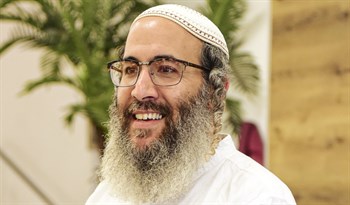


Rabbis in Midrash




















Lessons
fast navigation










Shoftim TESHUVA IN COURT OF LAW?
Parshat Shoftim-Chodesh Elul
Why does parshat Shoftim always come out during Elul? This innovative and central explanation is an eye-opener regarding many aspects of Judaism.

The Month of Elul TESHUVA IS THE ANSWER
The month of Elul serves as a vital time for self-reflection and personal accountability to prepare for true repentance.
P'ninat Mishpat P'ninat Mishpat: Realtor’s Fee on Large Commercial Building – part I
(based on ruling 85031 of the Eretz Hemdah-Gazit Rabbinical Courts)
(based on ruling 85031 of the Eretz Hemdah-Gazit Rabbinical Courts)
P'ninat Mishpat Complaints about Contractor’s Work – part II
(based on ruling 83037.1 of the Eretz Hemdah-Gazit Rabbinical Courts)
(based on ruling 83037.1 of the Eretz Hemdah-Gazit Rabbinical Courts)
Chemdat Yamim Moreshet Shaul: The Goal of an Agricultural Yeshiva – part I
Based on Siach Shaul, Pirkei Machshava V’Hadracha p. 263 (address at the laying of the cornerstone of the Yeshiva Chakla’it in Kfar Haroeh)
Based on Siach Shaul, Pirkei Machshava V’Hadracha p. 263 (address at the laying of the cornerstone of the Yeshiva Chakla’it in Kfar Haroeh)
Chemdat Yamim The Goal of an Agricultural Yeshiva – part II
Based on Siach Shaul, Pirkei Machshava V’Hadracha p. 263 (address at the cornerstone laying for the Yeshiva Chakla’it in Kfar Haroeh – 1938)
Based on Siach Shaul, Pirkei Machshava V’Hadracha p. 263 (address at the cornerstone laying for the Yeshiva Chakla’it in Kfar Haroeh – 1938)
Re'e NEVER EXTREME EXCEPT ISRAEL
Parshat Re'eh
Judaism is against extremism, so how can we understand the seemingly extreme statements found in our sages in favor of living in the Land of Israel and against living in Chutz laAretz? The article deals with the seeming contradiction between the strength of Free-Will and the strength of being influenced by our surroundings.
Ekev DANCE FOR ISRAEL- FOR YOUR BENEFIT
Parshat Eikev
Description: The 7 Haftarot we read after Tisha B'Av ("Shiva D'Nichemta") surely get us excited that they're coming TRUE, and awaken us to yearn, dance & join the return to Zion! The short article also deals with the problems and solutions facing the American Jewish community as discussed at a recent panel, as well as the question why Jews come from America to Israel to help when we face problems, but Israelis don't come to aid Jews in America when they face anti-Semitism.
P'ninat Mishpat P'ninat Mishpat: Complaints about Contractor’s Work – part II
(based on ruling 83037.1 of the Eretz Hemdah-Gazit Rabbinical Courts)
(based on ruling 83037.1 of the Eretz Hemdah-Gazit Rabbinical Courts)
Chemdat Yamim Moreshet Shaul: Twin Foundations
Based on Siach Shaul, Pirkei Machshava V’Hadracha p. 690
Based on Siach Shaul, Pirkei Machshava V’Hadracha p. 690