Yeshiva
Beit Midrash
- Torah Portion and Tanach
- Bereshit
- Vayeshev

But for all that, the story is not a pretty one. In fact, you might say that the selling of Yosef is "the sin that keeps on giving." Chazal say it is this horrendous crime that causes Bnei Yisrael to be enslaved in Egypt, enduring every kind of atrocity, for more than 100 years. And centuries later, in the infamous Eleh Ezkera/Martyrology section we read in the Yom Kippur Machzor, it surfaces again as background to the murder of Judaism’s leading rabbis.
Of course, it is based on a Battle between Brothers, an all-too-common malady that has afflicted us through the ages (bear in mind that our classic enemies – the Arabs of Yishmael, Moav, Edom/Europe & even Amalek are all related by blood to Am Yisrael!). In this case, it is Yosef’s siblings who despise Yosef almost beyond belief. This is strikingly demonstrated at the Sedra’s start. The pasuk (37:6) says "Yosef dreamt a dream & told his brothers, & they hated him even more." But only in the next pasuk does Yosef actually tell his brothers what the dream actually is! Their enmity is abstract, instinctive, automatic.
The pasuk also says, "They hated him, v’lo yachlu dabru l’Shalom." (They could not speak to him in peace). The Vilna Gaon comments: When a Jew takes leave of another Jew, he should not say, "Lech B’Shalom," which is more appropriate for the deceased, but rather "Lech L’Shalom," which is for the living. So pervasive was the brothers hate that they couldn’t even bring themselves to use the word "L’Shalom" when speaking to Yosef!
What can be done to correct this horrible malady?
Enter Chanuka. This story, too, sadly begins on a note of brotherly in-fighting. The Jews are divided between the Hellenists, who are intent on emulating the culture & mores of the Greeks, & the Chashmonaim, who firmly believe that only by preserving our uniquely Jewish way of life will we survive the ravages of history. The two factions of the Jewish People must confront one another & come to a meeting of the minds. Eventually, the nation rallies around the Maccabim; the Greeks are defeated & the purity of Am Yisrael is restored.
The lasting symbol of the holiday is, of course, the Chanukiya. Not only does it remind us of the power of faith & the danger of diluting Judaism, its many branches represent the reality that brothers can have their own identity, & standalone. Yet at the same time, we must remember that we come from the same base, the same source, & the unique light that each of us emanates also goes to the very same destination: Heaven & Hashem.
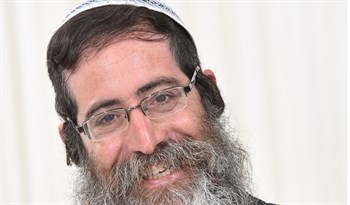






Rabbis in Midrash























Lessons
fast navigation











Hosha'ana Rabba FLYDUBAI & HOSHANA RABBA- ANI VAHU HOSHIA NA- I & HIM SAVE US
"Ani vaHu Hoshia Na", "I and Him, Save Us". We don't just pray to Him, but we also pray to and for ourselves that we should emulate and educate our children to have that instinctive altruism with which He created the world. President Trump seemed amused about Yaniv Hayon, our PLUMBER who confidently worked with G-d like Superman (he learned from a pilot on a TV show!) to save 174 lives on the Dubai hijacking, but we in Israel are totally accustomed already 78 years to our plumbers, teachers, garbage-men, rabbis, farmers & doctors being Hashem's shlichim! This is what Zionism is about.
Moreshet Shaul Hashem Is your Shadow – part I
Based on Siach Shaul, Pirkei Machshava V’Hadracha p. 420 – an address from 1941

P'ninat Mishpat A Non-Contractor in Changing Times – part I
(based on ruling 85128 of the Eretz Hemdah-Gazit Rabbinical Courts)
Moreshet Shaul Our King on Rosh Hashana, Our Father on Yom Kippur.
Based on Aroch Siach, p. 221 (Rav Shaul Yisraeli)





